
A skincare brand can look clinical without being credible. Consumers with a pharmacist's skepticism will see through it within one label read.
The Problem with "Science-Backed" as a Positioning
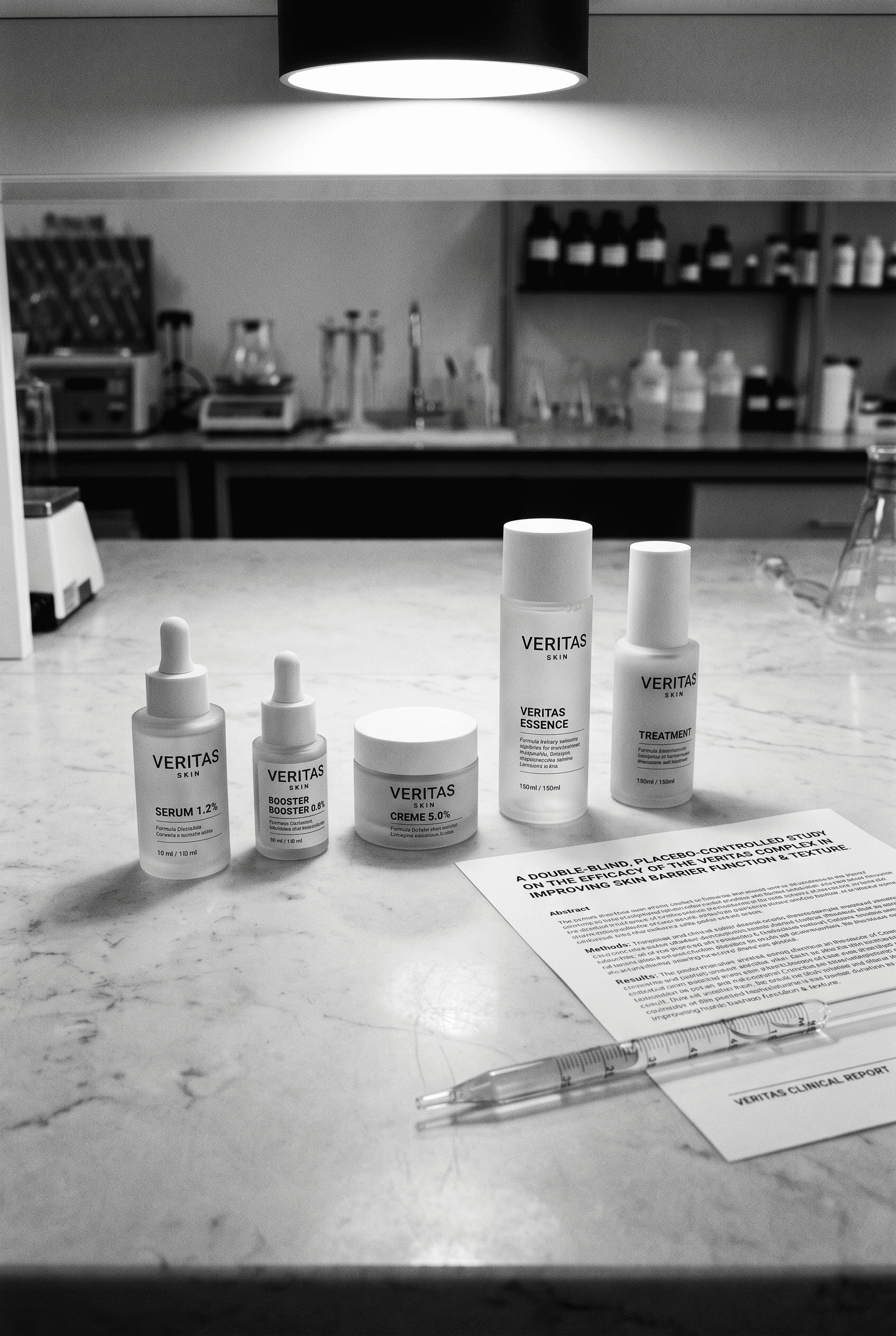
"Science-backed" has become one of the most overused and undersubstantiated claims in skincare branding. Brands use clinical-looking typography, white packaging, ingredient percentages, and references to "clinical studies" or "dermatologist testing" to imply scientific authority without actually having meaningful scientific differentiation.
This is not an aesthetic problem. It is a trust problem, and it is getting worse as consumers become more ingredient-literate. The growth of skincare communities on Reddit, TikTok, and dedicated forums like SkincareAddiction has produced a consumer base that reads ingredient lists, evaluates percentage claims, and identifies when a brand's scientific language does not match the actual formulation.
The brands that will win in the science-credible skincare segment are the ones that build genuine scientific substance into the brand from the strategy stage, not brands that apply clinical aesthetics as a veneer over undifferentiated formulations.
I am a pharmacist. I have spent 17 years building cosmetics and skincare brands. The brands I build in the science-credible space have pharmacist-level ingredient knowledge at their core. This guide explains what genuine science-backed skincare branding requires and how to build it for the long term.
What Science-Backed Skincare Branding Actually Requires
The distinction between genuine and performative science-backed skincare branding is visible at the formulation, the communication, and the proof level.
Dimension | Genuine Science-Backed Brand | Performative Science Branding |
|---|---|---|
Formulation basis | Active ingredients at clinically relevant concentrations | Active ingredients at sub-clinical concentrations behind clinical-looking packaging |
Ingredient communication | Accurate mechanism of action explanations | Impressive-sounding ingredient names without mechanism |
Clinical evidence | Brand-sponsored or published studies on specific formulation | Generic references to ingredient studies that do not apply to the formulation |
Dermatologist / pharmacist involvement | Formulation reviewed or developed by a licensed professional | "Dermatologist tested" sticker added post-manufacture without substantive involvement |
Claims language | Stays within FTC/FDA cosmetic claim boundaries with substantiation | Implies drug-like efficacy without substantiation |
Ingredient transparency | Full INCI list with percentage disclosures for key actives | INCI list without concentration data |
Long-term positioning | Built on sustained formulation investment and updated with evidence | Built on trend-dependent ingredients without long-term science roadmap |
The right column describes the majority of brands that currently use science-backed positioning language. The left column describes the minority that will build durable consumer trust over time.
Building Genuine Science Credibility into the Brand
1. Start with formulation, not aesthetics
Science-backed skincare branding must begin with a formulation that has genuine scientific substance. This means active ingredients at concentrations that are consistent with published efficacy data, formulation chemistry that delivers the active to its site of action, and stability testing that confirms the active remains efficacious throughout the product's shelf life.
A brand that applies clinical aesthetics to a formulation with active concentrations below clinical relevance is making a credibility claim it cannot sustain. As ingredient literacy among consumers increases, this gap between visual claim and formulation reality becomes increasingly visible and increasingly damaging.
2. Translate the science accurately
The communication of skincare science to consumers is one of the most technical copywriting challenges in consumer branding. The language must be accurate enough to withstand scrutiny from a scientifically literate consumer, accessible enough to engage a consumer without a chemistry background, and compliant with FTC guidelines that require substantiation for efficacy claims.
The most common failure mode is using mechanism-of-action language that applies to the ingredient in general but not to the specific formulation. "Contains retinol, which stimulates collagen production" may be accurate as a general statement about retinol. Whether the specific concentration in the formulation produces meaningful collagen stimulation at the skin depth the copy implies is a different question.
For a detailed guide to communicating skincare ingredients honestly and within regulatory limits, see my guide to skincare ingredient marketing.
3. Choose the right credibility signals
Not all credibility signals carry equal weight. The most durable are:
Pharmacist or physician formulation involvement (with the professional's name and credentials, not just "pharmacist-formulated" as a label claim)
Peer-reviewed ingredient research cited specifically (with links and accurate representation of what the study shows)
Third-party testing results from recognized laboratories
Dermatologist or clinician involvement in testing, not just a sticker that says "tested"
The least durable credibility signals are:
Clinical-looking packaging without clinical substance
Percentage disclosures for ingredients at concentrations below clinical relevance
"Studies show" language without citation or context
Awards from beauty publications (valuable for awareness, irrelevant to scientific credibility)
For the specific design and positioning requirements of a clinically positioned skincare brand, see my guide to clinical skincare branding.
4. Stay within the cosmetic claim boundary
The FTC requires that efficacy claims be substantiated by competent and reliable scientific evidence. For skincare products classified as cosmetics under the FDA framework, claims that imply drug-like structural or functional changes to the skin (beyond affecting appearance) make the product a drug, not a cosmetic, and subject it to the full regulatory framework for pharmaceutical products.
Science-backed skincare brands that push claim language to the edge of the cosmetic-drug boundary to compete in efficacy perception are taking on regulatory risk that can materialize as warning letters, injunctions, or forced reformulation. The safe position is to build a brand that is genuinely differentiated by the science and can therefore make honest claims that are compelling without overstating.
For a detailed guide to anti-aging skincare claim strategy, see my guide to anti-aging skincare branding.
How the Pharmacist Credential Creates a Competitive Moat
The pharmacist background is one of the most underused differentiators in the skincare market. Most founders who have a clinical background communicate it through a "pharmacist-formulated" label claim and then design the brand to look like every other clinical skincare brand. The credential becomes a commodity.
A pharmacist's training provides specific, verifiable advantages in skincare formulation:
Pharmacokinetic understanding of how active ingredients penetrate skin barriers
Drug interaction knowledge that applies to cosmetic-pharmaceutical crossover (retinoids and exfoliants, niacinamide interactions with vitamin C at specific concentrations)
Dosage and concentration knowledge that distinguishes efficacious formulations from cosmetically dosed ones
Regulatory knowledge of the cosmetic-drug boundary that protects the brand from claim overreach
Clinical evidence literacy that enables accurate and substantiated communication of ingredient research
These advantages are genuinely differentiating. They cannot be replicated by a non-pharmacist founder applying "clinical" as an aesthetic category. Building a science-backed skincare brand around this credential requires making the pharmacist's specific knowledge visible in the brand communications, not just citing the credential on the About page.
For a guide to how clean beauty positioning relates to science credibility, and how brands can communicate both honestly, see my guide to clean beauty branding.
The Visual Identity of a Science-Credible Skincare Brand
Science-credible skincare brands have a distinct visual language. The challenge is that this visual language has been adopted by so many brands without the underlying scientific substance that it has become partially associated with marketing claims rather than genuine credibility.
The visual elements that signal science credibility:
Restrained typography that prioritizes information hierarchy over decorative impact
Color palettes that draw from clinical and laboratory environments (whites, pale grays, cool neutrals) or that deliberately contrast with this convention to create distinctiveness
Ingredient and formulation information given prominent visual weight on packaging
Label information density that signals transparency rather than hiding information
Photography that prioritizes product truth over lifestyle fantasy
The visual elements that undermine science credibility:
Overly decorative typography that subordinates ingredient information
Packaging that hides or abbreviates the ingredient list
Excessive use of asterisks referring to non-committal qualifications
Inconsistency between the science-credible visual identity and product marketing copy that uses aspirational language inconsistent with the brand's scientific positioning
For a complete guide to the design language of medicated and clinically positioned skincare, see my guide to medicated skincare branding.
FAQ: Science-Backed Skincare Branding
What does "science-backed" mean in skincare?
In genuine usage, science-backed means the brand's formulations are developed with active ingredients at concentrations supported by clinical evidence, the efficacy claims are substantiated by competent scientific evidence, and the brand communicates the science accurately and within regulatory limits. In common marketing usage, it often means clinical aesthetics applied to a standard formulation.
What claims can a skincare brand make about scientific evidence?
The FTC requires that all efficacy claims be substantiated by "competent and reliable scientific evidence," which means well-controlled human studies where the evidence is relevant to the specific claim being made. General ingredient research does not automatically substantiate specific product claims. The FDA additionally restricts claims that imply drug-like structural or functional changes to the skin.
Do I need a dermatologist to claim "dermatologist-tested"?
Yes. "Dermatologist-tested" means the product was tested in a clinical or consumer-use study supervised or reviewed by a board-certified dermatologist. It cannot be applied as a label claim to a product that was simply manufactured and then reviewed by a consulting dermatologist for labeling. The FTC has pursued enforcement actions against cosmetic brands for making dermatologist claims without adequate substantiation.
How do I build science credibility without overstating the evidence?
Cite specific studies with accurate representation of what they show. Distinguish between ingredient-level evidence and formulation-level evidence. Disclose concentrations for key actives. Use mechanism language that applies to the specific formulation rather than the ingredient class in general. Have a pharmacist or physician with relevant credentials review the communication before it is published.
Can a non-pharmacist build a genuine science-backed skincare brand?
Yes. The pharmacist credential is one path to formulation expertise, not the only one. A brand founder with a chemistry or biochemistry background, working with an experienced cosmetic chemist, can build a formulation with genuine scientific substance. What cannot be replicated without the underlying expertise is the ability to verify independently that the formulation does what the brand claims.
I'm Tambi Haşpak, a brand strategist and creative director with an unfair advantage: I'm a pharmacist. I run a creative studio for life sciences, cosmetics, and supplements. 17 years. Exclusively. The science-backed skincare brands I build are credible because the science is real, not because the packaging looks clinical. Book a call or send me an email.