
A CBD product label that makes the wrong claim does not just fail compliance. It can reclassify the product as an unapproved drug and trigger FDA enforcement action.
The Regulatory Complexity of CBD Packaging
CBD (cannabidiol) exists in a regulatory environment that is more complex than any other consumer health category. The 2018 Farm Bill federally legalized hemp-derived CBD with less than 0.3% THC, but the FDA has not issued definitive regulations for CBD as a dietary supplement or food additive. States have their own regulations that may be more restrictive than federal law. Retail channels have individual compliance requirements that vary by platform and buyer.
The global CBD market was valued at $7.7 billion in 2023 and is projected to grow to over $30 billion by 2030, according to Grand View Research. That growth has attracted thousands of new brands, many of which have launched with packaging that contains prohibited claims, missing mandatory label elements, or design choices that are inconsistent with the channel requirements that would give the brand meaningful distribution.
I am a pharmacist and creative director with specific knowledge of supplement and cosmetic labeling regulations. CBD products can be positioned as topical cosmetics, dietary supplements, functional foods, or pet products, each with different labeling requirements and different design conventions. This guide covers what each category requires.
How CBD Product Category Determines Label Requirements
The regulatory category of a CBD product is determined by how it is marketed and what claims are made on the label, not by the ingredient alone.
Product Category | FDA Framework | Key Label Requirements | Prohibited Claims |
|---|---|---|---|
CBD topical / cosmetic | FD&C Act cosmetics provisions | Ingredient list (INCI), net quantity, company name and address | Drug claims, claims about biological change in skin |
CBD dietary supplement | DSHEA (if FDA clarifies) | Supplement Facts panel, serving size, DSHEA disclaimer | Disease claims, drug claims, unsubstantiated health claims |
CBD food / beverage | FDA food regulations | Nutrition Facts panel, ingredient list | Any CBD health claims |
CBD pet product | State regulations, NASC guidelines | Species, weight dosing, net quantity, certificate of analysis QR code | Disease claims |
The most important design implication of this table: the claims on the label determine the product category. A CBD topical that claims to "reduce inflammation" or "treat eczema" is no longer a cosmetic under FDA law. It is a drug. The FDA has issued warning letters to CBD companies for exactly this type of claim, and those letters are public record.
What a Compliant CBD Label Must Include
Compliance requirements vary by product type, but for the most common formats (CBD dietary supplements and CBD topicals), the mandatory elements are:
For CBD dietary supplements (hemp-derived):
Product identity statement (e.g., "Hemp Extract Capsules")
Net quantity of contents
Supplement Facts panel listing CBD content per serving (in mg), THC content if above 0, and any other listed actives
The mandatory DSHEA disclaimer: "This statement has not been evaluated by the Food and Drug Administration. This product is not intended to diagnose, treat, cure, or prevent any disease."
Full ingredient list in descending order of predominance
Name and address of manufacturer, distributor, or packer
Certificate of analysis (CoA) information or QR code pointing to third-party lab results confirming CBD content and absence of contaminants
Lot number and expiration date
For CBD topical cosmetics:
Full INCI-format ingredient list
Net quantity of contents
Company name and address
Any required warnings (for products with specific risk profiles)
The CoA requirement is not legally mandated at the federal level for supplements, but it is effectively mandatory for any CBD brand seeking retail distribution. Major natural food retailers, pharmacies, and online marketplaces require third-party testing verification. Designing packaging with a CoA QR code from the first launch signals transparency and accelerates retail acceptance.
For the complete guide to supplement label compliance requirements, see my guide to supplement packaging compliance. For a detailed breakdown of how cosmetic label requirements apply to CBD topicals, see my guide to cosmetic label design.
CBD Claims: What You Can Say and What Will Trigger an FDA Warning Letter
The FDA has issued more than 200 warning letters to CBD companies since 2015. The majority involve claims that cross the cosmetic-drug or supplement-drug boundary. Understanding the boundary is a design and copywriting requirement, not just a legal one.
Claims the FDA has cited as making a product a drug:
Treats, cures, mitigates, or prevents any named disease or condition
Specific references to diagnosed conditions ("for arthritis," "helps with seizures," "reduces cancer-related pain")
References to anxiety disorders, depression, PTSD, or other mental health conditions
Claims about neurological effects beyond general wellness
Claims that are likely acceptable for topical cosmetics:
Moisturizes skin
Soothes the appearance of redness
Helps skin feel calm
Provides a cooling sensation
Structure/function claims potentially acceptable for dietary supplements (with proper substantiation and disclaimer):
Supports a sense of calm
Promotes relaxation
May support healthy sleep patterns
Supports the body's natural recovery process
The margin between acceptable and prohibited in CBD claims is narrow. Any brand making claims beyond basic cosmetic function or general wellness should have copy reviewed by a regulatory attorney before printing packaging.
For a detailed guide to the general framework of supplement claims, see my guide to supplement claims on packaging.
CBD Packaging Design: Channel-Specific Requirements
The channel in which a CBD product is sold imposes design requirements beyond federal labeling compliance.
Natural food retailers (Whole Foods, Natural Grocers, Sprouts)
These buyers are sophisticated CBD evaluators. They require CoA QR codes, clear mg-per-serving labeling, and packaging that signals scientific credibility rather than cannabis culture. Brands that rely on green leaf imagery, stoner aesthetics, or hemp plant photography are categorically rejected by premium natural food buyers. The design language expected is clinical and supplement-professional, not cannabis-adjacent.
Pharmacy channel (CVS, Walgreens, Rite Aid)
Pharmacy buyers require the most clinical packaging aesthetic of any retail channel. CBD products in pharmacy must look like premium OTC products, not botanical wellness brands. Typography, label information hierarchy, and packaging materials must meet the visual standards of the pharmaceutical shelf.
DTC and e-commerce
DTC packaging has more design flexibility than retail. The primary requirement is that the packaging photograph well for product listing images, communicates the CBD content and key differentiators clearly in the primary image, and includes the mandatory compliance elements without compromising the visual hierarchy.
Amazon
Amazon has a more restrictive CBD policy than physical retail in many states. Hemp-derived CBD topicals are permitted in certain categories under specific compliance conditions. Ingestible CBD products are not permitted on Amazon as of 2026. Any brand planning Amazon distribution must verify current policy before investing in packaging designed for that channel.
Visual Design Principles for CBD Packaging
The most successful CBD brands have navigated away from cannabis-associated visual language toward a visual identity that signals the product's functional category.
What to avoid:
Hemp leaf imagery or cannabis plant photography on packaging intended for mainstream retail
Green color palettes that associate the product with cannabis culture rather than wellness
"420" references or cannabis culture terminology anywhere on the label
Unsubstantiated claims presented in visual hierarchy as primary brand communication
What builds trust:
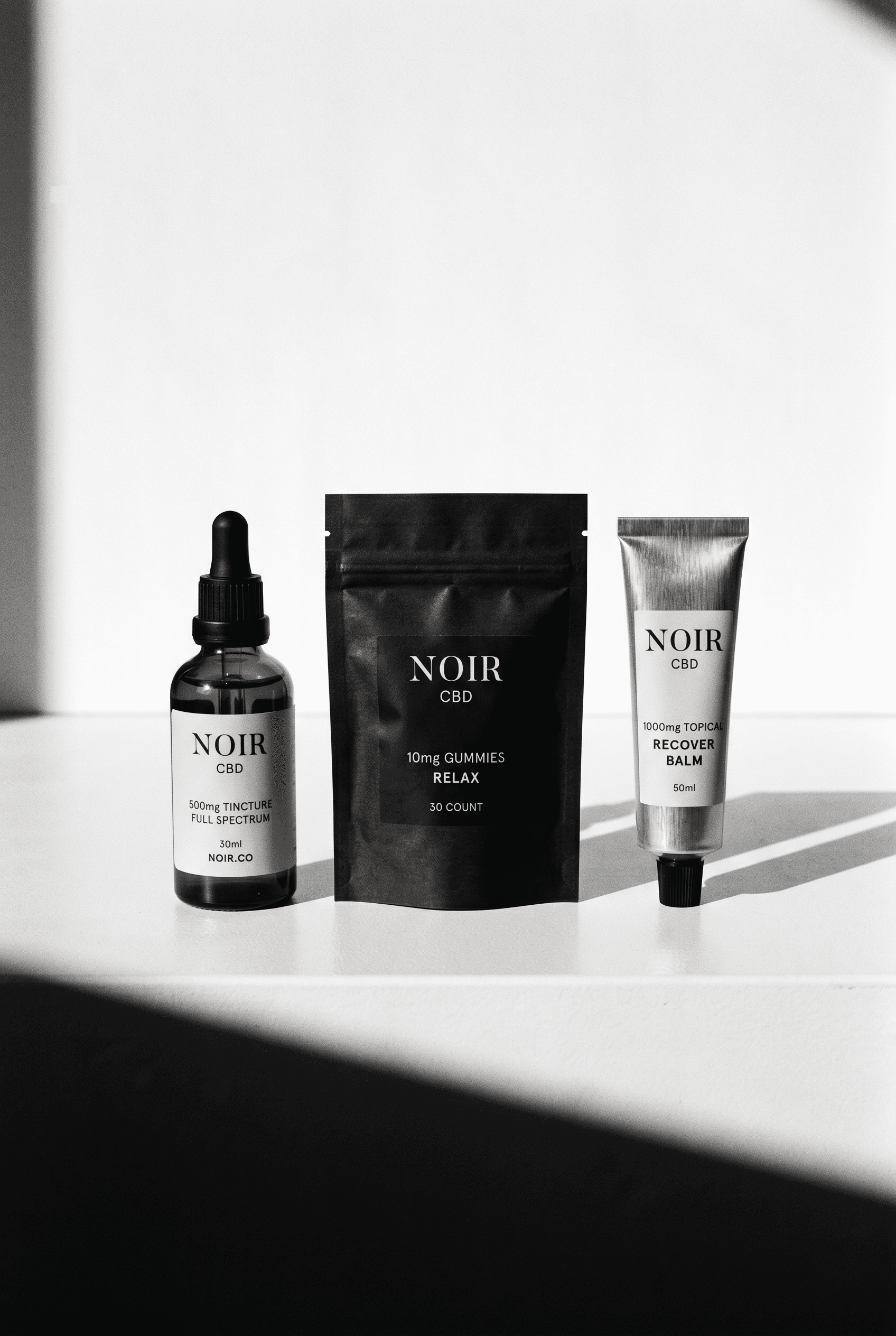
Clear mg-per-serving disclosure as a primary label element
Third-party testing verification (CoA QR code or batch number)
Clean typography that prioritizes information over decoration
Ingredient transparency (full INCI or ingredient list prominently accessible)
Packaging materials appropriate to the channel (glass for premium DTC, rigid plastic for pharmacy, barrier-sealed pouches for gummies)
For a broader guide to the supplement brand identity decisions that apply to CBD brands positioning in the wellness segment, see my guide to nutraceutical branding. For label design guidance applicable to CBD vitamin and supplement formats, see my guide to vitamin supplement label design.
FAQ: CBD Packaging Design
What must a CBD product label include?
Required elements depend on the product type. A CBD dietary supplement must include a Supplement Facts panel, the DSHEA disclaimer, ingredient list, net quantity, and manufacturer information. A CBD topical cosmetic must include an INCI ingredient list, net quantity, and manufacturer information. Both categories benefit from a CoA QR code for retail acceptance. Neither category can make disease claims.
Can I put "CBD" on my product label?
Yes. Identifying the product as containing CBD or hemp extract is permitted. The issue is the claims made in connection with the CBD ingredient. Claims that imply the CBD treats a medical condition can trigger FDA enforcement.
What is a Certificate of Analysis and why does it go on CBD packaging?
A Certificate of Analysis (CoA) is a third-party laboratory test result that confirms the CBD and THC content of the product and tests for heavy metals, pesticides, microbial contaminants, and residual solvents. It is not legally required by the FDA but is effectively mandatory for retail distribution and consumer trust. Including a QR code on the label that links directly to the CoA is standard practice in the legitimate CBD market.
What size font is required for CBD supplement labels?
The FDA requires that the "principal display panel" contain a statement of identity in type reasonably related to the most prominent printed matter on the panel. Mandatory label information on the information panel must use a minimum 1/16-inch font size. For small containers, specific size allowances apply. Working with a designer who has supplement label experience ensures these requirements are met without consuming excessive label space.
How is CBD topical packaging different from CBD supplement packaging?
CBD topicals are regulated as cosmetics, which means they do not require a Supplement Facts panel, a DSHEA disclaimer, or serving size information. They do require an INCI ingredient list, net quantity, and company contact information. The design implications are significant: CBD supplement labels have more mandatory information to accommodate than topicals, which affects the label layout and the amount of space available for brand communication.
I'm Tambi Haşpak, a brand strategist and creative director with an unfair advantage: I'm a pharmacist. I run a creative studio for life sciences, cosmetics, and supplements. 17 years. Exclusively. The CBD brands I have designed are compliant from the first version, retail-ready from the first print run, and built to earn trust in the most skeptical distribution channels. Book a call or send me an email.