
The anti-aging brands that win long-term are not the ones that promise the most. They are the ones that promise specifically what they can actually deliver, and then deliver it so clearly that consumers tell everyone they know.
The Anti-Aging Skincare Market and Its Brand Challenges
The global anti-aging skincare market reached $58 billion in 2023 and is projected to grow to $93 billion by 2030, according to Allied Market Research. It is one of the highest-value segments in the entire beauty industry, driven by an aging global population with increasing disposable income and increasing willingness to invest in appearance and skin health.
It is also the category with the highest claim inflation, the most regulatory scrutiny, and the greatest consumer skepticism. Decades of brands overpromising and underdelivering have created a consumer base that is simultaneously desperately seeking effective anti-aging solutions and deeply suspicious of any brand that claims to have found them.
The brand challenge is to navigate this contradiction: communicate genuine efficacy clearly enough to convert the consumer, without making claims so ambitious that they trigger regulatory action, consumer disappointment, or reputational damage when they are not fully delivered.
Getting this balance right requires understanding three things simultaneously: what the science of skin aging actually shows, what the regulatory frameworks permit, and what specific consumer segment you are targeting and what they specifically need to hear. Most anti-aging brand failures come from weakness in at least one of these three areas.
What the Science of Skin Aging Actually Supports
Understanding what anti-aging science actually supports is the foundation of responsible, credible anti-aging branding. The well-established science supports the following claims.
Topical retinoids (retinol, retinaldehyde, tretinoin) have the strongest published evidence base for visible improvement in fine lines, skin texture, and pigmentation. Multiple randomized controlled trials support their efficacy. The limitation is that efficacy is dose-dependent and time-dependent: lower concentrations available in cosmetics produce more modest effects than prescription-strength retinoids. Peptide complexes have evidence supporting their role in supporting skin firmness signals and reducing visible depth of wrinkles, though the evidence base is smaller and less consistent than for retinoids. Specific peptide complexes (Matrixyl, Argireline, copper peptides) have published clinical studies. Antioxidants including Vitamin C, niacinamide, and resveratrol have evidence supporting their role in photo-protection, brightening, and skin barrier support. Their direct "anti-aging" efficacy is more indirect (protecting against future damage) than direct (reversing existing changes). Hyaluronic acid has strong evidence for immediate and sustained hydration improvement, which has a visible plumping effect on fine lines. It does not reverse structural aging changes. SPF has the strongest evidence base of all for preventing future skin aging, because UV exposure is the largest controllable contributor to premature skin aging.
What the science does not support: any cosmetic product that "repairs DNA damage," "regenerates cells," "reverses aging," or "treats" fine lines and wrinkles. These are drug claims or unsupported efficacy claims that routinely attract regulatory action.
The Regulatory Framework for Anti-Aging Claims
Anti-aging claims are among the most closely scrutinized cosmetic claims by the FDA in the US and equivalent bodies in the EU, UK, and Australia.
In the US, the FDA has consistently challenged anti-aging claims that imply a change to the structure or function of the skin (which would make the product a drug). Permissible claims describe visible appearance changes: "visibly reduces the appearance of fine lines," "skin looks firmer and smoother," "visible improvement in skin texture." Impermissible claims describe actual biological changes: "rebuilds collagen," "repairs skin at the cellular level," "reverses aging."
In the EU, the EU Cosmetics Regulation and EFSA's cosmetics claims guidance are similarly focused on whether claims are truthful, substantiated, and not misleading. Claims that imply drug action or that cannot be substantiated by evidence are prohibited.
The FTC in the US has specifically noted that many anti-aging advertising claims lack adequate scientific substantiation, and has taken enforcement action against brands making specific anti-aging claims without the clinical evidence to support them.
According to the FDA, anti-aging skincare is among the top three cosmetic product categories for warning letters and enforcement actions annually. The regulatory risk is real, and it affects brands of all sizes.
Positioning Strategy for Anti-Aging Skincare
The positioning choices for anti-aging skincare can be organized around four distinct approaches, each with different target consumers and different claim strategies.
Science-forward positioning emphasizes ingredient specificity, clinical evidence, and measurable outcomes. This positioning is most effective for consumers who research skincare actively, who are ingredient-literate, and who respond to evidence-based communication. The brand communicates specific concentrations, specific mechanisms, and specific study references. The risk is that this positioning can feel cold or clinical without warmth and human connection. Longevity positioning reframes anti-aging as skin health optimization rather than age reversal. This approach avoids the loaded language of anti-aging and instead speaks to skin vitality, resilience, and longevity. It is increasingly popular because it sidesteps the negative associations of "anti-aging" marketing (ageism, unrealistic expectations) while maintaining the efficacy focus. The consumer for this positioning is typically more progressive, more body-positive, and more sophisticated in their relationship with aging. Luxury positioning frames the anti-aging routine as a ritual of self-investment and self-respect. The efficacy is still the foundation, but the communication prioritizes the experience: the texture, the ritual, the sensory pleasure, the act of taking care of yourself seriously. This positioning works well for premium price points where the consumer expects both results and an exceptional sensory experience. Age-positive positioning is the most culturally current approach: brands that celebrate aging while offering products that support skin health and appearance. These brands do not promise to make consumers look younger. They promise to support skin that looks healthy, vital, and expressive at every age. This positioning is commercially powerful because it creates genuine brand affinity among consumers who are exhausted by anti-aging marketing that implies aging is something to fight.
Comparison Table: Anti-Aging Claim Types and Regulatory Risk
Claim Type | Example | Regulatory Status | Risk Level |
|---|---|---|---|
Appearance change | "visibly reduces fine lines" | Permissible (cosmetic) | Low |
Structure/function change | "rebuilds collagen" | Impermissible (drug claim) | High |
Biological repair | "repairs DNA damage" | Impermissible (drug claim) | High |
Hydration/texture | "plumps and smooths skin" | Permissible (cosmetic) | Low |
Protection | "helps protect against future signs of aging" | Permissible (cosmetic) | Low |
Clinical substantiation | "proven to reduce fine lines by 27% in 8 weeks" | Permissible if substantiated | Medium (requires study) |
Disease treatment | "treats wrinkles" | Impermissible (drug claim) | Very High |
The Language of Anti-Aging: What Works and What Gets You in Trouble
The specific language choices in anti-aging skincare branding have outsized commercial and regulatory importance. The same product benefit can be expressed in ways that are both compelling and compliant, or in ways that are compelling but create regulatory exposure.
The key linguistic framework is: describe what the consumer will see and experience, not what is happening biologically inside the skin. "Your skin will look smoother and firmer" is describing a visible outcome. "Your skin will produce more collagen" is describing a biological mechanism, which is a drug claim.
Words and phrases that consistently get anti-aging brands into regulatory trouble: reverses aging, repairs, regenerates, rebuilds, restores (when used to imply cellular or structural repair), treats, fights (when used to imply treatment of a skin condition as disease).
Words and phrases that communicate anti-aging efficacy within regulatory limits: visibly reduces, appears more, looks more, skin feels, in clinical testing skin appeared, visible improvement in, supports the appearance of.
The most effective anti-aging copywriting uses specific outcome language ("visible reduction in fine line depth"), time references ("in four weeks"), and measurement language ("in a clinical study with X participants") while staying entirely within the appearance-description framework.
The Consumer Over 40: What They Actually Want
The consumer specifically targeted by most anti-aging skincare is the woman over 40, and most anti-aging marketing misunderstands her at a fundamental level. The assumption most brands make is that this consumer wants to look younger. The reality is more nuanced: she wants her skin to look and feel healthy, vital, and as good as she feels internally.
This distinction matters enormously for brand positioning. Anti-aging brands that position around looking younger are implicitly telling their consumer that how she currently looks is a problem. This is both ineffective (most women over 40 reject the premise that aging is a problem) and commercially limiting (it creates a proposition that becomes more implausible with age rather than more compelling).
Anti-aging brands that position around skin health, vitality, and feeling confident in your skin at every age speak to what the consumer actually wants and build brand relationships that strengthen over time rather than becoming less credible.
The consumer over 40 is also significantly more ingredient-literate than younger consumers, more skeptical of marketing claims, and more loyal to brands she trusts. According to Kantar's 2024 Beauty Consumer Insights, women over 45 have the highest brand loyalty scores in any skincare consumer segment, and they attribute their loyalty to brands that "delivered what they promised" rather than to brands with high marketing spend. The investment required to earn this consumer is in efficacy and honest communication, not in marketing volume.
Building Clinical Credibility in Anti-Aging Branding
Given the efficacy skepticism in the anti-aging category, clinical credibility is the most powerful trust-building tool available to anti-aging brands. Clinical credibility comes from: specific ingredient concentrations (not "contains retinol" but "0.3% encapsulated retinol"), third-party testing with disclosed methodology and results, dermatologist input in formulation or endorsement, and consistent, honest communication about what the product does and does not do.
The anti-aging brands with the most durable consumer trust in the market are those that have been consistently honest about both the capabilities and limitations of their products. A brand that says "this will visibly reduce fine lines with consistent use over eight weeks, and it will not reverse deep structural changes" builds more trust than a brand that promises transformation and then fails to deliver.
This honest communication approach requires confidence: confidence in the product's actual performance, confidence in the value of what it genuinely delivers, and confidence that the consumer will respond to honesty better than to overclaim. In my experience, this confidence is always justified. The consumer who trusts your brand because you have been honest with her is a significantly more valuable long-term asset than the consumer who purchased once because of an overclaimed promise.
Internal Links
Anti-aging brands that are also navigating clinical positioning will find clinical skincare branding directly applicable to their claim strategy and credibility building. For the ingredient communication layer of anti-aging branding, skincare ingredient marketing covers how to build ingredient authority that converts without over-claiming. Brands developing a premium anti-aging positioning should also review luxury skincare branding for the visual and experiential standards that premium anti-aging consumers expect.
FAQ: Anti-Aging Skincare Branding
Q: Can an anti-aging brand use the term "anti-aging" without regulatory issues?
A: The term "anti-aging" itself is not regulated as a drug claim in most markets when used generally as a product category descriptor. The regulatory exposure comes from specific claims about what the product does: reversing aging, rebuilding collagen, repairing cellular damage. "Anti-aging moisturizer" as a product description is typically permissible. "Anti-aging moisturizer that rebuilds your collagen" is a drug claim.
Q: How do you prove anti-aging claims without a clinical trial?
A: Consumer perception studies and in-vitro ingredient studies are the most common substantiation approaches for anti-aging claims at accessible investment levels. A consumer perception study with 30 or more participants using validated assessment methods can support claims like "90% of participants saw visible improvement in skin texture." This is not equivalent to a randomized controlled trial, but it is legitimate substantiation for appearance-based cosmetic claims when properly disclosed.
Q: What should anti-aging brands do about the cultural shift away from anti-aging language?
A: The shift is real and commercially significant. Brands that have built their entire identity around "fighting aging" or "turning back the clock" face an increasingly difficult positioning in a market where more consumers reject the premise. The strategic response is to evolve the brand positioning toward skin health, vitality, and longevity language, which captures the same consumer desire for effective skincare without the cultural baggage of anti-aging framing.
Q: Is there a market for explicitly anti-aging products, or should brands pivot to age-positive language?
A: Both markets exist and will continue to exist. A significant consumer segment actively wants anti-aging products and responds to anti-aging positioning. The trend toward age-positive language is strong but is not yet universal. The strategic question is which consumer segment your brand is built for, and whether your positioning language authentically speaks to that consumer.
Q: How important is packaging format in anti-aging skincare?
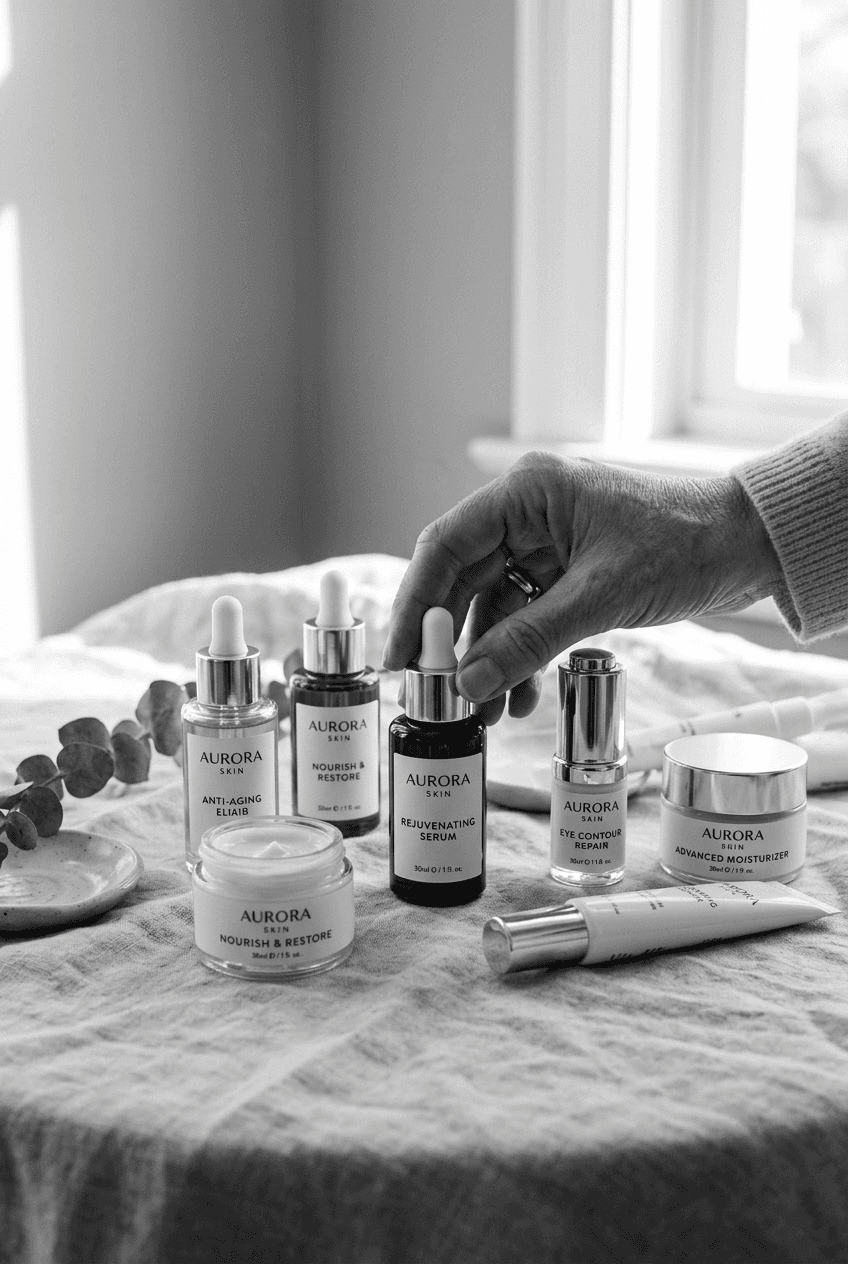
A: Very important, for two reasons. First, the consumer over 40 often has specific functional requirements: easy-to-open caps, pump dispensers that allow controlled dosing, tubes that can be used to the last drop. Packaging that is beautiful but difficult to use creates a negative brand experience. Second, anti-aging skincare packaging communicates quality and efficacy before the product is even opened. Premium airless pump packaging signals preservation of active ingredients. This is not just marketing: airless packaging genuinely extends the efficacy of certain active ingredients by reducing oxidation.
Q: Should anti-aging brands use models of aging faces or aspirational younger faces?
A: The answer depends on your specific brand positioning, but the trend is clear: imagery that shows real, specific skin improvement in consumers of the appropriate age performs better than aspirational young-face imagery for the anti-aging consumer. The consumer over 40 does not see herself in a twenty-five-year-old face. Imagery that shows genuinely beautiful, healthy mature skin after consistent product use is both more honest and more commercially effective for this consumer.
I am Tambi Haşpak, a brand strategist and creative director with an unfair advantage: I am a pharmacist. I run a creative studio for cosmetics, supplements and beyond. Seventeen years in this category. Exclusively.