
The best men's skincare brands do not brand for masculinity. They brand for a specific man at a specific moment in his relationship with his own skin, and that specificity is what builds the loyalty that generic grooming brands cannot achieve.
The State of Men's Skincare Branding
The global men's skincare market is projected to reach $18.9 billion by 2027, growing at a CAGR of 5.4% according to Statista's 2024 Beauty Industry Report. This growth is driven by a fundamental cultural shift: men in their 20s, 30s, and 40s are increasingly treating skincare not as a luxury or an indulgence but as a practical routine, equivalent to exercise or nutrition, something you do because it works and because you deserve to feel good in your skin.
This shift is creating a genuine commercial opportunity. But the brands capturing this opportunity most effectively are not the ones that shout the loudest about masculinity. They are the ones that have built specific, credible brand identities that speak to what their target consumer actually wants from a skincare brand.
Most men entering skincare are not looking for a brand that makes them feel more masculine. They are looking for a brand that makes them feel like their interest in skincare is legitimate, normal, and worth investing in. The brand's job is to normalize and elevate the category, not to prove credentials.
The Positioning Spectrum in Men's Skincare
Men's skincare brands occupy a positioning spectrum from hyper-masculine on one end to gender-neutral on the other. Understanding where on this spectrum your brand should sit is the first strategic decision, and it should be driven by your specific target consumer, not by what you personally prefer aesthetically.
Hyper-masculine positioning uses dark colors, angular design, military or athletic references, and product names that emphasize performance and toughness. This positioning speaks to men who are self-conscious about skincare and need the brand to signal that their grooming is still within acceptable masculine norms. It has a clear consumer and a clear commercial logic. The risk is that it reads as dated and insecure to a growing segment of men who have no anxiety about their skincare routine. Performance positioning frames skincare as functional optimization, comparable to sports nutrition or fitness equipment. The communication focuses on efficacy, ingredients, and measurable outcomes. This positioning appeals to men who respond to science and evidence rather than aesthetic appeal. It is the fastest-growing positioning segment in men's skincare because it frames grooming as rational rather than indulgent. Premium lifestyle positioning frames skincare as part of a broader aesthetic and lifestyle sensibility. The visual identity is refined, the packaging is object-quality, and the communication is confident without being ostentatious. This positioning appeals to men who are sophisticated consumers across multiple categories and simply want the same quality in their skincare that they apply to their clothing, food, and interior design. Gender-neutral positioning frames the brand as not specifically for men, but with the understanding that men are a significant part of the consumer base. This approach is increasingly common as gender fluidity becomes more culturally mainstream and as brands realize that a gender-neutral positioning does not cost them male consumers but does open the brand to non-binary and female consumers.
How to Choose Your Men's Skincare Positioning
Your positioning choice should be driven by three factors: your specific target consumer, your competitive context, and your brand's authentic voice.
The specific target consumer is the most important factor. A brand built for men in their 40s who are dealing with aging skin for the first time has a different positioning need than a brand built for men in their 20s who are managing acne and oiliness. The 40s consumer wants efficacy, credibility, and understated quality. The 20s consumer may respond to performance framing, digital community, and ingredient transparency. Serve the specific consumer, not an abstract "man."
The competitive context matters because positioning is always relative. If your category is dominated by hyper-masculine brands, a performance or premium lifestyle positioning creates immediate differentiation. If your category is dominated by gender-neutral or clinical brands, a more confident masculine positioning might create useful distinctiveness.
Your brand's authentic voice is the filter that determines what you can credibly own. A brand founded by a pharmacist specializing in skin health has authentic credibility in performance and clinical positioning. A brand founded by a former professional athlete has authentic credibility in performance positioning. A brand founded without a specific personal story needs to build its authentic voice through a specific consumer insight rather than a founder credential.
Naming for Men's Skincare Brands
Men's skincare brand naming follows different conventions than women's skincare naming, and understanding these conventions helps you navigate them deliberately rather than accidentally.
Names that work well tend to be: short and direct (men generally respond better to brevity than to evocative multi-word names), functional or personal (names that describe what the brand does or connect to the founder's identity), or meaningfully distinctive (names that have a specific meaning or reference that connects to the brand's positioning without being generic).
Names that fail in men's skincare tend to be: excessively referencing toughness or masculinity through metaphor (Ironclad, TitanSkin, ForceGrooming), so clinical that they feel pharmaceutical rather than personal, or so gender-neutral that they give the male consumer no clear signal that this brand is designed with him in mind.
The naming decision also has implications for range architecture. A single-word brand name works well for a focused product range. A compound or descriptive name may limit range extension as the brand grows beyond its initial product territory.
Packaging Design for Men's Grooming
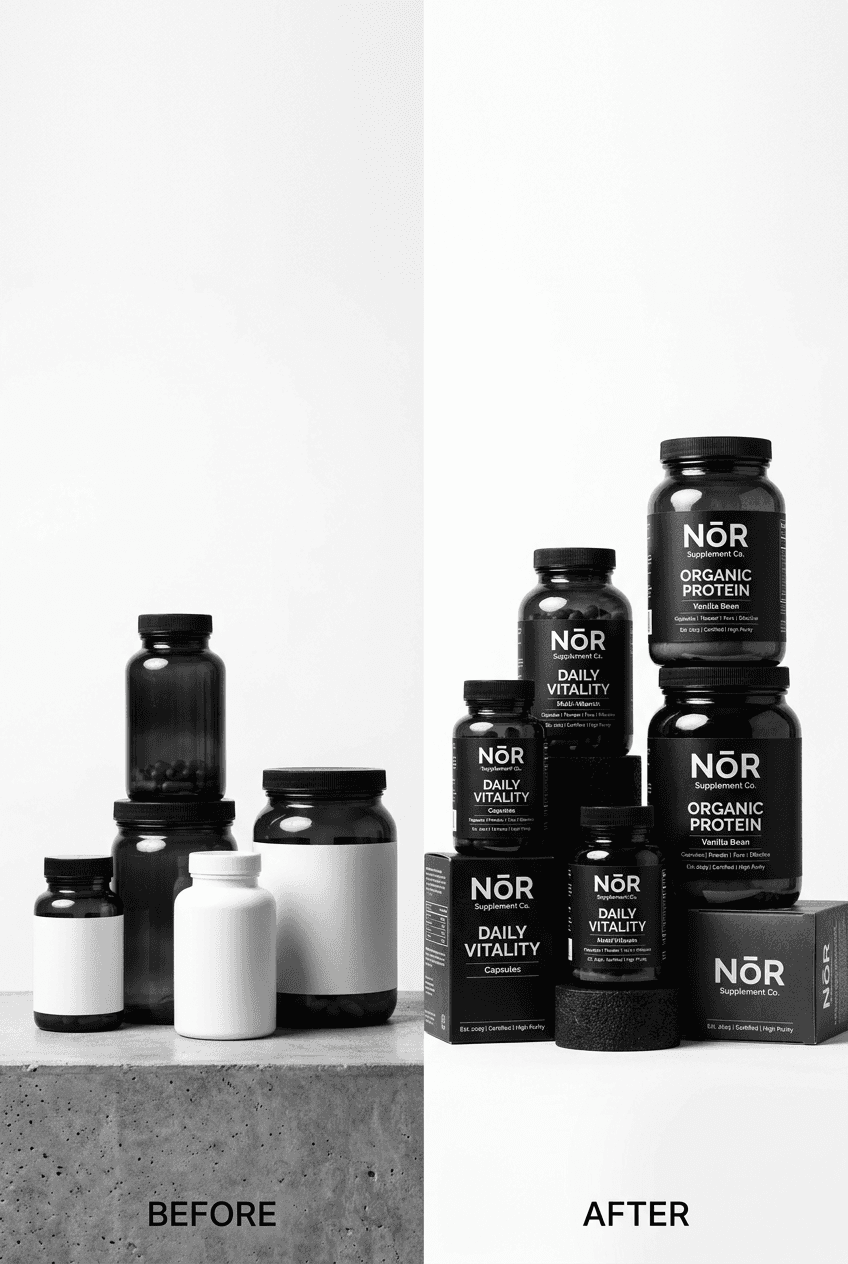
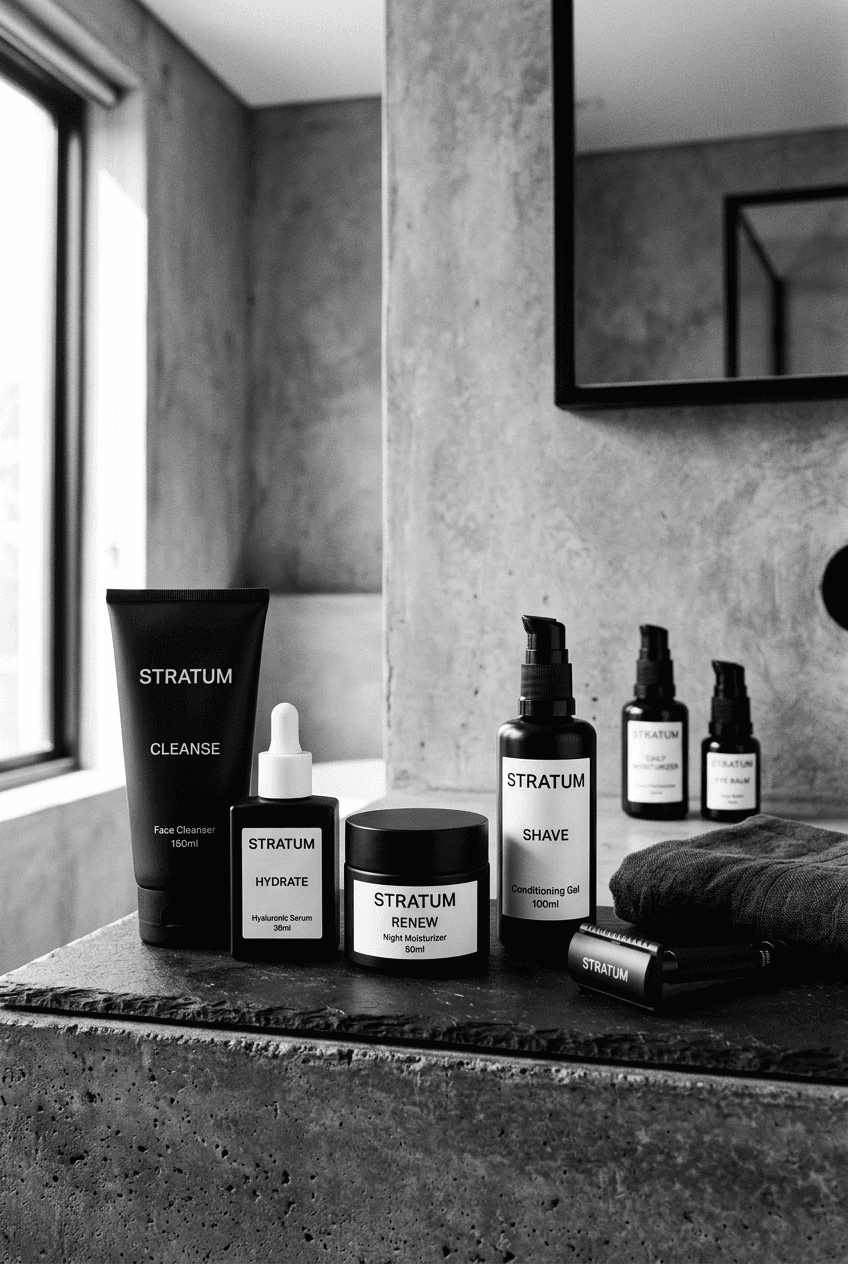
Packaging for men's skincare is held to a specific functional standard by the target consumer: men generally have a higher tolerance for basic packaging than women but a strong negative reaction to packaging that feels feminine, fragile, or fussy. The packaging should communicate: this is a serious product that does serious things, it is efficient to use, it will not embarrass you in your bathroom.
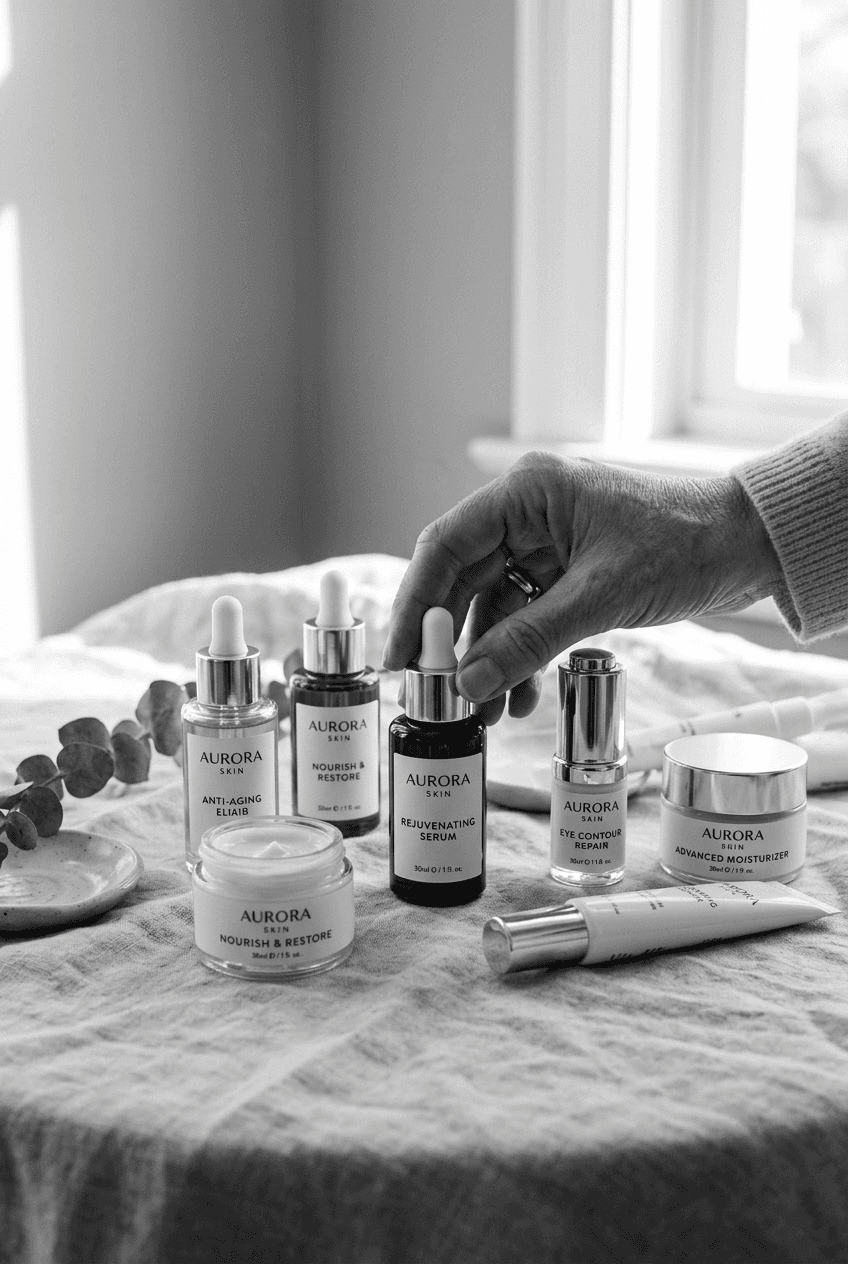
Format choice matters significantly. Tubes communicate clinical efficiency. Pump bottles communicate volume and value. Jars communicate richness (though they can feel feminine if not designed carefully). Dropper bottles communicate precision and prestige. The format you choose should match both the product's texture and your brand's positioning. Color is the most loaded design variable in men's skincare. Dark colors (navy, charcoal, black, forest green) signal masculinity and seriousness. Light colors (white, cream, pale grey) signal clinical cleanliness and premium restraint. Muted or earthy tones (warm grey, stone, warm white) signal natural and lifestyle positioning. Highly saturated or pastel colors risk alienating male consumers unless your brand is very specifically positioned in the premium lifestyle space. Typography should be clean, confident, and highly legible. Heavy-weight sans serifs with generous spacing are the most common and most effective choice. Decorative or script typography almost never works for men's skincare unless it is used very specifically and against a very strong overall brand design. Information architecture on men's skincare packaging should prioritize the benefit claim and the key active ingredient over brand story and sensory language. Men consumers researching skincare respond to specificity: "3% niacinamide for visible pore reduction" converts better than "our botanically-inspired pore treatment."
Comparison Table: Positioning Approaches in Men's Skincare
Positioning | Target Consumer | Visual Identity | Communication Style | Risk |
|---|---|---|---|---|
Hyper-masculine | Self-conscious beginner | Dark, tactical, angular | Performance language, minimal | Feels dated to sophisticated consumers |
Performance | Evidence-driven, active | Clean, functional, scientific | Ingredient-led, results-focused | Can feel cold without brand humanity |
Premium lifestyle | Aesthetic-driven, affluent | Refined, minimal, object-quality | Confident, understated | Price-sensitive consumers may not convert |
Gender-neutral | Inclusive, sophisticated | Clean, universal | Benefit-focused, no gender markers | May not signal clearly to male consumers |
The Role of Ingredient Communication in Men's Skincare
Men entering the skincare category are increasingly ingredient-informed, driven by YouTube, Reddit, TikTok, and the wider cultural conversation about skincare science. This creates a specific communication opportunity: brands that communicate their ingredients specifically and accurately build faster trust with male consumers than brands that communicate through vague benefit claims.
According to a 2024 Mintel study on men's skincare attitudes, 64% of male skincare consumers in the US, UK, and Australia say they research specific ingredients before purchasing, and 58% say they would pay more for a brand that clearly explains how its ingredients work. This is a higher ingredient-research behavior than comparable women's skincare consumer data.
The implication for brand identity and packaging design is that ingredient communication deserves prominent positioning on packaging and website. Not the full INCI list (which is a regulatory requirement but not a communication tool), but the key active ingredients at their concentrations with their specific benefits. A moisturizer that says "Hyaluronic Acid 1% + Niacinamide 5% for deep hydration and pore reduction" converts better with this consumer than a moisturizer that says "Advanced moisture complex for healthy-looking skin."
Men's Skincare in Pharmacy Versus Specialty Retail Versus DTC
Distribution channel shapes positioning requirements significantly in men's skincare. The pharmacy channel requires clinical credibility and efficacy positioning. The specialty beauty retail channel (Space NK, Sephora, cult beauty) requires premium visual identity and brand story. The DTC channel requires content strategy, community building, and conversion-optimized packaging photography.
Many men's skincare brands start DTC and later seek pharmacy placement, which requires a packaging upgrade rather than a rebrand: the design that converts online needs to also perform under pharmacy lighting, on pharmacy shelving, alongside clinical-looking competitors. Planning for eventual multi-channel distribution from the start means designing packaging that works in all three contexts rather than optimizing only for the launch channel.
Internal Links
For brands positioning in the clinical space within men's skincare, clinical skincare branding covers the specific credibility signals that apply. Brands developing ingredient-led communication for their grooming range will find skincare ingredient marketing directly relevant. The broader skincare brand launch process is covered in how to brand a skincare line, which applies equally to men's and women's positioning.
FAQ: Men's Skincare Branding
Q: Should a men's skincare brand use the word "men" in its name?
A: It depends on your positioning strategy. Explicitly masculine naming ("for men") can create clear initial consumer identification but limits the brand's ability to expand to a broader audience later. Many successful men's skincare brands avoid explicit masculine naming and instead build their masculine positioning through visual identity and communication without naming it directly. The product and brand speak for themselves without the label.
Q: How do you avoid the hyper-masculine cliche while still being clearly positioned for men?
A: By being specific rather than generic. Cliche masculinity (tactical, dark, aggressive) is generic. Specific masculinity (the practical, evidence-driven man who wants his skin to work as hard as the rest of him) is not a cliche. The specificity of your consumer portrait is what prevents the cliche: when you are building a brand for a real, specific person rather than an abstract "man," the brand naturally avoids the caricature.
Q: What is the biggest mistake men's skincare brands make with their packaging?
A: Over-indexing on dark, heavy, masculine aesthetic to the point where the brand looks more like a hardware brand than a skincare brand. This happens when the design brief is "masculine" rather than "for a specific man who wants this specific thing." Great men's skincare packaging is confident and considered, not heavy and aggressive.
Q: How do you convert a male consumer who is new to skincare?
A: Make the entry point simple and the result specific. Men new to skincare want to know: what do I use first, what will it do, how quickly will I see results? The brand's job is to reduce the barrier to starting, not to impress with the complexity of the range. A simple starter recommendation, specific benefit claims, and clear usage instructions convert the new consumer. A full product range with no clear entry point does not.
Q: Is there a market for premium men's skincare, or do men mainly want value?
A: There is a strong and growing market for premium men's skincare, particularly among men who already spend significantly on other quality goods (clothing, watches, food). According to the NPD Group's 2024 men's grooming report, the premium men's skincare segment grew 18% year over year, significantly outpacing the mass market segment. Men who are motivated to invest in skincare want quality. They do not want to spend on something that does not perform.
Q: Should men's skincare brands use male models or photography of male faces?
A: Imagery of real, specific skin outcomes on men is more effective than generic aspirational male photography. Show what the product does to real skin, not just what the ideal consumer looks like. Men buying skincare for practical reasons respond to practical evidence. Photography that shows before-and-after skin improvement, or that shows the product in use context, converts more effectively than fashion-style portraiture.
I am Tambi Haşpak, a brand strategist and creative director with an unfair advantage: I am a pharmacist. I run a creative studio for cosmetics, supplements and beyond. Seventeen years in this category. Exclusively.