
When your formulation is identical to fifty other products on the market, your brand is the only thing that makes your product worth paying more for. And it absolutely can be.
What Is White Label Supplement Branding?
White label supplement branding is the process of creating a distinct brand identity, packaging system, and market positioning for a supplement product that is manufactured by a third-party contract manufacturer to a standard or customizable formulation. The product itself is not proprietary. What becomes proprietary is the brand, the positioning, the visual identity, and the consumer relationship built around the product.
The white label supplement market is enormous and growing. According to Grand View Research, the global dietary supplement contract manufacturing market reached $28.4 billion in 2023 and is projected to grow at 9.8% annually through 2030. This growth is driven largely by brands and individuals entering the category via white label, which requires no formulation development investment and relatively low minimum order quantities.
The commercial challenge is equally clear: when anyone can launch the same product as you with the same formulation, the only durable competitive advantage is a brand that consumers prefer, trust, and return to. This is not a consolation prize for not having a proprietary formulation. It is the actual category game, and it is a game that sophisticated brand strategy wins decisively.
Why Most White Label Supplement Brands Fail to Build Brand Equity
The most common failure mode in white label supplement branding is treating the brand as secondary to the product. This manifests as: choosing a generic supplement brand name, designing packaging that looks like every other product in the category, making ingredient claims as the primary consumer communication, and competing primarily on price.
This approach produces brands that are interchangeable with their competitors. A consumer who finds your omega-3 on Amazon searches for a cheaper option next purchase because you have given them no reason to prefer your brand specifically. Without brand preference, you are always one price-drop away from losing your customer.
The brands that build genuine equity in the white label supplement space invest in brand strategy before, not after, the packaging design. They define: who specifically they are for, what emotional and functional promise they make, what their distinct visual identity will be, and how they will communicate in a way that creates genuine preference. This upfront strategy investment is what converts a white label product into a real brand.
The Four Brand Pillars of Successful White Label Supplement Brands
Pillar 1: A Specific Consumer
The most successful white label supplement brands are built for a very specific consumer, not for everyone who might want a supplement. "People interested in health" is not a consumer. "Women over 40 managing perimenopause who are already informed about supplements and want transparency without being condescended to" is a consumer. This specificity allows the brand's visual identity, tone of voice, and communication to resonate deeply with the specific consumer rather than broadly and blandly with everyone.
The specificity pays off commercially because specific brands build specific communities. A brand that speaks directly to a defined consumer earns referrals within that consumer community, social media amplification that reaches similar consumers, and retention rates significantly above category average because the consumer feels the brand is for them.
Pillar 2: A Differentiating Positioning
In a market where formulations are identical, positioning differentiation is everything. Differentiation in supplements can come from: the consumer segment you serve (women's health, active aging, performance athletes, children), the philosophy behind the brand (minimal ingredients, whole food sources, evidence-based formulation, environmental sustainability), the format innovation (innovative delivery formats, lifestyle integration), or the communication approach (radical transparency about what is in the product and why, clinical rigor without clinical coldness).
The positioning must be specific enough to be different from direct competitors and broad enough to accommodate a full product range. The most common positioning mistake is choosing a positioning that sounds good as a marketing statement but does not actually guide product selection, design, or communication. A positioning that cannot be used to make real brand decisions is not a positioning.
Pillar 3: A Proprietary Visual System
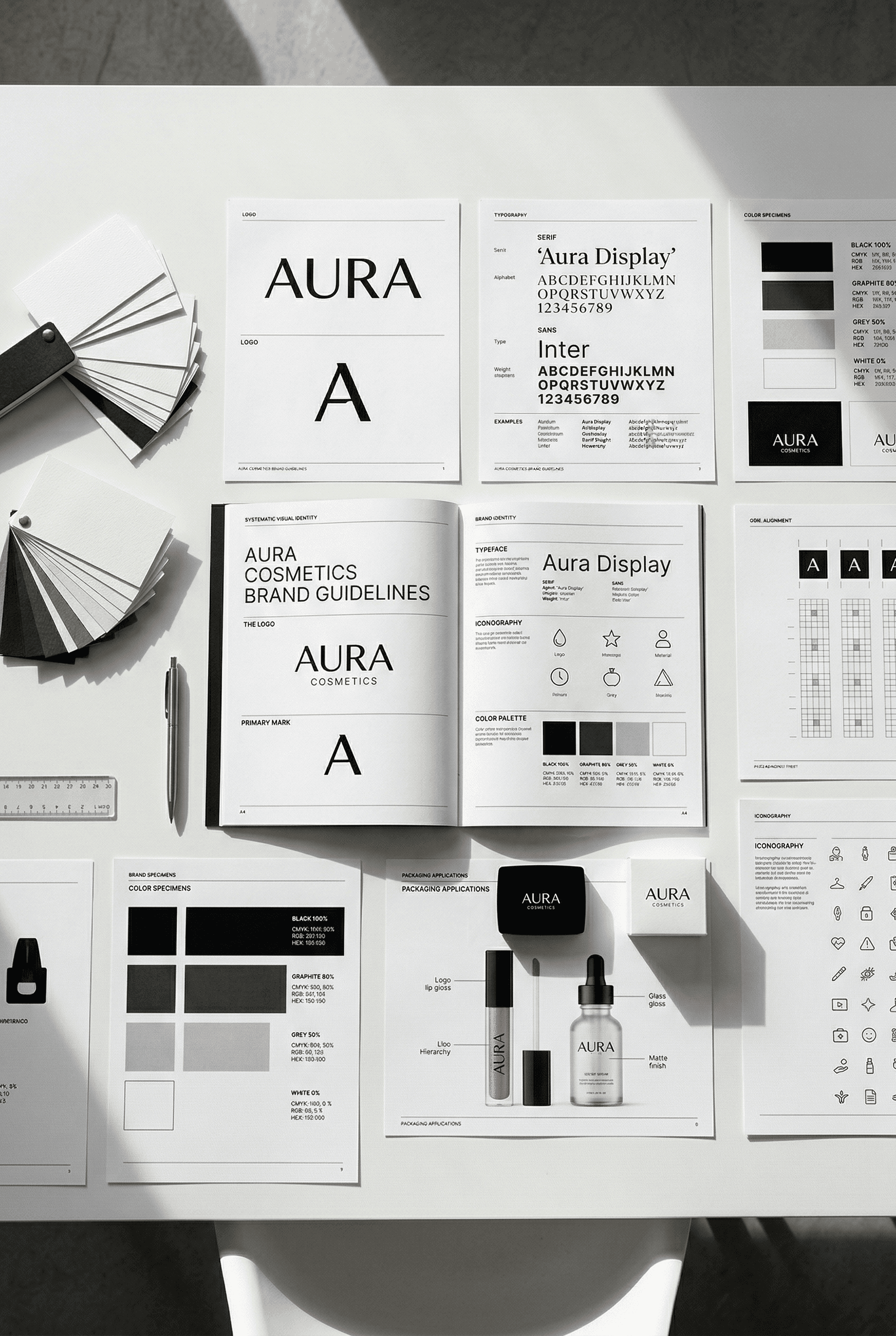
The visual identity of a white label supplement brand is the primary tool for making a generic product feel proprietary. This starts with the brand name (which should feel distinctive, not generic), continues through the logo design, and extends through the complete packaging system including packaging format, label design, color palette, and typography.
The visual system should be designed to create immediate recognition and preference on shelf and on screen. In supplement categories where consumers are comparing multiple products on an Amazon search results page or a pharmacy shelf, the brand that is most immediately recognizable and most visually distinct will be considered first.
Pillar 4: A Compelling Brand Story
The brand story is the why behind the brand: the reason it exists, the problem it was created to solve, and the human story that makes it trustworthy. White label supplement brands without compelling brand stories feel like commercial vehicles. White label supplement brands with genuine, specific brand stories feel like companies that actually care about their consumer.
Brand stories in supplements do not need to be dramatic to be compelling. "A pharmacist who was frustrated with the quality and transparency of mainstream supplements and decided to build a range she would actually recommend to her patients" is a compelling brand story. It is specific, credible, and personally motivated. The specificity is what makes it believable.
Comparison Table: Generic White Label vs. Brand-Led White Label
Element | Generic White Label | Brand-Led White Label |
|---|---|---|
Product differentiation | None (same formulation) | None required (brand provides differentiation) |
Consumer | Undifferentiated | Specific, well-defined |
Name | Generic descriptor | Distinctive, ownable |
Packaging | Functional, category-standard | Distinctive, brand-expressive |
Pricing | Race to bottom | Premium justified by brand value |
Retention | Low (price-driven switching) | High (brand preference drives loyalty) |
Amazon positioning | Undercut competitor | Seek direct channel dominance |
Long-term equity | None | Significant asset value |
Naming Your White Label Supplement Brand
Naming is the highest-leverage brand investment you make in white label supplements, and it is often where the least thinking happens. The name is the first signal of what your brand is, and it has to work across a product range, across consumer touchpoints, and ideally across markets.
Good supplement brand names avoid three common failure patterns. First, generic descriptor names: "PureHealth," "NutriMax," "VitaCore" are forgettable, undifferentiable, and legally difficult to protect because they describe the category rather than the brand. Second, overly clinical or pharmaceutical-sounding names that create the wrong register for consumer supplement brands. Third, names that are too narrowly themed to one product category (a name that only works for protein supplements cannot extend to a broader health range).
Names that work well in the supplement category tend to have: a clear phonetic distinctiveness (they sound different from competitors), a meaningful or evocative quality that connects to the brand's positioning, the ability to extend across a full product range, and enough distinctiveness to be protectable as a trademark.
Packaging Design That Makes White Label Feel Proprietary
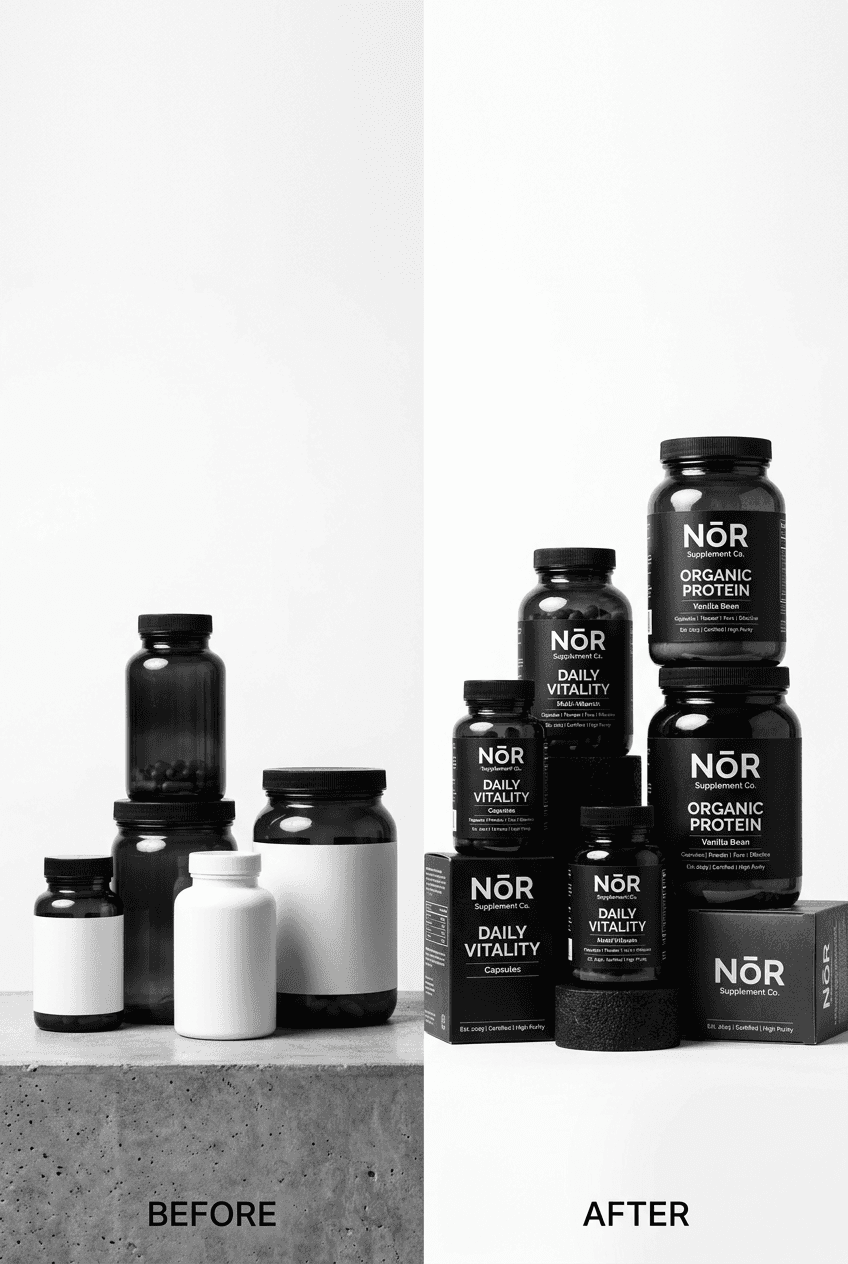
Packaging design is where the transformation from generic to brand happens visually. The packaging of a white label supplement brand must accomplish in two seconds what a proprietary formulation accomplishes through ingredient innovation: it must create immediate consumer preference.
The elements that create this preference are: a distinctive color palette that stands out in the category (many supplement categories default to similar color palettes, which means a brand with a genuinely distinctive color approach immediately stands out), a label design that communicates the brand's consumer specificity (the design should make the target consumer feel the product is for them), information architecture that balances claim communication with brand story, and material and finish choices that signal the brand's quality positioning.
For white label supplement brands competing in e-commerce, the packaging photography is as important as the packaging itself. Product photography should be lit and styled to create the impression of a premium, considered brand rather than a commodity product. The same supplement in the same packaging can appear dramatically more or less premium based on the quality of its photography.
Claims Strategy for White Label Supplement Brands
Claims management is the regulatory-critical element of white label supplement branding, and it is where pharmacist knowledge becomes particularly valuable. Supplement claims in the US are governed by the FDA's Dietary Supplement Health and Education Act (DSHEA). In the EU, supplement health claims are governed by EFSA regulations. In the UK and Australia, different frameworks apply.
The strategic claims decisions for a white label supplement brand include: which structure/function claims to use (and these must be truthful, substantiated, and include required DSHEA disclaimer language), how to use authorized health claims where they are applicable, how to differentiate claims communication from competitors who are using identical claims for identical formulations, and how to build a claims hierarchy that leads with the most compelling evidence-backed claim while supporting it with secondary claims.
The mistake I see most often is brands using exactly the same claims language as their white label competitors, which makes their claims indistinguishable. The opportunity is to communicate the same underlying evidence in more specific, more memorable, more consumer-resonant language within the regulatory constraints.
Building a White Label Supplement Brand for Direct Selling
Many white label supplement brands are built specifically for direct-to-consumer selling through the brand's own website, social media, and email channels. This approach offers significantly higher margins than wholesale or marketplace distribution, but requires the brand to do more of the consumer acquisition and retention work.
For DTC white label supplement brands, the brand investment pays off particularly clearly because the consumer's entire relationship with the brand is mediated by the brand's own channels. The brand story, the visual identity, the communication style, and the consumer community are all within the brand's control.
The DTC supplement brand that invests in a distinctive visual identity, a compelling brand story, and a genuinely specific consumer positioning builds a direct consumer relationship that is extremely difficult for commodity competitors to replicate. A consumer who subscribes to a DTC supplement brand they love and trust is not going back to Amazon to comparison shop.
Internal Links
White label supplement brands that want to understand the broader supplement branding landscape will find food supplement branding useful for category-level strategic context. For brands considering the supplement brand launch process, how to launch a supplement brand covers the full launch checklist. Brands specifically working on label design within their white label brand development should review vitamin supplement label design for the technical specifications of supplement label development.
FAQ: White Label Supplement Branding
Q: Can a white label supplement brand build a premium positioning?
A: Yes, and many do. Premium positioning in the supplement category is not determined by the formulation (which is often the same as lower-priced competitors). It is determined by the brand positioning, visual identity, packaging quality, and consumer experience. A white label supplement brand with a genuine premium positioning, high-quality packaging, a specific consumer story, and excellent customer experience can sustain premium pricing indefinitely as long as the brand value justifies the price premium in the consumer's perception.
Q: How much does it cost to brand a white label supplement properly?
A: A complete brand identity and packaging design for a white label supplement launch typically ranges from $8,000 to $25,000 depending on the range size and the depth of strategic work included. This investment, spread over the commercial life of the brand, is almost always a fraction of the revenue impact of having a brand that converts versus one that does not. For perspective: a supplement brand selling 1,000 units per month at even $5 higher margin due to brand premium generates $60,000 per year in margin improvement, which recovers the branding investment in months.
Q: Does using a white label manufacturer limit my brand building?
A: Not at all. The consumer does not know or care whether you manufactured the formulation yourself or sourced it from a contract manufacturer. What the consumer cares about is whether they trust your brand and whether your product delivers what it promises. White label supplement brands have grown to become category leaders in their niches because the brand work, not the manufacturing, is what drives consumer preference.
Q: What is the difference between white label and private label supplements?
A: White label supplements use a standard formulation made by the manufacturer that any brand can apply their label to. Private label supplements are formulated specifically for a single brand, typically with some degree of customization. Many contract manufacturers offer both options, with private label requiring higher minimum order quantities and development costs. From a branding perspective, the strategy is the same: the brand, not the formulation, is the primary differentiator.
Q: How do I make my supplement brand look established if I am just launching?
A: Through the quality and coherence of your brand identity. A new brand with a thoroughly developed visual identity, a compelling brand story, high-quality packaging, and professional photography can look and feel as established as a brand that has been in the market for years. Conversely, a brand that has been in the market for years with poor brand development can look like a startup. Brand maturity is a perception, and perception is built through the quality of brand expression, not through years of existence.
I am Tambi Haşpak, a brand strategist and creative director with an unfair advantage: I am a pharmacist. I run a creative studio for cosmetics, supplements and beyond. Seventeen years in this category. Exclusively.