
The supplement market moves at 182 billion dollars globally. But a poorly launched supplement brand will never reach profitability because of compliance confusion, label mistakes, and positioning mismatch. Get the fundamentals right first.
Stage One: Validate Your Concept and Define Your Formulation Brief
Before you spend money on formulation or branding, validate that your supplement concept has real consumer demand. Many founders develop supplements based on personal experience or market observation, only to discover consumers will not pay for the solution. I always start with three things: market research, target consumer clarity, and a realistic formulation budget.
Market research means understanding the existing landscape. Are there competitors already addressing your target consumer's need? If yes, what gap exists? If no, why? Sometimes no competitors means opportunity. Sometimes it means the market does not want the solution. Research both.
Target consumer clarity is non-negotiable. Who is this supplement for? Not everyone. A supplement for fitness-focused women aged 25-35 is different from a supplement for aging professionals aged 50-65. Same benefit, different positioning, different distribution, different pricing. Define this early, because it shapes everything that follows.
Formulation budget matters. High-potency supplements using premium ingredients cost more. Budget-friendly supplements using conventional ingredients cost less. Be honest about your budget, then brief a formulation partner on what is realistic within that budget. A formulation that costs eight dollars per unit cannot retail at twenty-five dollars without margin compression. Know your numbers before you develop the formula.
According to research from NutraceuticalsWorld, approximately forty-three percent of new supplement brands launched in 2025 did not achieve profitability within two years because they underestimated formulation costs or overestimated market demand. Validate first.
Stage Two: Partner with a Qualified Formulation Specialist
This is not a place to cut costs. A poorly formulated supplement creates liability risk, compliance risk, and consumer disappointment. I partner with formulation specialists who understand not just ingredient efficacy, but also bioavailability, stability, regulatory requirements, and manufacturing feasibility.
Your formulation partner should ask you these questions before they start working:
What is the primary functional benefit you want to deliver?
What is your target dosage? (How much active ingredient per serving?)
What is your delivery format: capsules, tablets, powder, liquid, gummies, bars?
What is your production volume target? (100 units per month or 10,000 units per month?)
What is your price point at retail? (This determines ingredient quality and cost parameters)
Are there any ingredients you want to include or exclude?
What is your shelf life requirement? (1 year, 2 years, 3 years?)
Will you make structure-function claims or disease claims? (This determines regulatory classification)
Do not hire a formulation partner who does not ask these questions. A good partner does not just throw ingredients together; they engineer a formula that meets specific requirements and constraints.
The formulation development process typically takes 8-12 weeks if you're developing a standard supplement, or 16-20 weeks if you're creating something novel. Budget accordingly. You'll have multiple iterations where you test stability, bioavailability, taste (if applicable), and manufacturing feasibility. Expect to revise.
During this process, start thinking about your ingredient story. Which ingredients are distinctive? Which have research backing? Which will resonate with your target consumer? This ingredient story becomes your brand narrative and your marketing foundation.
According to industry data from IBisWorld, supplements with distinctive, research-backed ingredients see sixty-five percent higher retail pricing power compared to supplements using commodity ingredients. The investment in proper formulation pays dividends in positioning and pricing.
Stage Three: Regulatory Clarity and Claim Substantiation
Before you design your label or launch marketing, understand exactly what you can claim. This is where a pharmacist's expertise becomes essential. Supplements in the US are regulated as dietary supplements under the DSHEA (Dietary Supplement Health and Education Act). This means different rules than drugs or cosmetics.
You can make structure-function claims: "Supports healthy immune response," "Promotes restful sleep," "Maintains healthy cholesterol levels already in the normal range." You cannot make disease claims: "Treats high cholesterol," "Cures insomnia," "Prevents heart disease." The line is important and heavily enforced.
You must have substantiation for any claim you make. Substantiation can be clinical studies, established ingredient use, or documented consumer experience, depending on your claim strength. A claim like "promotes relaxation" requires less rigorous substantiation than "reduces anxiety." Understanding what substantiation you have (or can afford to develop) shapes what you can claim.
Your Supplement Facts label is mandatory and follows a specific format. You must list every ingredient by its official name with amount per serving. You must include disclaimers required by FDA. You must list any allergens. You must include directions for use and any warnings applicable to your formula. All of this must fit on your label at legible font sizes.
I always recommend a regulatory consultation early. The cost is 1,000 to 3,000 dollars upfront, and it prevents costly mistakes later. Many founders skip this and discover during manufacturing that their claims are not compliant, or their label is not formatted correctly, and everything stops.
According to FDA enforcement data, approximately thirty-five percent of supplement companies receive warning letters in their first three years, most commonly for unsupported claims or labeling violations. The ones who invested in regulatory guidance upfront had significantly fewer issues.
Stage Four: Develop Your Brand Identity and Positioning
With your formula clarified, your regulatory boundaries understood, and your target consumer defined, you're ready to develop brand identity and positioning.
Brand positioning answers: what specific consumer need does your supplement address, and why should they choose you over competitors? This is not a marketing message; it is a strategic choice about which space in the market your brand occupies.
I typically develop positioning around one of these anchors: ingredient science (your formula uses distinctive, researched ingredients), functional benefits (your supplement delivers specific, measurable benefits), brand mission (your brand exists to serve a specific consumer group or cause), quality positioning (your manufacturing, sourcing, or testing is superior), or value positioning (you deliver benefits at accessible price).
Most successful supplement brands own one positioning clearly rather than trying to claim everything. A brand positioning around ingredient science does not also claim cheapest price. A brand positioning around value does not also claim premium luxury. Choose one, own it, and build everything else around it.
Brand identity flows from positioning. If you're science-led, your naming, visual design, and communication should feel scientific and credible. If you're mission-driven, your identity should reflect that cause. If you're value-focused, your identity should feel approachable and clear.
Naming matters significantly for supplements. Your name should be memorable, defensible as a trademark, and aligned with your positioning. I've worked with brands that chose beautiful names that turned out to be trademarked already, or names that suggested medical claims the brand could not legally substantiate. Choose a name early, check trademark availability, and ensure it does not imply drug classification.
According to research from Mintel, supplement brands with clear, distinctive positioning see forty-eight percent higher consumer awareness and thirty-five percent higher retail pricing compared to brands with vague or contradictory positioning.
Stage Five: Packaging Design and Label Compliance
Your supplement packaging serves two functions: protecting your product and communicating to consumers. These are not separable in supplement branding.
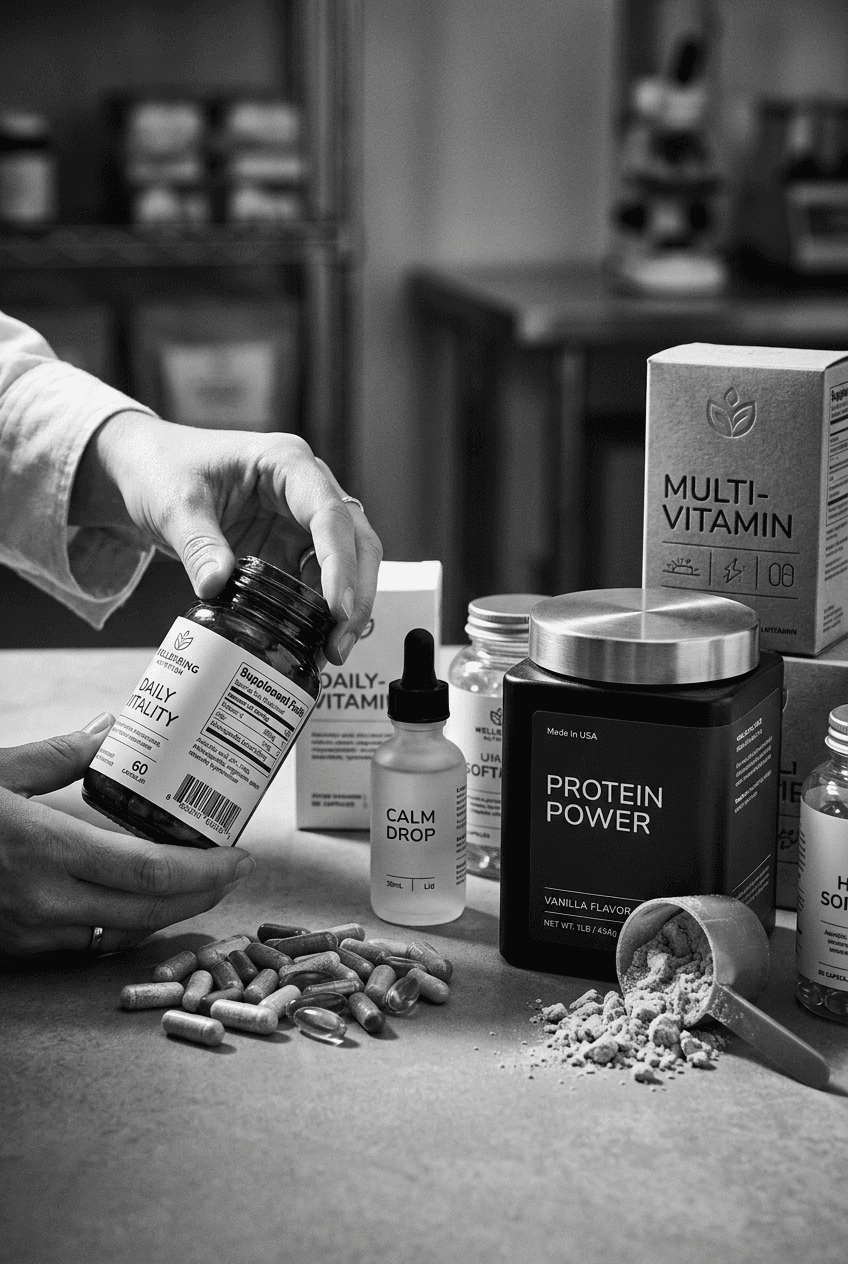
Format selection comes first. Are you using capsules, tablets, powder, liquid, gummies, or something else? Each format has different packaging requirements, different costs, and different communication implications. Capsules and tablets fit in standard bottles. Powders require scoopable containers. Liquids require droppers or pumps. Gummies require packaging that prevents sticking and allows easy counting.
The packaging material must protect your ingredients. If you're using sensitive actives (vitamins, probiotics, enzymes), you need protection from light, air, and moisture. Dark glass or opaque plastic, sealed caps, and sometimes inert atmosphere packaging are necessary. Transparent plastic bottles that look pretty are often insufficient for ingredient protection.
Your label must include:
Brand name and product name (primary display)
Supplement Facts panel (mandated format and content)
Ingredients statement (INCI format, official names)
Directions for use (clear dosage and frequency)
Warnings and disclaimers (required legal language)
Manufacturer/distributor information and address
Net content statement (quantity in grams or units)
Allergen declarations if applicable
Any claims you're making with supporting research statements
The Supplement Facts panel has specific formatting requirements: font size, spacing, contrast. The label must be legible. The required disclaimers must be visible and clear. This is not negotiable space you can design away. It is regulatory requirement that shapes your available design space.
I design supplement labels by treating the Supplement Facts as a design element, not a compliance afterthought. The panel integrates into the overall visual system. The typography, color strategy, and layout all work together. A well-designed Supplement Facts panel actually builds credibility.
Your packaging should also communicate your key differentiation. If you're positioning around quality ingredients, highlight that. If you're communicating specific benefits, show that. If you're emphasizing sustainability or ethical sourcing, use packaging materials and design to reinforce it.
According to packaging industry data, supplement brands that invest in distinctive label design see twenty-six percent higher retail visibility and eighteen percent higher consumer purchase intent compared to generic supplement labeling.
Stage Six: Manufacturing Partnership and Quality Control
Before you launch, establish a manufacturing partnership that can produce your supplement at scale consistently and safely. This is not about cost optimization alone; it is about quality assurance, batch consistency, and regulatory compliance.
You'll work with either a branded contract manufacturer (who formulates and manufactures to your specifications) or a generic contract manufacturer (who manufactures to your specifications but from your formulation). Most supplement founders use branded contract manufacturers because they handle formulation, manufacturing, and regulatory documentation.
During manufacturing partner selection, evaluate:
GMP (Good Manufacturing Practices) certification: This is non-negotiable for supplement quality
Production capacity: Can they manufacture your current volume and scale with you?
Regulatory expertise: Do they understand supplement compliance and documentation?
Testing protocols: What stability, potency, and contamination testing do they perform?
Quality consistency: Do they have process controls that ensure batch-to-batch consistency?
Communication: Are they responsive and transparent about their processes?
Pricing: Is their pricing sustainable for your business model?
I always recommend site visits to potential manufacturing partners. You want to see their facilities, understand their processes, and assess their culture around quality. A cheap manufacturer often becomes expensive when quality issues arise.
Establish quality control standards upfront. Every batch should be tested for:
Label claim verification (does the product contain what the label says?)
Stability (does the product maintain potency for the shelf life you claim?)
Microbial contamination (is it safe?)
Heavy metals (especially for supplements using botanical or mineral ingredients)
Allergens (cross-contamination prevention)
This testing costs money, but it prevents much more expensive problems later: recall costs, regulatory fines, consumer lawsuits, brand damage.
According to FDA data, the most common reasons for supplement recalls are undeclared allergens, microbial contamination, and potency verification failures. Most of these can be prevented with proper quality control during manufacturing.
Stage Seven: Distribution Channel and Market Entry Strategy
With your product formulated, labeled, manufactured, and tested, you need to decide how to reach consumers. Different distribution channels require different strategies, different pricing, and different timing.
Direct-to-consumer (DTC) via your own website is the most common channel for first-time supplement brands. This gives you control over pricing, messaging, and customer experience. You invest in digital marketing and customer acquisition. Margins are higher because you eliminate retail markups, but customer acquisition costs are also significant. Plan for 30-40% of revenue to go toward marketing in the first year.
Retail distribution (Amazon, health food stores, conventional retailers) is more complex. Retailers take 40-50% of your retail price as their margin. You need to hit their volume minimums, which often means manufacturing larger batches. But retail provides visibility and credibility that DTC alone does not. Most successful supplement brands use a combination of both.
Amazon is a unique channel. It has tremendous traffic and consumer trust, but the competitive environment is intense. You'll need sophisticated product photography, extensive keyword research, and a paid advertising strategy. Plan for 15-25% of Amazon sales revenue to go toward advertising.
Subscription models are increasingly popular for supplements. Consumers subscribe to receive shipments monthly and often get 10-20% discounts for committed purchases. This creates predictable recurring revenue and higher lifetime value compared to one-time purchases.
Professional channels (sold through practitioners like nutritionists, chiropractors, functional medicine doctors) are also valuable. These channels command premium pricing because they carry the practitioner's endorsement. But they require different marketing and sales approaches.
Your market entry strategy should be sequential, not simultaneous. Start with one channel where you have conviction, build proficiency, then expand. Most brands start DTC on their own website, add Amazon, then explore retail after they've validated the product and built some brand momentum.
According to research from NutraceuticalsWorld, supplement brands that launch DTC-first and add retail within 12-18 months see the most sustainable growth. Brands trying to launch into retail simultaneously with DTC often fail because they spread resources too thin.
Stage Eight: Marketing, Customer Education, and Brand Building
Supplements live in a category where consumer education is inseparable from marketing. Most consumers do not understand supplement efficacy, dosage, or the difference between structure-function claims and substantiated benefits. Your marketing must educate while it sells.
Build authority through content. Supplement brands with blogs, videos, and educational resources about ingredients, dosage, and efficacy see significantly higher consumer trust and retention. This is not optional marketing. It is foundational brand building.
Ingredient education is your primary messaging anchor. Teach your consumers which ingredients are in your supplement, what research supports them, and what benefits they can realistically expect. This positions your supplement as transparent and credible.
Influencer partnerships work well for supplements, particularly with fitness influencers, wellness practitioners, and health educators. But only partner with influencers who genuinely use your product and can speak authentically about benefits. False endorsements destroy brand credibility quickly.
Customer testimonials and review management are important, but they must be genuine. Never fabricate reviews. Encourage real customers to leave reviews, respond professionally to all feedback, and address legitimate complaints. A supplement brand that addresses customer concerns directly builds tremendous loyalty.
Email marketing is particularly effective for supplements because repeat purchase rates are often high. Build an email sequence that educates new customers about your product, builds habit formation, and encourages reorder.
According to research from Mintel, supplement brands that combine ingredient education, authentic influencer partnerships, and strong community engagement see seventy-eight percent higher customer lifetime value compared to brands using traditional advertising alone.
Stage Nine: Scaling and Line Extension
After your first supplement launches successfully, the temptation is to scale aggressively or develop adjacent products. Be strategic about this. A portfolio of products allows you to serve more of the customer's needs, but it also increases complexity and cost.
Line extensions should address the same target consumer's adjacent needs or different delivery formats of the same ingredient benefit. A brand that starts with a sleep supplement can extend into a magnesium powder or a sleep support stack. A brand that starts with capsules can extend into gummies for the same benefit. These extensions feel natural and leveraged.
Avoid scattered product development where you're trying to serve many different consumers or benefits. A supplement brand trying to serve fitness, sleep, immunity, and cognition simultaneously looks unfocused. A brand serving deep in fitness with multiple formats and ingredient variations looks expert.
Evaluate new products on these criteria: Does it serve our target consumer? Does it leverage our manufacturing or distribution relationships? Can we achieve the same quality standards? Does it strengthen or dilute our brand positioning?
I recommend launching new products one at a time, validating each before moving to the next. Too many brands develop five products simultaneously, launch all at once, and cannot adequately market any of them effectively.
Stage Ten: Ongoing Compliance, Regulation Monitoring, and Quality Maintenance
Supplement regulation is evolving. FDA continues to clarify claims, testing standards, and labeling requirements. A compliance posture in your first year is not sufficient for the long term. You must continuously monitor regulatory changes, adjust practices as needed, and maintain quality consistency.
Subscribe to FDA guidance updates. Join industry associations that monitor regulatory changes. Maintain relationships with regulatory and legal experts. Budget for annual compliance audits. This ongoing commitment prevents surprises and protects your brand.
Quality maintenance means never cutting corners on ingredient sourcing, manufacturing standards, or testing. As your business scales, pressure to reduce costs increases. Resist it. A brand that maintains quality as it grows builds increasing loyalty and premium pricing. A brand that cuts costs to scale sees increasing customer complaints, bad reviews, and regulatory issues.
Consumer feedback is also data. Pay attention to customer reviews, questions, and complaints. They often signal formulation improvements, labeling clarifications, or communication gaps. Use this feedback to continuously improve.
According to industry data, supplement brands that maintain strict quality and compliance standards experience significantly lower rates of customer complaints and regulatory issues. This actually saves money long-term despite higher short-term costs.
Comparison Table: Supplement Launch Approaches and Typical Timelines
Stage | Activity | Typical Timeline | Key Deliverables | Critical Success Factors |
|---|---|---|---|---|
1 | Concept Validation | 4-8 weeks | Market research, consumer insights, budget clarity | Clear product-market fit understanding |
2 | Formulation Development | 8-16 weeks | Final formula, stability data, manufacturing specs | Quality formulation partner, clear brief |
3 | Regulatory Planning | 4-8 weeks | Claim substantiation, label compliance plan, warning language | Regulatory expertise access |
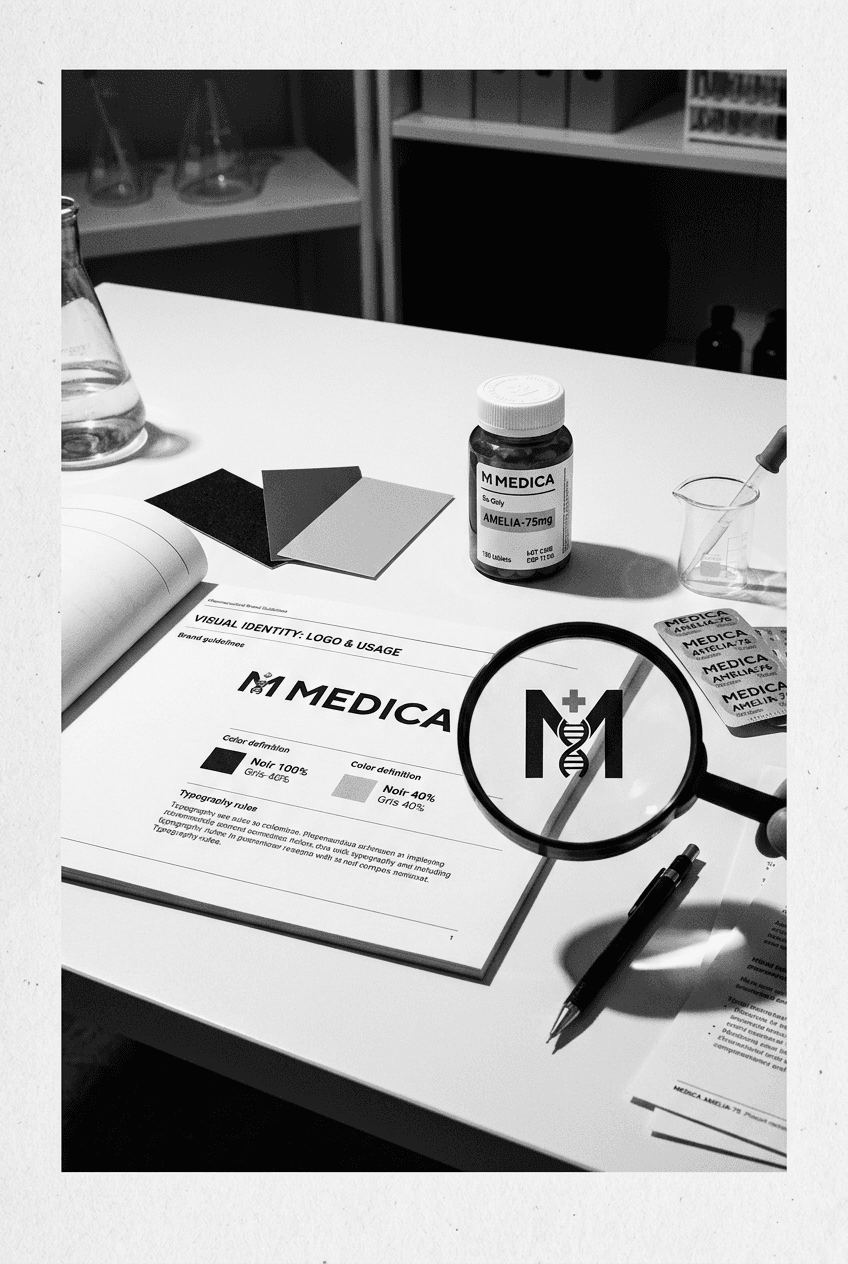
4 | Brand Identity | 6-10 weeks | Name, positioning, visual identity, brand guidelines | Clear market positioning |
5 | Packaging and Labeling | 6-12 weeks | Packaging materials, label design, compliance verification | Proper label engineering |
6 | Manufacturing Setup | 8-16 weeks | Manufacturing partnership, quality protocols, first batches | GMP-certified partner, quality systems |
7 | Distribution Planning | 4-8 weeks | Channel selection, pricing strategy, fulfillment setup | Clear channel strategy |
8 | Marketing Launch | Ongoing | Content, influencer partnerships, advertising | Authentic customer education |
9 | Scaling | Months 6-12 | Line extension planning, operational optimization | Validated first product |
10 | Ongoing Compliance | Continuous | Regulatory monitoring, quality maintenance, customer feedback | Committed compliance culture |
The total timeline from concept to launch is typically 6-9 months with proper sequencing. Rushing stages leads to regulatory issues or quality problems that take much longer to fix.
Common Supplement Launch Mistakes to Avoid
I see founders make these mistakes repeatedly. First: developing a supplement without understanding regulatory boundaries. A supplement claiming "treats anxiety" is a drug and requires FDA approval. A supplement claiming "supports relaxation" is a structure-function claim and requires structure-function substantiation. Know the difference before you invest.
Second: partnering with a manufacturing or formulation company without verifying GMP certification and quality standards. Budget manufacturers sometimes skip testing steps to reduce costs. Your brand becomes liable for quality issues that could have been prevented.
Third: launching with unclear positioning. Many supplements try to serve everyone: athlete, aging consumer, wellness-focused, busy professional. Position for one clear target consumer and own that space deeply.
Fourth: underestimating marketing costs. A supplement can be excellent but will not sell itself. Budget 30-40% of revenue for marketing in year one. If your margins do not support this, your pricing or cost structure needs adjustment.
Fifth: ignoring customer feedback and reviews. Supplements with poor customer satisfaction scores, unclear benefit delivery, or quality inconsistency lose credibility quickly. Listen to customers and iterate rapidly.
Sixth: failing to monitor regulatory changes. A supplement compliant at launch may face new regulatory requirements 18 months later. Staying current prevents costly surprises.
According to industry analysis, approximately forty-seven percent of new supplement brands fail within three years. The primary reasons: unclear positioning or target market, marketing underinvestment, and quality control issues. These are preventable with proper planning and execution.
Internal Links for Supplement Brand Resources
If you're launching a supplement brand, you're likely also navigating branding, packaging, and positioning questions that extend beyond formulation. Explore tambihaspak.com/blog/supplement-brand-identity to understand how brand identity integrates with product positioning. For guidance on packaging design and label compliance specifically, tambihaspak.com/blog/supplement-packaging-design-brief covers the technical and creative details.
If you're focusing on Amazon distribution specifically, read tambihaspak.com/blog/supplement-packaging-amazon for channel-specific packaging guidance. For understanding how to develop a cohesive supplement line beyond your first product, tambihaspak.com/blog/food-supplement-branding covers multi-product brand architecture.
For broader supplement marketing and positioning guidance, tambihaspak.com/blog/supplement-branding-cost covers the financial reality of supplement brand investment. And if you're developing nutraceutical products specifically (supplements with pharmaceutical-like positioning), tambihaspak.com/blog/nutraceutical-packaging-design covers that specialized space.
FAQ: Supplement Brand Launch Questions
What is the realistic cost to launch a supplement brand?
Realistic cost varies tremendously based on format, volume, and distribution channel. For a DTC supplement brand with 2,000-5,000 units at launch, budget: formulation development (3,000-8,000 dollars), first manufacturing batch (3,000-15,000 dollars depending on format and volume), label design and packaging (1,000-4,000 dollars), regulatory consultation (1,000-3,000 dollars), website and branding (2,000-10,000 dollars), and initial marketing (5,000-15,000 dollars). Total: 15,000-55,000 dollars. For retail distribution, double these numbers because of higher first-batch volumes. These are baseline budgets; premium formulations and luxury positioning increase costs significantly.
How long does it take from concept to first sale?
With proper sequencing and execution, 6-9 months from concept to your first customer. This assumes you have a clear concept validated, budget secured, and can dedicate resources full-time. First-time founders often take 12-18 months because they're learning the regulatory landscape and building expertise simultaneously. The path is not fast, but it is systematic.
Should I formulate my supplement myself or work with a partner?
Unless you have formal education in pharmaceutical formulation or cosmetic chemistry, work with a partner. Supplement formulation requires understanding bioavailability, stability, manufacturing feasibility, and regulatory constraints. A poor formulation undermines everything else. The investment in a qualified formulation partner (500-2,000 dollars in design fees) is insurance against much more expensive problems later.
What is the minimum batch size I should manufacture?
Minimum economical batch size depends on your manufacturing partner and format. For capsules, typically 5,000-10,000 units. For powders, sometimes 2,500-5,000 units. For liquids and tinctures, sometimes 1,000-3,000 units. Smaller batches are possible but cost per unit increases significantly. I recommend starting with a batch size that gives you 4-6 months of inventory, then reordering as demand validates. This prevents overproduction of a product that may need adjustments.
Do I need clinical studies to support my supplement claims?
Not always. Structure-function claims can be substantiated through ingredient literature, established use, or documented consumer experience. You do not need original clinical studies for basic claims like "supports healthy immune response" if the ingredient has published research. However, if you're making specific benefit claims or novel claims, clinical data strengthens your position and reduces regulatory risk. Budget for basic clinical studies (20,000-60,000 dollars) if you want premium positioning and maximum regulatory confidence.
Can I launch on Amazon without a website?
You can launch on Amazon first, but I do not recommend it as your sole channel. Amazon requires business registration, tax documentation, and inventory management. You do not own the customer relationship; Amazon controls pricing, reviews, and customer communication. A combination of your own website (where you own the customer) and Amazon (for volume and visibility) is optimal. Build the website first, even if it is minimal. It establishes your brand ownership and gives you a fallback if Amazon policies change.
How do I handle customer questions about health claims I cannot legally make?
Be transparent about your constraints. You can say: "Our supplement supports healthy [function] but cannot claim to treat or diagnose [condition]. If you have concerns about [condition], please consult your healthcare provider." This honesty builds credibility. Never sidestep claims boundaries with clever language. Regulatory scrutiny catches these attempts and creates liability. Transparency is your legal and brand protection simultaneously.
What if I discover my supplement is not selling after launch?
Before you abandon the product, investigate why. Is it a positioning problem (consumers do not understand why they need it)? A pricing problem (consumers think it is too expensive)? A communication problem (marketing is not reaching your target customer)? A product problem (quality, efficacy, or format is not right)? Each diagnosis leads to a different solution. Most supplements need 3-6 months of marketing investment and iteration before you have data to declare failure. Give it a proper launch before you pivot.
Should I offer subscription options for my supplement?
Yes, if your target consumer is someone who benefits from consistent use (sleep aids, daily vitamins, fitness supplements). Subscriptions increase customer lifetime value by fifty percent on average. Offer 10-20% discount for subscription compared to one-time purchase to make it compelling. But do not force it on consumers who want to buy once and try. Provide both options.
How do I stay current with supplement regulations?
Subscribe to FDA regulatory updates (available on fda.gov). Join the Natural Products Foundation or similar industry association in your market. Maintain a relationship with a regulatory consultant. Review the FDA warning letters database monthly (it shows what issues FDA is currently enforcing). Budget annually for a compliance audit. This ongoing commitment prevents surprise regulatory action that could derail your business.
I am Tambi Haşpak, a brand strategist and creative director with an unfair advantage: I am a pharmacist. I run a creative studio for cosmetics, supplements, and beyond. 17+ years. Exclusively.