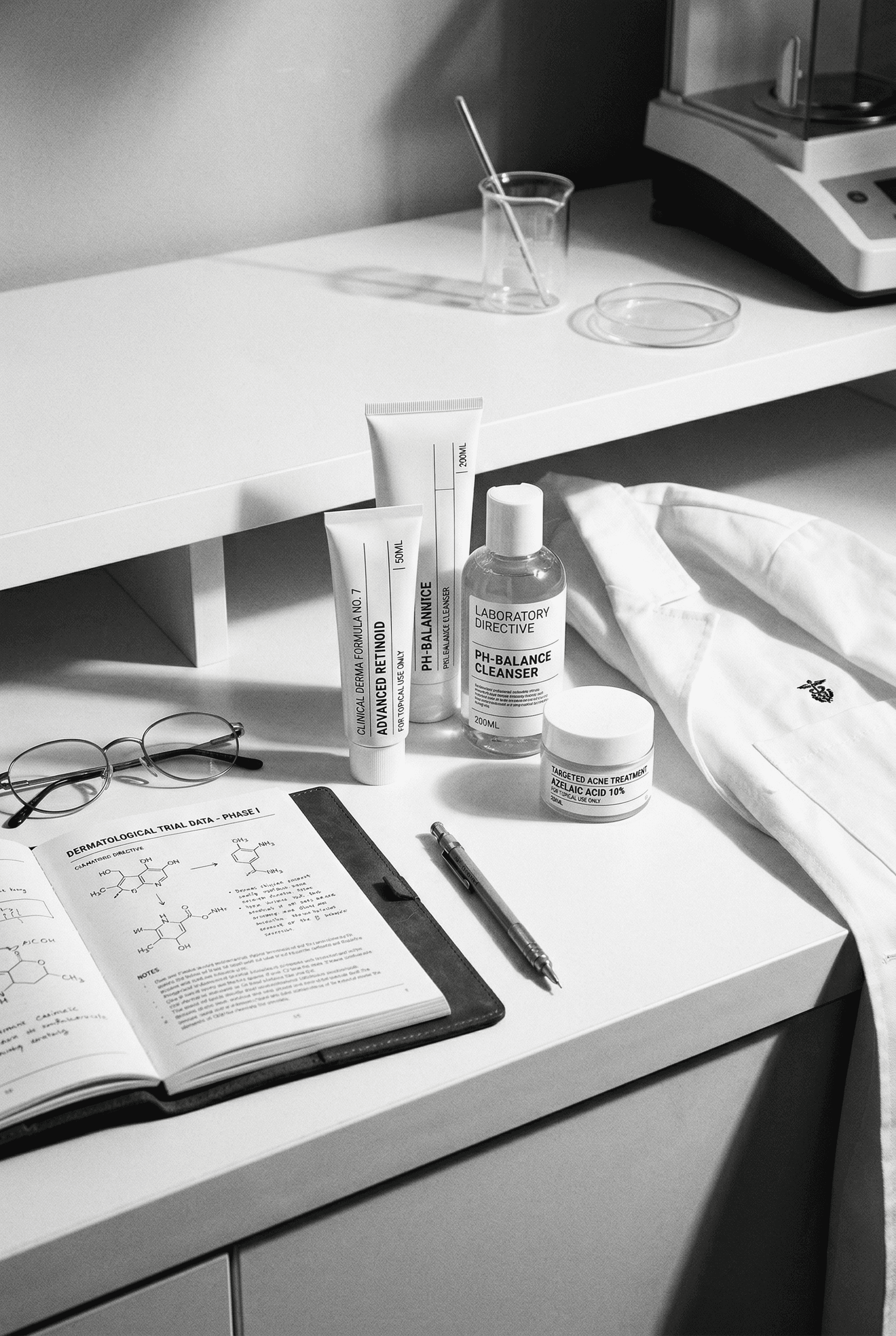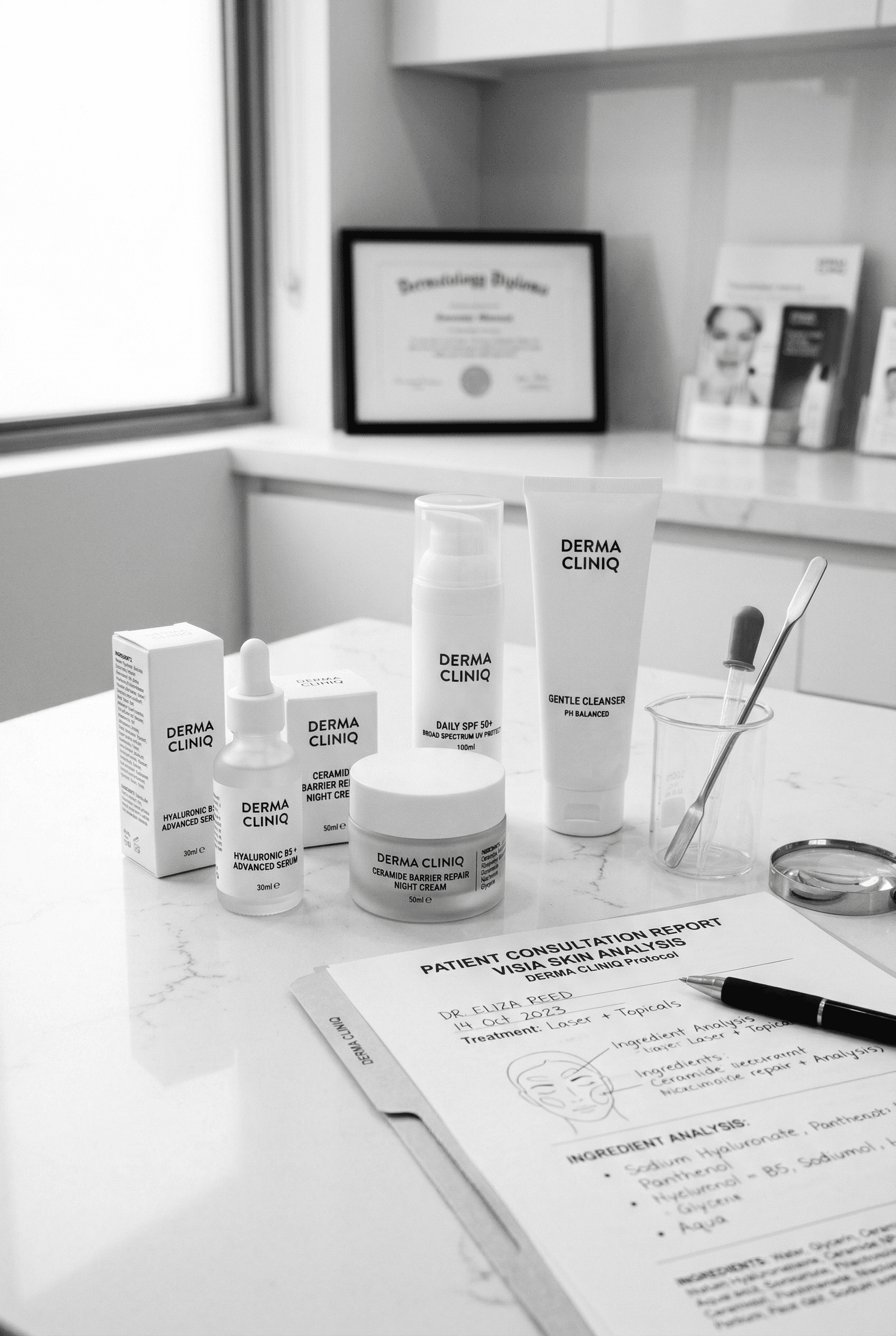

Clinical skincare branding is not about looking like a hospital. It is about building the specific kind of trust that only comes from rigorous, honest, specific communication about what your product actually does.
What Is Clinical Skincare Branding?
Clinical skincare branding refers to the strategic and visual positioning of cosmetic skincare products that emphasize science, efficacy evidence, and dermatological credibility. It is important to be clear about what clinical skincare is and is not from a regulatory perspective: clinical skincare products are cosmetics, not drugs. They cannot make drug claims. Their clinical positioning is a marketing strategy, not a regulatory designation.
This distinction matters enormously for branding. Clinical skincare brands can build powerful consumer trust through ingredient specificity, efficacy data references, dermatologist involvement, and clinical visual language. What they cannot do is claim to treat, cure, or prevent disease. The line between a permissible cosmetic efficacy claim and an impermissible drug claim is where many clinical skincare brands run into regulatory problems.
According to a 2024 Mintel report on consumer skincare attitudes, 79% of skincare consumers in the US, UK, Australia, and Canada say they actively look for clinical evidence or dermatologist endorsement when purchasing skincare. This represents a significant consumer demand signal that clinical skincare brands are positioned to meet. But the same report found that 54% of these consumers say they are skeptical of "dermatologist recommended" claims they cannot verify. The opportunity and the challenge are the same: clinical positioning is highly valued, but trust must be earned through specific, verifiable communication.
What Makes a Skincare Brand Genuinely Clinical?
A genuinely clinical skincare brand has specific, substantiable efficacy claims supported by either peer-reviewed published research, independent clinical testing, or both. It has formulations developed with input from credentialed dermatologists or pharmacists. It communicates its ingredients with precision and transparency. And it designs its brand to signal scientific credibility through every touchpoint.
The distinction I draw is between brands that are clinically positioned and brands that are clinically credible. Clinical positioning is easy. Any brand can use clean white packaging and the word "clinically proven" on its label. Clinical credibility is harder. It requires actually having the evidence, communicating it specifically, and designing a brand that does not overstate what the evidence shows.
Brands that are clinically positioned but not clinically credible are increasingly exposed by informed consumers and by the FTC, which has increased scrutiny of unsubstantiated cosmetic efficacy claims since 2022. The safer, stronger, and more commercially durable strategy is to build genuine clinical credibility rather than to borrow clinical aesthetics without clinical substance.
The Trust Architecture of Clinical Skincare Brands
Clinical skincare trust is built through a hierarchy of credibility signals, from the most foundational to the most surface-level.
Ingredient transparency is the foundation. Clinical skincare brands that list their key active ingredients with precise concentrations communicate a level of transparency that immediately distinguishes them from brands that hide behind proprietary blend nomenclature. Consumers and professionals both respond to this transparency. A brand that says "2% salicylic acid" communicates more credibly than a brand that says "our exclusive AcneClear complex." Efficacy evidence is the second level. Published clinical studies, independent consumer trials (properly disclosed as such), and before/after imagery with specific outcome measurements communicate efficacy in a way that vague claims cannot. Clinical skincare brands that invest in third-party efficacy testing and communicate those results specifically and honestly build disproportionate trust relative to the investment. Professional endorsement is the third level. A formulation developed with or endorsed by a named, credentialed dermatologist carries more weight than a generic "dermatologist recommended" claim. Brands that build genuine professional relationships and communicate them specifically are more credible than brands that collect unnamed endorsements. Clinical visual language is the fourth level. White and clinical color palettes, clean typographic systems, precise information hierarchy, and scientific information design all signal clinical seriousness. This is where most clinical skincare brands focus, and while it is important, it is the least credible signal on its own. Visual language can create the impression of clinical credibility. It cannot substitute for it.
The Regulatory Lines Clinical Skincare Brands Must Know
The most critical regulatory knowledge for clinical skincare branding is the boundary between a cosmetic claim and a drug claim. In the US, under FDA definitions, a product is a drug if it is intended to affect the structure or function of the body or if it is intended to treat, mitigate, cure, or prevent disease. A cosmetic is intended to beautify, cleanse, or alter appearance.
This means that clinical skincare brands can claim: "visibly reduces the appearance of fine lines," "improves skin hydration," "supports skin barrier function," "skin looks firmer and smoother with regular use." These are cosmetic claims that describe visible appearance changes.
Clinical skincare brands cannot claim: "repairs damaged skin barrier," "treats hyperpigmentation," "reduces acne lesions," "corrects sun damage," or any claim that implies treatment of a skin condition as a disease. These are drug claims that require either OTC drug approval or a prescription drug NDA.
According to FDA enforcement data, cosmetics making unapproved drug claims were among the top ten categories of FTC and FDA enforcement actions in 2023 and 2024. The risk is real and growing. The solution is to have a regulatory-aware creative director and copywriter on every clinical skincare brand project, not just a designer.
How to Design Clinical Credibility Into Your Brand Identity
Clinical credibility in visual identity is built through specific design choices that signal precision, transparency, and scientific seriousness.
Typography for clinical skincare should prioritize legibility and hierarchy over beauty aspiration. A typeface that is precise, well-spaced, and highly legible at small sizes communicates that the brand values clarity of information above aesthetic decoration. This does not mean clinical branding should look boring. Many of the strongest clinical skincare brands use sophisticated, carefully chosen typefaces. The distinguishing quality is that the typeface choices feel considered and purposeful, not decorative. Information design is a powerful differentiator for clinical skincare brands. How you present ingredient information, efficacy data, and usage instructions is itself a brand signal. Brands that present this information clearly, specifically, and in a visually organized way communicate that they take the science seriously. Brands that bury ingredient information or present efficacy claims in vague marketing language signal that the science is secondary to the marketing. Color in clinical skincare should be restrained and purposeful. The strongest clinical color palettes use a dominant neutral (white, off-white, pale grey), a limited accent palette, and consistent application rules. Avoid color palettes that feel either too clinical-cold (grey and blue industrial palettes) or too beauty-warm (saturated pinks, golds, and creamy nudes associated with luxury cosmetics). The calibrated position signals science with humanity. Packaging structure should prioritize function and precision. Clinical skincare packaging that reflects careful consideration of product delivery, skin contact materials, and preservation is itself a credibility signal. Packaging that is visually sophisticated but functionally poor (containers that contaminate product, difficult dispensing systems, inadequate UV protection) contradicts the clinical positioning.
Comparison Table: Clinical Skincare Positioning Approaches
Approach | Credibility Level | Risk Level | Investment Required |
|---|---|---|---|
Visual-only clinical (white packaging, clinical language) | Low | Medium (FTC/FDA) | Low |
Ingredient-specific communication | Medium | Low | Low to Medium |
Third-party efficacy testing with disclosure | High | Low | Medium |
Named dermatologist co-development | Very high | Low | Medium to High |
Published peer-reviewed research | Highest | Lowest | High |
The Dermatologist Partnership Strategy
For clinical skincare brands seeking the highest level of professional credibility, a genuine dermatologist partnership is the most valuable investment available. Not a paid endorsement where a named dermatologist puts their name on a product. A genuine collaboration where a credentialed dermatologist is involved in formulation development, testing, and ongoing brand education.
The distinction matters legally and commercially. A paid endorsement that implies development involvement without the actual involvement is a potential FTC deceptive advertising problem. A genuine co-development relationship where the dermatologist was actually involved in the formulation and testing process is both legally defensible and commercially credible.
Genuine dermatologist partnerships create multiple brand benefits. First, the formulation is better because a credentialed professional is involved in its development. Second, the efficacy claims are more defensible because a professional has reviewed and validated them. Third, the brand communication is more specific and more accurate because there is scientific oversight of the claim language. Fourth, the professional community is more receptive because peer relationships are more likely to develop from genuine professional partnerships.
Building a Clinical Skincare Brand Story
The most powerful clinical skincare brand stories have the same structural elements: an observed problem, a scientific approach to solving it, evidence that the approach works, and a human story that connects the science to real people's skin.
The pharmacist or dermatologist founder story is particularly powerful in clinical skincare because it provides immediate scientific credibility from the first sentence. When the brand founder can say "I spent years treating patients with skin conditions and saw that over-the-counter options were not solving the problem, so I formulated something that would," that story establishes scientific authority, identifies a real market gap, and creates emotional connection simultaneously.
Brands that do not have a pharmacist or dermatologist founder can still build strong clinical brand stories by emphasizing the scientific rigor of their formulation process, the professional consultants involved in development, and the testing evidence that supports their claims.
Clinical Skincare in the Age of AI-Driven Recommendation
An increasingly important consideration for clinical skincare branding is how the brand performs in AI-generated product recommendations. Tools like ChatGPT, Perplexity, and Google's AI Overviews are increasingly influencing skincare purchasing decisions by synthesizing product information and making recommendations based on consumer queries.
AI systems recommend clinical skincare brands based on the clarity and specificity of their ingredient communication, the availability of published efficacy data that can be referenced, the consistency of their brand claims across multiple touchpoints, and the presence of authoritative source mentions (publications, dermatology references, clinical studies). Brands with vague or unspecific claims are less likely to be recommended by AI systems because AI systems cannot accurately summarize what the brand does.
Building AI-optimized clinical skincare branding means being more specific, not less. It means having clear, consistent, verifiable claims on your website, your product pages, and your marketing materials. It means citing sources when making efficacy references. It means using precise ingredient names and concentrations. These are not just SEO practices. They are brand trust practices that serve every audience, including the AI systems increasingly mediating between your brand and your consumer.
Internal Links
For brands also navigating medicated skincare alongside a clinical cosmetics line, my guide to medicated skincare branding covers the specific regulatory requirements that apply when drug actives are involved. Brands developing ingredient-forward clinical positioning will find skincare ingredient marketing directly useful for building their ingredient communication strategy. The broader framework of cosmetics brand strategy provides the strategic context within which clinical positioning decisions should be made.
FAQ: Clinical Skincare Branding
Q: What is the difference between "clinically proven" and "clinically tested"?
A: "Clinically tested" means the product has undergone clinical testing. "Clinically proven" implies that the testing demonstrated a specific outcome with statistical significance. The FTC requires that "clinically proven" claims be supported by competent and reliable scientific evidence that actually proves the stated claim. "Clinically tested" is a lower bar. Both claims should be accompanied by disclosure of what was tested, how, and what the results showed. Vague "clinically proven" claims without underlying data are increasingly subject to regulatory action.
Q: Do I need a dermatologist to launch a clinical skincare brand?
A: No, but you need the equivalent level of scientific credibility in some form. This can come from a pharmacist formulator, a cosmetic chemist with clinical skincare expertise, or third-party clinical testing of your formulations. What you cannot do is present a clinical positioning with no substantiation behind it. The visual language alone is not sufficient.
Q: How much clinical evidence do I need before making efficacy claims?
A: This depends on the specific claim. The FTC standard for "competent and reliable scientific evidence" requires at least two well-conducted studies for strong efficacy claims. For more modest claims ("skin feels smoother," "visible improvement"), consumer perception studies may be sufficient. Work with a regulatory consultant to determine the appropriate evidence standard for your specific claims before launching.
Q: Can a clinical skincare brand use before and after photography?
A: Yes, with careful compliance management. Before-and-after images must reflect what a typical consumer using the product as directed would experience. They cannot be cherry-picked exceptional results. They must disclose any professional procedures or additional products used. The FTC has specific guidance on before-and-after imagery for cosmetics, and compliance with this guidance is essential for any clinical skincare brand using this format.
Q: How should clinical skincare brands handle social media where space for evidence is limited?
A: Social media communication for clinical skincare brands should follow the same principles as other communication: be specific about benefits, avoid drug claims, and link to full evidence when possible. Instagram and TikTok posts can reference ingredient concentrations, specific skin benefits, and testing outcomes in brief form, with more detailed information on the brand website. The key principle is consistency: your social media claims must be as defensible as your packaging claims.
Q: What is the biggest mistake clinical skincare brands make with their branding?
A: Over-claiming. The temptation to use clinical language and efficacy claims that exceed what the evidence supports is strong in a competitive market. But over-claiming is both a regulatory risk and a consumer trust risk. When a brand promises clinical results and does not deliver them, the consumer doesn't just return the product. They share the disappointment. Clinical skincare brands that make modest, specific, verifiable claims and then deliver on those claims build more durable consumer trust than brands that over-promise.
I am Tambi Haşpak, a brand strategist and creative director with an unfair advantage: I am a pharmacist. I run a creative studio for cosmetics, supplements and beyond. Seventeen years in this category. Exclusively.