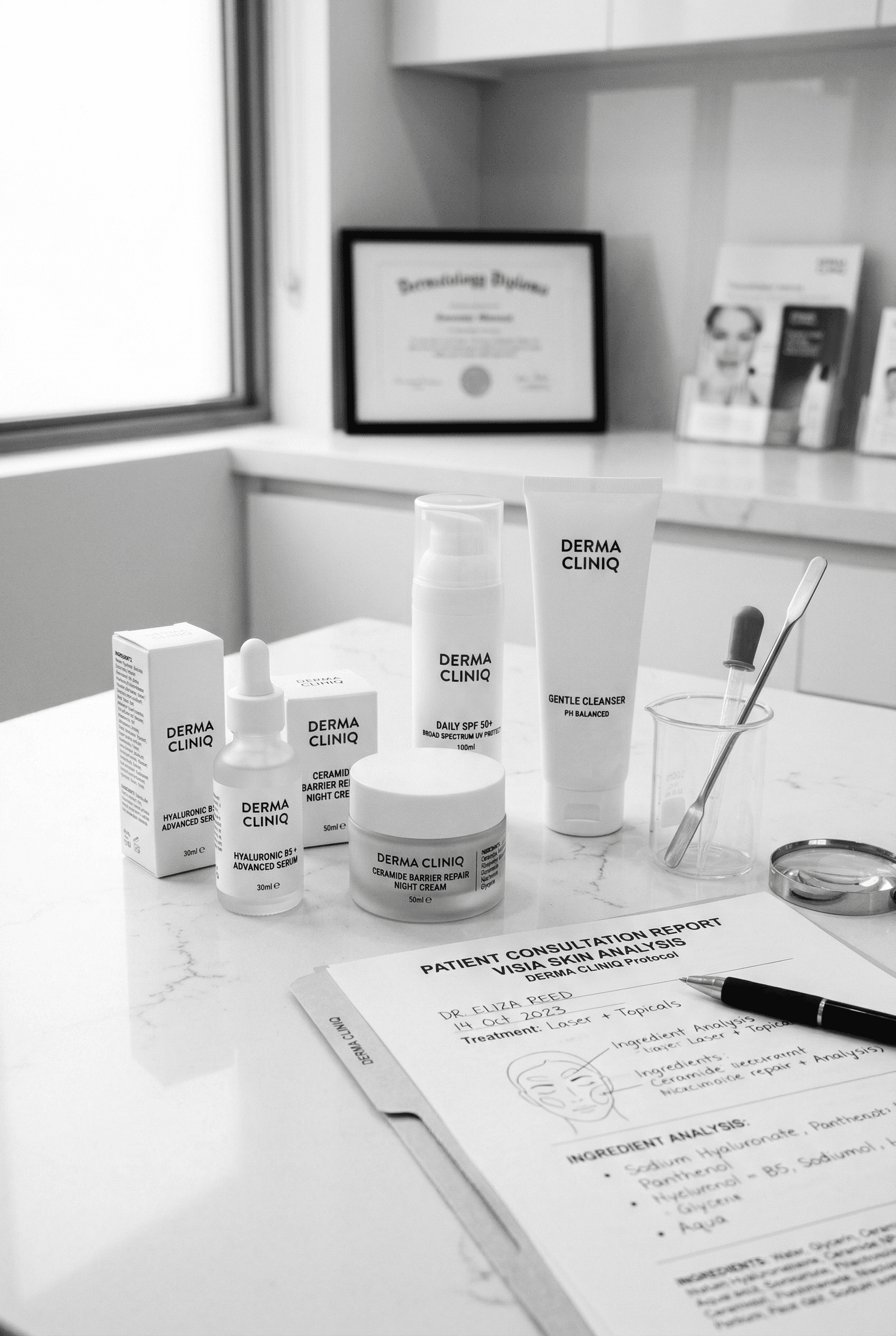

Medicated skincare branding is not a design problem. It is a regulatory knowledge problem dressed up as a design problem, and the brands that misread that pay for it in label recalls and lost shelf space.
What Is Medicated Skincare Branding?
Medicated skincare branding is the strategic and visual development of brands whose products contain drug-active ingredients regulated as over-the-counter (OTC) drugs, or products that are transitioning from prescription-only status to OTC availability. The category includes acne treatments containing benzoyl peroxide or salicylic acid, anti-fungal creams, anti-itch formulations, sunscreens with SPF claims, and a growing number of Rx-to-OTC switches in categories like hair loss, rosacea management, and hyperpigmentation.
According to IQVIA's 2024 OTC Market Report, the global OTC skincare segment grew 9.4% year over year, driven largely by Rx-to-OTC switches and increased consumer demand for effective, accessible treatments. This growth makes medicated skincare one of the most commercially attractive segments in beauty, but it is also one of the most regulated.
The branding challenge is fundamental: OTC drug regulations require specific label elements, specific claims language, and specific warnings. Beauty positioning requires sensory language, aspirational imagery, and emotional connection. These two requirements are not mutually exclusive, but they require deliberate brand strategy to navigate simultaneously.
The Rx-to-OTC Switch and What It Means for Brand Strategy
An Rx-to-OTC switch happens when a pharmaceutical ingredient that was previously available only by prescription receives regulatory approval to be sold over the counter. For the brand, this is a major commercial opportunity and a major strategic challenge. The clinical credibility that comes with a prescription history must be maintained and leveraged. But the brand must now speak to consumers directly, without the healthcare professional intermediary that prescription brands rely on.
This transition requires a complete brand strategy rethink. The physician-facing positioning, the clinical trial data emphasis, and the medical credibility signals that work in prescription markets do not automatically transfer to consumer markets. Consumers respond to different signals: they want efficacy, but they also want accessibility, understandability, and some degree of beauty aspiration.
The most successful Rx-to-OTC brand transitions I have seen maintain the clinical authority of the prescription heritage while translating it into consumer-accessible language and design. They do not abandon the science. They make the science legible to consumers who have not gone to medical school. This translation work is the core of Rx-to-OTC brand strategy.
Regulatory Constraints and Their Brand Implications
The FDA's OTC monograph system in the US, and equivalent frameworks in the EU and UK, determine what claims a medicated skincare brand can make, what warnings it must carry, and how active ingredients must be communicated. These requirements are not optional and cannot be designed around.
For brand designers, this means that certain label real estate is non-negotiable. Drug Facts panels in the US, active ingredient declarations, and required warnings must appear on the label in specified formats. The brand's visual identity system must be designed to work around these mandatory elements, not in competition with them.
The mistake I see most often from non-specialist designers is treating mandatory label elements as design problems to minimize or hide. This is both legally problematic and strategically counterproductive. For medicated skincare, the Drug Facts panel and active ingredient declaration are actually credibility signals. Consumers who reach for a medicated product want reassurance that it actually contains something that works. Making these elements clear and prominent, within the required format, builds consumer confidence rather than undermining it.
The Dual Trust Challenge: Pharmacist and Consumer
Medicated skincare brands sold through pharmacy channels face a specific challenge that pure beauty brands do not: they need the pharmacist's endorsement as well as the consumer's preference. Pharmacists are asked about skincare products constantly, and their recommendations carry enormous authority. A pharmacist who trusts a brand recommends it. A pharmacist who does not trust a brand deflects the consumer elsewhere.
Pharmacist trust is built through different signals than consumer trust. Pharmacists respond to: clear active ingredient declaration, concentration levels that match published efficacy data, appropriate and complete warning language, and a brand presentation that signals clinical seriousness rather than purely cosmetic aspiration. A brand that looks too much like a luxury beauty brand signals to pharmacists that its marketing has outpaced its science.
Consumer trust in medicated skincare is built through: clear benefit communication, credible efficacy claims with evidence, accessible and approachable design, and packaging that signals both effectiveness and safety. A brand that looks too purely clinical and pharmaceutical signals to consumers that it might be harsh, complicated, or professional-use-only.
The design solution is a calibrated position between these two poles. The brand should read as clinically serious to a pharmacist and as approachable and effective to a consumer. This calibration is what makes medicated skincare branding genuinely difficult, and why brands that solve it well tend to win their categories decisively.
Claim Architecture for Medicated Skincare
One of the most strategically important elements of medicated skincare branding is the claim architecture: the hierarchy of claims you make, the language you use to make them, and where each claim sits within regulatory limits.
OTC drug claims must comply with the relevant OTC monograph or, for products not covered by a monograph, an NDA or ANDA. This means the efficacy claims you can make are more tightly defined than for cosmetics. You cannot make disease-treatment claims without drug approval. You can make drug claims within the monograph framework.
The strategic opportunity within this constraint is significant. Because the claims framework is defined, medicated skincare brands can make efficacy claims that pure cosmetics brands cannot. "Clinically proven to reduce acne" is available to a benzoyl peroxide OTC product. "Reduces fine lines" is available to a cosmetic moisturizer. These are different types of claims, different regulatory frameworks, and different consumer trust signals. A medicated skincare brand that leverages its regulatory status to make credible, specific claims communicates something that a cosmetics competitor simply cannot.
The claim architecture should prioritize the most specific, most credible, most evidence-backed claim at the top of the hierarchy, then support it with secondary claims and ingredient communication. This hierarchy guides both the label design and the marketing communication system.
Comparison Table: Cosmetic vs. OTC Drug Label Requirements
Element | Cosmetic Label | OTC Drug Label |
|---|---|---|
Ingredient declaration | Required (INCI names) | Required (active ingredients separately, Drug Facts) |
Efficacy claims | Must not claim drug action | Must stay within monograph limits |
Warning language | Limited required warnings | Mandatory Drug Facts warnings |
Format requirements | Flexible within space | Structured Drug Facts panel format |
Net quantity | Required | Required |
Responsible party | Required | Required |
Expiry dating | Not always required | Often required |
Regulatory framework | FDA Cosmetic Regulation (US) | FDA OTC Monograph or NDA (US) |
Visual Identity Strategy for Medicated Skincare
The visual identity for a medicated skincare brand should communicate clinical credibility without looking like a hospital supply product, and beauty aspiration without looking like it is hiding the medicine inside. These two objectives are achieved through deliberate visual choices.
Typography in medicated skincare branding should be clean and precise, with medical-grade legibility but not the cold institutional quality of pharmaceutical manufacturing. Type that combines clinical precision with modern beauty sensibility works well. Avoid typefaces that are either too decorative (signals luxury cosmetics, not clinical efficacy) or too clinical-institutional (signals pharmacy generic, not consumer brand). Color is one of the most powerful tools for calibrating the clinical-beauty position. Whites and near-whites communicate clinical cleanliness. Blue-adjacent colors communicate science and trust. Natural skin tones communicate connection to the product's purpose. The mistake is choosing colors that look too much like either a luxury beauty brand (highly saturated, fashion-forward palettes) or a pharmaceutical brand (generic white with standard clinical blues). The calibrated position uses a restrained palette with deliberate warmth that signals human connection alongside scientific rigor. Imagery should feature skin outcomes, not beauty aspiration fantasies. Medicated skincare consumers are looking for results. They are not looking for an aspirational lifestyle. The photography and imagery direction should show real skin improvement, clinical evidence references (not reproduced data, but the language of evidence), and the brand's scientific authority in a way that is accessible rather than intimidating.
Packaging Design for Medicated Skincare
Packaging design for medicated skincare has functional constraints that pure beauty packaging does not: regulatory label requirements dictate specific information placement, specific type sizes, and in some cases specific panel allocations. The brand identity must work within these constraints, not fight against them.
The most effective medicated skincare packaging systems I have designed treat the mandatory elements as structural anchors for the brand, not as obstacles. The Drug Facts panel or equivalent regulatory block becomes a credibility signal rather than a compromise. The active ingredient is displayed prominently as a feature, not buried in small text. The warning language is integrated into the design system with appropriate visual weight.
Packaging format choice also carries brand meaning in medicated skincare. Clinical tubes signal pharmaceutical efficacy. Pump bottles signal consumer skincare sophistication. Jars signal richness and texture. The format you choose should match the product's clinical positioning. A highly active treatment product in a jar that looks like a luxury face cream creates a positioning mismatch that can undermine consumer trust.
Building Distribution Strategy Into Brand Positioning
Medicated skincare brands have two primary distribution channels: pharmacy and beauty retail. Each channel has different consumer expectations, different shopper behavior, and different competitive dynamics. The brand positioning must be able to perform in both, and the packaging design must work in both contexts.
Pharmacy distribution requires the brand to perform in a clinical context alongside other OTC products. The positioning signals that matter most are: ingredient credibility, efficacy claims, safety profile, and professional heritage. The visual identity should feel at home alongside dermatologist-recommended skincare and recognized OTC drug brands.
Beauty retail distribution requires the brand to perform in a context of sensory richness, aspirational imagery, and competitive visual density. The positioning signals that matter most are: skin benefit outcomes, sensory experience, brand story, and visual distinctiveness. The visual identity must hold its own on a beauty shelf against competitors with significantly larger marketing budgets.
The most successful medicated skincare brands develop channel-specific communication that adapts their core brand positioning for each channel context, while maintaining consistent visual identity and claim architecture. The same brand can lead with efficacy science in pharmacy and lead with visible skin improvement in beauty retail, as long as both communication layers are rooted in the same brand strategy.
The Pharmacist-Creative Director Perspective
I want to be specific about why my pharmacist background matters for this category. Standard brand designers approach medicated skincare as a design problem. They look at the market, identify visual conventions, and develop a creative system that fits within or deliberately breaks those conventions. This is legitimate design thinking.
What it misses is the regulatory and scientific layer that underpins every label claim, every ingredient communication, and every efficacy statement. When I design for a medicated skincare brand, I know why the Drug Facts panel has its required format, what the active ingredient concentration means for the claim hierarchy, what the warning language implications are for consumer perception, and where the regulatory lines are between a permitted OTC claim and an unapproved drug claim. This knowledge prevents expensive mistakes. It also enables more confident, more specific, and more credible brand communication, because I know exactly where the boundaries are.
Internal Links
For brands developing medicated skincare alongside a broader cosmetics range, my guide to OTC drug packaging design covers the packaging-specific requirements in detail. Brands in the clinical skincare space will also find clinical skincare branding directly relevant to positioning strategy. If you are building a medicated skincare brand within a supplement and wellness portfolio, pharmaceutical branding covers the broader strategic framework for regulated health brands.
FAQ: Medicated Skincare Branding
Q: What is the difference between medicated and clinical skincare for branding purposes?
A: Medicated skincare contains regulated drug-active ingredients and is governed by OTC drug regulations. Clinical skincare is a marketing positioning used by cosmetic products that do not contain drug actives but want to communicate scientific credibility. The regulatory requirements differ completely. Medicated skincare must follow OTC drug labeling rules. Clinical skincare must follow cosmetic labeling rules and avoid drug claims.
Q: Can a medicated skincare brand use beauty imagery in its marketing?
A: Yes, with careful attention to claims compliance. The product packaging must comply with OTC drug label requirements, but broader brand marketing has more flexibility. However, any efficacy claims in marketing must remain within the permitted OTC claims for the active ingredient category. You can show beautiful skin. You cannot claim to treat a disease unless your product is approved for that drug claim.
Q: How do Rx-to-OTC brands maintain their clinical credibility after the switch?
A: By emphasizing the heritage rather than hiding it. The prescription history is a credibility signal, not a liability. Rx-to-OTC switches should be positioned as: this was only available by prescription because it is that effective. Now it is available to you directly. The clinical heritage becomes a consumer benefit story rather than a regulatory footnote.
Q: What are the most common labeling mistakes in medicated skincare?
A: The four most common mistakes are: active ingredient declarations that do not match the OTC monograph format, efficacy claims that exceed what the OTC monograph permits, warning language that is incomplete or incorrectly formatted, and Drug Facts panels that are positioned in locations that do not comply with placement requirements. All of these result in FDA warning letters or required label corrections, which are expensive and damaging.
Q: Should a medicated skincare brand look like a pharmaceutical product or a beauty product?
A: Neither extreme works. A brand that looks purely pharmaceutical will not attract the consumer shopper in a beauty retail context. A brand that looks purely cosmetic will not earn the pharmacist's trust or convert the consumer who specifically wants a proven-effective treatment. The calibration between these poles is the core design challenge of medicated skincare branding, and the right position depends on your specific channel mix and your competitive set.
Q: How does sunscreen fit into medicated skincare branding?
A: In the US, sunscreens are regulated as OTC drugs, which means SPF products must comply with OTC sunscreen monograph requirements for labeling and claims. In the EU and UK, sunscreens are regulated as cosmetics. This regulatory difference creates branding complexity for brands selling in multiple markets, because the label compliance requirements differ significantly. A specialist studio that understands both frameworks can design packaging that complies in all target markets while maintaining brand consistency.
I am Tambi Haşpak, a brand strategist and creative director with an unfair advantage: I am a pharmacist. I run a creative studio for cosmetics, supplements and beyond. Seventeen years in regulated health and beauty. Exclusively.