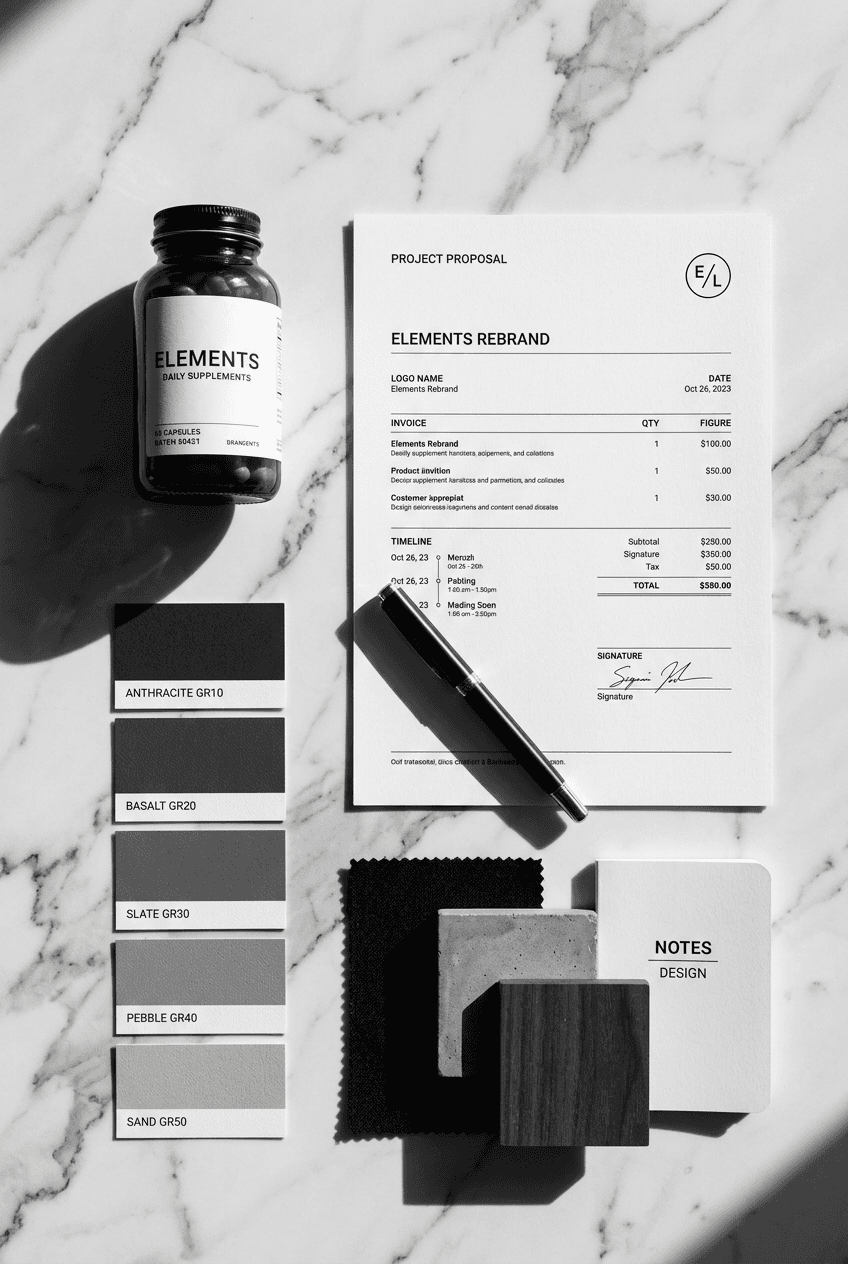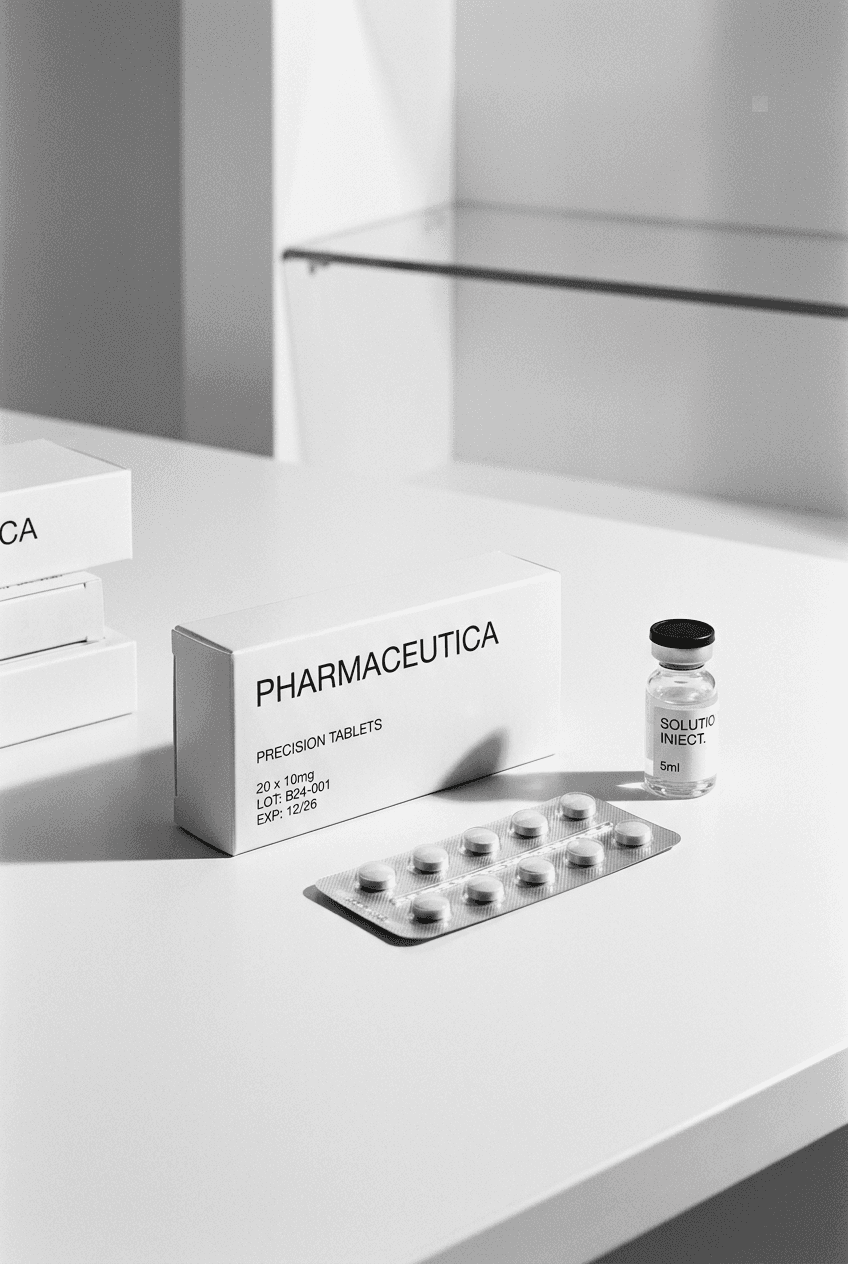

In pharma, the brand is a trust signal. Every visual element either builds it or costs it.
What Pharmaceutical Branding Actually Is (And What It Is Not)
Pharmaceutical branding is frequently confused with pharmaceutical marketing. They are related disciplines but not the same thing. Marketing in pharma is about awareness and promotion, constrained heavily by regulatory advertising guidelines. Branding is about the systematic construction of trust, recognition, and perceived credibility through visual identity, naming, and communications design.
The global pharmaceutical market was valued at $1.48 trillion in 2022 and is projected to grow to $2.27 trillion by 2028, according to a report by The Business Research Company. In a market that large, differentiation is not a luxury. It is a survival requirement. But differentiation in pharma cannot come from the same tools available to consumer goods brands. Pharmaceutical companies cannot make emotional aspiration promises in the same way a beauty brand can. They cannot use humor in advertising freely. They cannot take the same risks with unconventional packaging that a food brand might.
Pharmaceutical branding works within a fundamentally different constraint structure. The visual identity must communicate efficacy, safety, and rigor simultaneously. It must serve multiple audiences: patients, healthcare professionals (HCPs), pharmacists, hospital procurement committees, and regulators. And it must do this across materials that range from tiny blister pack labels to hospital room signage to scientific symposium presentations.
This is not simple design work. It is one of the most demanding branding challenges in commercial practice.
The Audiences That Pharmaceutical Branding Must Serve
Understanding the audiences for pharmaceutical branding is essential because different audiences require different trust signals from the same brand identity.
Patients are the end users. They encounter the brand primarily through packaging, patient information leaflets, and increasingly through digital channels. For patients, the key trust signals are: clarity (they can understand what this product is and how to use it), safety (the brand communicates that this product has been thoroughly tested and approved), and accessibility (the brand does not make them feel alienated or overwhelmed by clinical complexity). Effective patient-facing pharmaceutical branding is precise, calm, and navigable. Healthcare professionals are the prescribers and dispensers. They encounter the brand through pharmaceutical sales materials, conference presence, medical education content, and the actual product packaging. For HCPs, the trust signals are different: scientific credibility, evidence base, product differentiation versus competitor molecules, and the institutional reputation of the manufacturer. HCP-facing pharmaceutical branding must communicate at a higher information density and a more sophisticated scientific register without appearing inaccessible. Pharmacists have a dual audience role: they read the brand as HCPs (evaluating scientific credibility) and advise patients on usage (requiring communication clarity). Packaging that is designed only for one of these audiences frequently creates friction with the other. Regulators are not typically thought of as a branding audience, but regulatory agency reviewers do interact with brand materials including proposed brand names and packaging designs. In the US, FDA brand name review is specifically designed to prevent brand names and visual designs that could cause medication errors. Understanding how regulators read brand materials is part of competent pharmaceutical branding practice.
The Visual Identity Elements That Build Pharmaceutical Trust
Naming strategy. Pharmaceutical brand names operate in a highly constrained environment. Proprietary names (trade names) must be approved by regulatory agencies, must be tested for confusion potential with existing drug names (USAN database in the US), and must communicate positioning without implying unapproved claims. A pharmaceutical brand name that sounds like a consumer wellness brand may perform well in patient recall but create regulatory complications. A name that sounds too clinical may perform well in HCP environments but alienate patient populations. The naming brief for a pharmaceutical product must explicitly navigate this tension.
According to the FDA's drug name review process documentation, medication name mix-ups are responsible for an estimated 1.3 million injuries annually in the US, and brand name design is one of the primary preventive tools. The stakes of pharmaceutical naming are quite literally clinical.
Color strategy. Color in pharmaceutical packaging serves both brand identity and safety functions. The core brand color must be sufficiently distinctive to enable reliable product recognition but cannot violate category color-coding conventions where they exist (for example, the international ISO standard color coding for medical gas containers). Across a product range, color differentiation between SKUs (different strengths, different formulations) must be visually unambiguous under clinical lighting conditions. This is a complex constraint set that does not exist in consumer packaging design. Typography. Pharmaceutical typography has explicit regulatory constraints. The FDA's guidance on container and carton labeling specifies minimum font sizes for certain required label elements. European medicines packaging is governed by similar EMA guidance. Within these constraints, typography choices carry significant brand character signals: the difference between a refined humanist sans-serif and a rigid geometric sans-serif communicates very different institutional personalities while meeting the same technical requirements. Packaging structure. Pharmaceutical secondary packaging (cartons, outer boxes) is where brand identity has the most creative latitude. Primary packaging (blister packs, vials, bottles) is more constrained by functional and regulatory requirements. Smart pharmaceutical branding concentrates identity investment in the secondary packaging while ensuring the primary packaging communicates essential information with maximum clarity and minimum error risk.
How Visual Identity Builds Trust in Pharmaceutical Brands
The mechanism through which visual identity builds trust in pharmaceutical brands is more specific and measurable than in most other brand categories.
A 2021 study published in the Journal of Medical Marketing found that patients' reported confidence in a pharmaceutical product increased by 34% when the packaging design communicated "professional precision" (defined as consistent alignment, clear hierarchy, and controlled color palette) compared to packaging with equivalent information but inconsistent visual execution. This is not a marginal effect. It is a direct measure of how design quality translates to patient trust.
For HCPs, the trust mechanism is different. Research published in the British Journal of Clinical Pharmacology found that pharmaceutical sales materials with higher perceived visual quality (measured by typography consistency, information hierarchy clarity, and production values) were rated significantly more credible by prescribers, even when the clinical content was identical. Visual quality is a proxy signal for scientific rigor. This is a human cognitive shortcut that experienced pharmaceutical brand builders exploit deliberately and defensibly.
The trust-building mechanism in pharmaceutical branding operates through four visual principles.
Precision signaling: Perfect alignment, consistent spacing, and immaculate typography communicate that the organization responsible for this brand has the precision required to manufacture pharmaceutical-grade products. Inconsistency in small details undermines this signal dramatically. Institutional stability: Color palettes and design systems that communicate stability (muted, professional tones; classical typographic choices; restrained graphic language) build the perception of institutional longevity and reliability. New pharmaceutical brands that use trendy, experimental visual language sacrifice this trust signal, often unnecessarily. Information hierarchy clarity: Pharmaceutical brand materials that organize information with flawless hierarchy (the most important information is unambiguously dominant, supporting information is clearly secondary, regulatory and safety information is accessible without dominating) communicate respect for the reader's cognitive load and confidence in the product's core message. Consistency across touchpoints: A pharmaceutical brand that looks different across its packaging, its patient materials, its digital presence, and its HCP-facing materials signals organizational fragmentation. The perception of fragmentation undermines trust. Rigorous brand consistency, even across very different communication contexts, builds the impression of organizational control and precision.
Pharmaceutical Branding for Biotech and Specialty Pharma
The fastest-growing segment of pharmaceutical branding work is for biotechnology and specialty pharmaceutical companies. These are organizations at the intersection of clinical science and commercial ambition, building brands in categories (gene therapy, cell therapy, biologics, precision oncology) that did not exist at commercial scale a generation ago.
Biotech and specialty pharma branding has specific characteristics that distinguish it from traditional pharmaceutical brand development. The timeline is often shorter: biotech companies frequently need investor-facing brand materials and conference presence before a product reaches clinical trial phase. The audience mix is more complex: biotech brands must communicate simultaneously to patients, HCPs, hospital systems, payers (insurance companies and NHS-type bodies), and financial investors. And the novelty of the science requires educational communication as well as trust-building communication.
The visual language conventions of biotech branding have evolved significantly in the last decade. Early biotech brands adopted pharmaceutical visual conventions wholesale (clinical white, blue, sterile geometric forms). Contemporary biotech branding is more likely to use premium craft aesthetics borrowed from luxury consumer brands (artisan typography, expressive photography, bespoke illustration) as a deliberate signal of scientific confidence: these brands are so secure in their evidence base that they do not need to rely on conventional pharmaceutical trust signals.
This evolution is commercially significant. According to a BioPharma Dive analysis from 2024, biotech companies with distinctive brand identities raise Series B and later funding rounds at valuations 18% higher on average than category peers with conventional pharmaceutical visual aesthetics. In an industry where financing rounds are existential, branding ROI is measurable.
Building a Pharmaceutical Brand Identity: Key Considerations
For a pharmaceutical company or biotech organization beginning a brand identity project, here are the considerations that should be addressed before any design work begins.
Regulatory name clearance. In the US, proposed proprietary names should be submitted to the FDA for screening as early as possible in product development. In the EU, the EMA has a similar review process. Name clearance can take 6-12 months and should not be left until late in brand development. Multi-audience brief. The brand brief must explicitly define the primary and secondary audiences and the specific trust signals required for each. A brief that describes only one audience (typically the patient or the HCP) will produce a brand identity that is optimized for one context and inadequate for others. Production complexity. Pharmaceutical packaging must meet strict production quality standards, including tamper-evidence requirements, child-resistant packaging specifications, and in some markets, serialization and track-and-trace compliance. A packaging designer working on pharma must understand these requirements from the start of the design process. International regulatory variation. A pharmaceutical brand launching in multiple markets faces different labeling requirements in each jurisdiction. The EMA requires specific label elements in the EU. The FDA has its own requirements in the US. TGA governs Australia. A brand designed for single-market launch that later expands internationally frequently requires significant redesign investment. Multi-market design from the start is more efficient.
FAQ: Pharmaceutical Branding
What is pharmaceutical branding?
Pharmaceutical branding is the strategic development of a visual identity, name, and communications design system for pharmaceutical products or companies. It encompasses proprietary drug naming, packaging design, corporate identity, patient communications design, and HCP-facing materials, all subject to regulatory constraints specific to the pharmaceutical industry.
How is pharmaceutical branding different from pharmaceutical marketing?
Pharmaceutical marketing is the promotional and advertising activity governed by medical advertising regulations (ABPI code in the UK, FDA regulations in the US). Pharmaceutical branding is the foundational identity system from which all marketing materials are built. Branding comes before marketing and operates at a more strategic level: it defines what the brand is, what it stands for, and what it visually communicates, before any specific promotional messages are developed.
What are the biggest constraints in pharmaceutical branding?
Regulatory approval of proprietary names, labeling requirements for packaging content and format, advertising restrictions on claims and imagery, and the multi-audience communication challenge (patients, HCPs, payers, regulators, and investors all interpreting the same brand simultaneously) are the primary constraint categories. Each market has its own regulatory regime, adding complexity for international brands.
How long does a pharmaceutical brand identity take to develop?
A complete pharmaceutical brand identity project, from strategy through regulatory name clearance to final packaging design, typically takes 18-36 months for a primary care drug brand. Specialty or biotech brands, where the timeline may be partially investor-driven, sometimes work on accelerated 9-18 month schedules for corporate identity without full packaging sign-off.
What does a pharmaceutical branding studio need to know?
A studio working on pharmaceutical branding needs working knowledge of FDA (US), EMA (EU), and applicable national regulatory guidelines for drug naming and packaging labeling. They need understanding of the HCP-patient communication spectrum, production requirements for pharmaceutical-grade packaging, and the specific visual language conventions and differentiating strategies in the pharmaceutical category.
Can small biotech companies afford pharmaceutical branding?
Yes, though scope needs to be calibrated to stage. A pre-clinical biotech needs a strong corporate identity and investor-facing materials more than it needs full drug packaging design. A Series A biotech company can invest $30,000-80,000 in a brand identity that creates the institutional credibility needed for the next funding round. Full pharmaceutical packaging design investment comes later, proportionate to the product development stage.
I'm Tambi Haspak, a brand strategist and creative director with an unfair advantage: I'm a pharmacist. I run a creative studio for cosmetics, supplements and beyond. 17 years. Exclusively. If your pharmaceutical or biotech brand needs an identity built on real scientific and regulatory knowledge, email me or book a call.