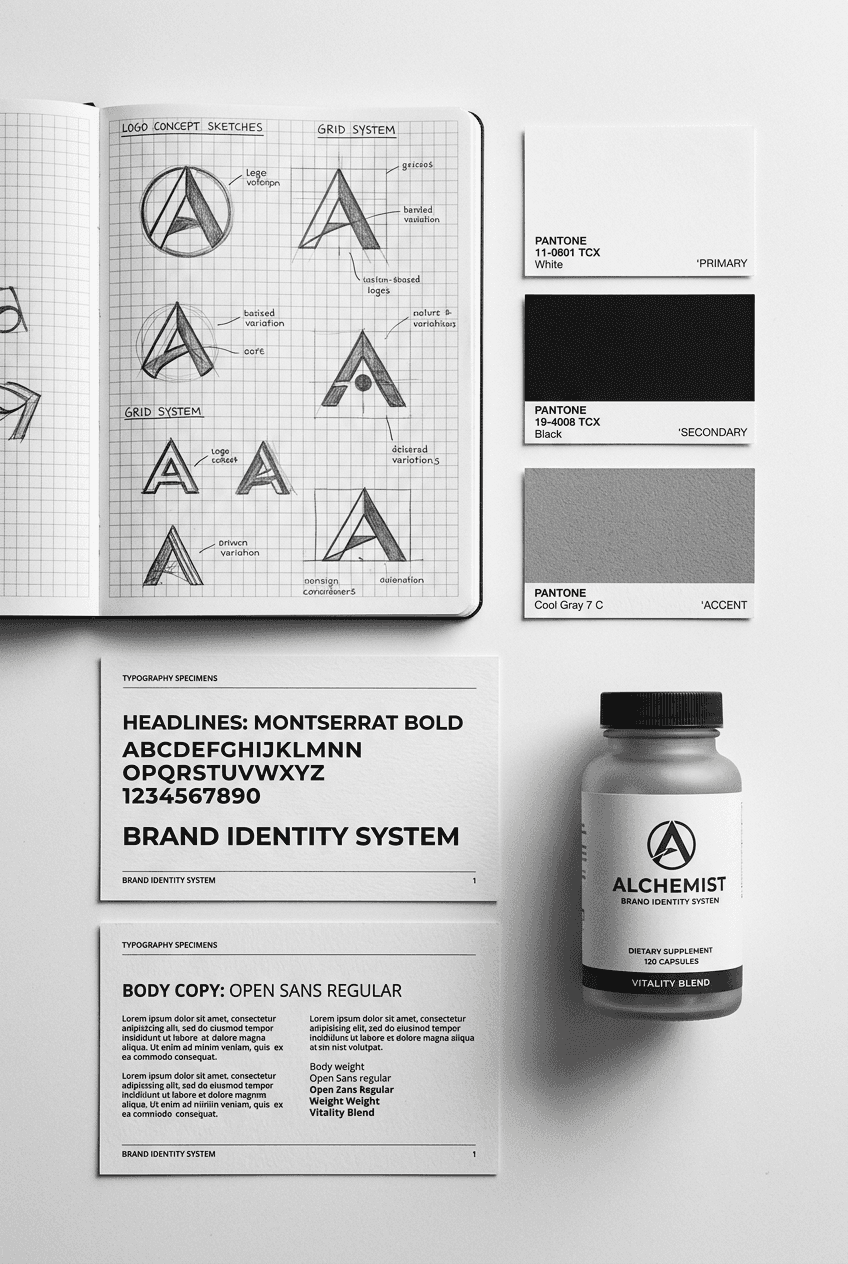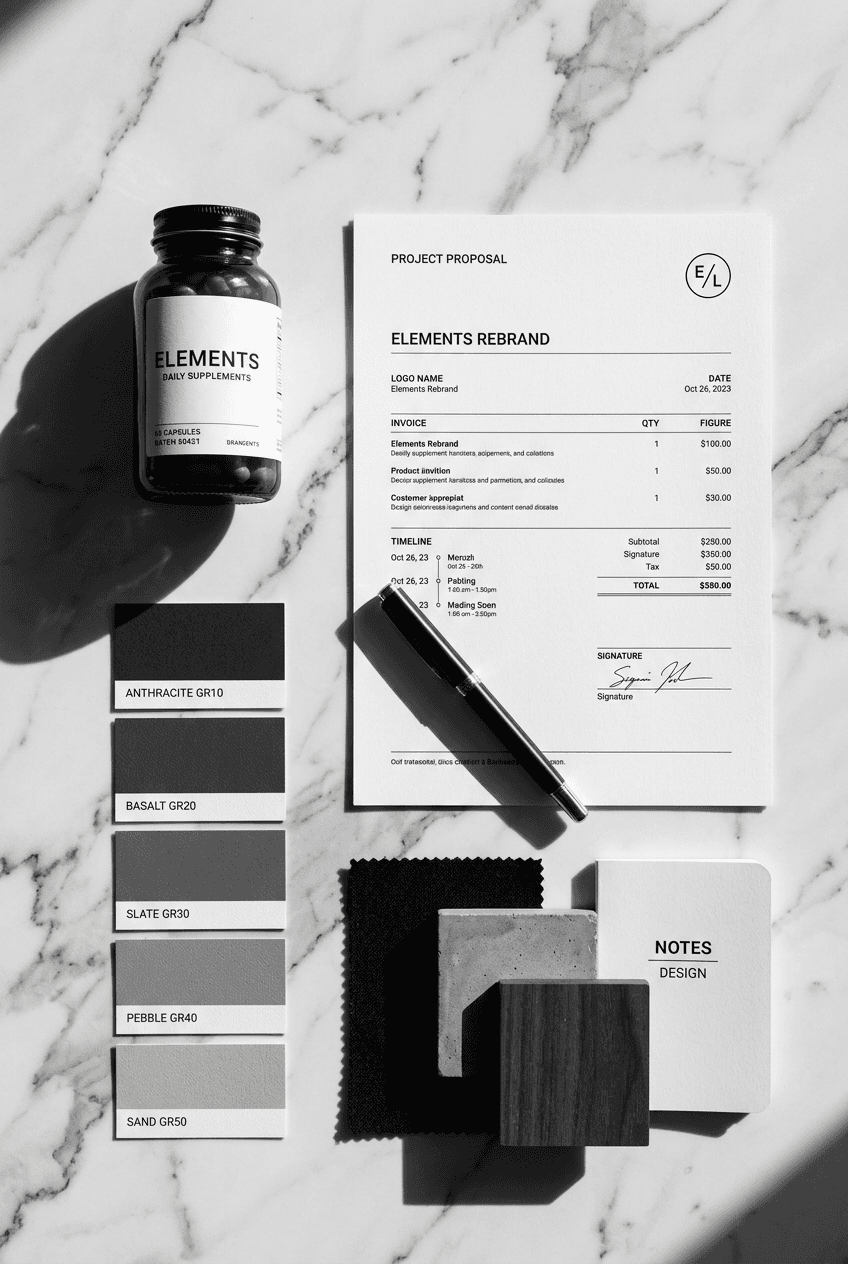

Cheap branding is not free. You pay for it later, at relaunch, when it costs twice as much.
Why Supplement Branding Pricing Is So Opaque
The supplement branding market has a transparency problem. Most studios list no prices on their websites. RFP processes produce wildly inconsistent proposals. Founders hear wildly different numbers from different sources and have no framework for evaluating them. This opacity benefits agencies (it prevents price competition) and hurts founders (it makes budget planning nearly impossible).
The result is a market where founders either massively over-budget (paying for work they do not need) or massively under-budget (paying for work that cannot deliver what they need at the quoted price). Neither outcome serves the people building supplement brands.
This guide gives you actual pricing ranges, what those ranges include, and the factors that drive cost variation. It is the information a good studio would share with you in a first conversation.
What Drives Supplement Branding Costs
Before getting to specific price ranges, it is worth understanding the five factors that cause the most variation in supplement branding costs.
Studio tier and specialization. A specialist supplement branding studio with 10 years of category experience commands a different rate than a generalist graphic designer who has done a few supplement projects. The premium reflects not just execution quality but strategic knowledge that prevents expensive mistakes. Scope of deliverables. A logo-only project is fundamentally different from a full brand system including strategy, identity, packaging, brand guidelines, and digital assets. These are not the same product at different price points. They are genuinely different engagements with different outcomes. Number of SKUs and packaging formats. A single product in one format costs significantly less to brand than a range of six products across three packaging formats. Each additional SKU multiplies the packaging design work substantially. Revision process and project duration. Projects with more revision rounds, longer approval processes, or more stakeholders involved cost more because they consume more studio time. The number of revision rounds included in a scope is one of the most meaningful differences between proposals. Geographic market complexity. Brands launching in a single market have simpler regulatory and visual requirements than brands designing for simultaneous US, EU, and UK launch. Multi-market launches require label architecture that accommodates different regulatory text blocks, which increases design complexity and time.
Supplement Branding Cost by Service Level
Here is how supplement branding investment breaks down across different engagement types. These are real-world ranges based on current market rates.
Level 1: Logo and Basic Visual Identity
Investment range: $2,500 to $8,000
What this typically includes: logo design (3-4 concept directions with one carried to final), color palette selection, typography recommendation, basic brand guidelines (1-2 pages), and master logo files.
What this does not include: packaging design, label architecture, brand strategy documentation, competitive research, or digital asset templates.
Best for: early-stage DTC brands testing a product concept before committing to full packaging investment, or brands that already have a clear positioning and need only visual execution.
The risk at this level: a logo without strategy is a mark without meaning. Logos designed without a competitive audit or positioning framework frequently need to be replaced when the brand attempts to enter retail or scale.
Level 2: Brand Identity with Packaging Design
Investment range: $8,000 to $25,000
What this typically includes: discovery and positioning workshop, competitive visual audit, logo and identity development, color palette and typography system, primary packaging label design for one product, and brand guidelines document.
What this does not include: secondary packaging design, full product range extension, photography production, or ongoing brand management.
Best for: brands launching one or two SKUs who need a commercially solid identity from the start but are not yet ready for a full brand system investment.
According to a 2023 Packaging Digest industry survey, brands that invest in professional packaging design at launch generate an average of 22% higher reorder rates in their first year compared to brands using DIY or freelancer-built packaging. At this investment level, the ROI calculus is clear for most supplement launches.
Level 3: Full Brand System
Investment range: $25,000 to $60,000
What this typically includes: full brand strategy and positioning, competitive landscape research, naming input (if required), logo and identity system, color and typography standards, packaging design for full product range (3-8 SKUs), primary and secondary packaging, brand guidelines (comprehensive), digital asset templates, and photography style guide.
What this does not include: photography production itself, website design, paid media assets, or ongoing retainer support.
Best for: brands with serious retail ambitions, multi-SKU ranges, or international market targets. This scope produces a brand identity that can be handed to a packaging manufacturer, a web designer, a social media manager, and a retail buyer and communicate consistently across all those contexts.
Level 4: Enterprise Brand Development
Investment range: $60,000 and above
What this typically includes: everything in Level 3, plus multiple product line development, international market adaptation (US, EU, AU regulatory variants), photography production, website design integration, and sometimes a retained brand management relationship.
Best for: supplement brands with significant product ranges, multiple target markets, and well-funded launches. At this level, branding is treated as a commercial infrastructure investment, not a creative project.
Freelancer vs. Boutique Studio vs. Large Agency: Real Cost Differences
The three main types of supplement branding partners have genuinely different cost structures and genuinely different outputs.
Freelance designers typically charge $50-150/hour or fixed project rates of $1,500-10,000 for supplement branding work. The cost advantage is real. The tradeoffs are also real: most freelancers work without strategic frameworks, without competitive research capability, without production knowledge, and without the accountability structures that come with studio engagement. For early-stage testing, a skilled freelancer can be excellent value. For a brand intended to grow to retail, the limitations become apparent quickly. Boutique specialist studios (like Tambi Haspak) typically charge $15,000-60,000 for supplement brand system work. These studios combine strategic rigor with design execution, bring category-specific expertise, and have production knowledge that prevents expensive errors. The investment is higher than freelance. The commercial outcomes are consistently stronger. Large full-service agencies typically charge $80,000-300,000 and above for brand system work. At this level, you are paying for significant overhead, multiple management layers, and generalist scale. For established supplement brands with large budgets and complex needs, this can make sense. For emerging supplement brands, it almost never does.
What Rebranding Actually Costs (The Hidden Cost of Under-Investing)
One reason the "invest properly upfront" argument is worth making is the real cost of supplement brand relaunches. When a brand identity does not perform at retail, needs to be rebuilt to enter a new market, or simply looks unprofessional after 18 months of growth, the cost of fixing it is substantially higher than the original investment would have been.
A supplement brand relaunch typically involves: new design fees (often at full scope, since small changes to weak brands rarely solve the underlying problems), new packaging production minimum runs (usually 1,000-5,000 units per SKU), stale inventory writedowns, the disruption period where old and new brand coexist in the market, and the customer confusion that comes with mid-flight brand changes.
For a mid-size supplement brand with four SKUs, a relaunch typically costs $40,000-120,000 in direct costs, plus the indirect cost of the market confusion period. That is often three to four times what a proper initial brand investment would have cost.
The economics of investing properly at launch are compelling. The brands that learn this lesson early are the ones that grow efficiently. The ones that learn it late pay for their brand twice.
How to Evaluate a Supplement Branding Proposal
When you receive a proposal for supplement branding work, evaluate it against these criteria. Price alone is not the right filter.
What specifically is included? The proposal should list every deliverable precisely. Vague descriptions like "branding package" or "full brand identity" without detailed scope are invitations to scope disputes later. How many revision rounds are included? Two rounds is typical. One round is restrictive. Unlimited revisions is not a generous offer. It is a signal that the studio is uncertain about their process or their ability to get direction right early. Who owns the work? Final deliverables, including master files, should transfer to you in full at project completion. Any proposal that implies retained ownership of deliverables by the studio is not a standard arrangement. What is the payment structure? Standard supplement branding projects are structured as 50% upfront, 50% on delivery. Proposals that require 100% upfront payment before work begins or unusual payment structures deserve scrutiny. What does the process look like? A proposal with a clear, phase-by-phase process description indicates a studio that has done this enough times to have a reliable methodology. A vague process description indicates improvisation.
FAQ: Supplement Branding Cost
How much does supplement branding cost in total?
Total supplement branding investment ranges from $2,500 for a basic logo to $60,000 or more for a complete brand system including strategy, identity, and full packaging design. For a typical single-product launch aiming for retail, a realistic budget is $15,000-30,000 with a specialist studio.
Is it worth paying more for a specialist supplement branding studio?
Yes, for brands with retail ambitions or plans to scale. A specialist studio brings regulatory knowledge, category visual intelligence, and production expertise that generalist studios lack. The premium is typically 30-50% above generalist rates. The value is avoiding mistakes that cost 3-4x that premium to fix later.
Can I brand my supplement on a very small budget?
An early-stage DTC test with $2,000-5,000 is possible using skilled freelancers. It requires clear positioning from you (so the designer is not working without strategic direction), careful freelancer selection (portfolio review specifically in supplements), and an honest acknowledgment that the resulting brand will likely need professional development before retail entry.
What is the average cost to design a supplement label?
Supplement label design specifically, without a broader brand identity engagement, typically costs $1,500-6,000 with a freelancer and $3,000-12,000 with a specialist studio for a single product. These figures assume the logo and brand identity already exist.
Does branding cost vary by type of supplement?
Not significantly. A protein powder and a vitamin supplement have the same fundamental branding needs. Complexity increases with the number of SKUs, the number of markets targeted, and the complexity of the packaging format rather than the type of supplement.
How do I budget for supplement branding?
A practical rule for emerging supplement brands: allocate 8-15% of your first-year projected revenue to brand development and packaging design. Brands projecting $200,000 in first-year revenue should budget $16,000-30,000 for branding. For brands with retail distribution ambitions, err toward the higher end of that range.
What should I avoid when budgeting for supplement branding?
Avoid selecting an agency based on price alone, avoid underestimating packaging production costs (design fees and print production fees are separate), and avoid planning to "upgrade" the brand later as a cost-saving strategy. The cost of rebranding after launch is consistently higher than investing properly at the start.
I'm Tambi Haspak, a brand strategist and creative director with an unfair advantage: I'm a pharmacist. I run a creative studio for cosmetics, supplements and beyond. 17 years. Exclusively. If you want an honest conversation about what your supplement brand needs and what it will actually cost, book a call or email me directly.