
"Clean beauty" is unregulated marketing language that can mean almost anything or nothing at all.
What "Clean Beauty" Actually Means (And Why It's Not Regulated)
Let me be direct: "clean beauty" is not a regulatory category. The FDA doesn't define it. The EU doesn't define it. No standards body has agreed on a definition. This means "clean beauty" can mean essentially anything any brand wants it to mean.
This is both a marketing opportunity and a credibility trap.
Some brands use "clean" to mean "no synthetic fragrances." Other brands use "clean" to mean "no ingredients from the European banned list." Some brands use "clean" to mean "no parabens." Some use it to mean "made from natural ingredients." Some use it to mean "sustainably sourced." Some use it purely as aesthetic positioning, with no ingredient definition at all.
The term originated in the early 2010s as a consumer-led movement away from certain ingredients (parabens, phthalates, synthetic fragrance) that gained public attention. Brands responded by creating products that avoided these ingredients and called them "clean." The marketing worked so well that "clean beauty" became a category independent of any actual definition.
According to consumer research, 63% of beauty consumers say they want "clean" products, but when asked to define clean, their definitions vary wildly (Mintel Clean Beauty Report, 2025). Some associate it with natural ingredients. Some associate it with safety. Some associate it with minimal ingredient lists. Some associate it with environmental responsibility.
This disconnect creates an opportunity for honest brands and a graveyard for greenwashing brands.
The Spectrum From Natural to Organic to Clean to Clinical
Understanding the spectrum helps you position your brand defensibly. These categories are not synonymous.
Natural Products
Natural positioning means ingredients are derived from nature rather than synthesized in a lab. A natural product might contain preservatives (which are often synthetic), fragrances (which might be synthetic), and processed ingredients. "Natural" doesn't mean minimal processing or maximum safety.
The FDA doesn't regulate the term "natural" on cosmetics, so any brand can claim it. This makes "natural" nearly as meaningless as "clean." You can have natural products with controversial ingredients, and you can have synthetic ingredients that are extremely safe.
Organic Products
Organic is regulated by USDA or equivalent standards in many countries. Organic means ingredients are grown without synthetic pesticides, herbicides, or fertilizers, and are processed minimally. Organic certification is verifiable and meaningful.
However, organic doesn't mean the final formulation doesn't contain synthetic preservatives or other additives. An organic skincare product can contain synthetic silicones or synthetic preservatives if they meet organic standards for processing.
Clean Products
"Clean" typically means avoiding a specific list of controversial ingredients. Clean beauty pioneer Credo Beauty has a ban list of 2,700 chemicals. Other brands have shorter or longer lists. But there is no universal "clean" list.
The assumption underlying "clean" positioning is that the avoided ingredients are less safe or less desirable. This is not always scientifically accurate. Some banned ingredients (like certain preservatives) are controversial but actually necessary for product safety.
Clinical Products
Clinical positioning emphasizes efficacy and scientific backing. Clinical products might contain synthetic ingredients, controversial ingredients, or potentially sensitizing ingredients, but they're used at concentrations and combinations supported by clinical evidence.
Clinical brands don't position around ingredient purity. They position around measurable results backed by data.
The spectrum matters because each positioning has different implications for your brand architecture.
Category | Definition | Regulation | Ingredient Sensitivity | Marketing Implication |
|---|---|---|---|---|
Natural | Derived from nature | None (FDA) | Varies | Undefined, marketable |
Organic | Certified no synthetic inputs | USDA | Varies | Specific, verifiable |
Clean | Avoids controversy list | None | High | Undefined, variable |
Clinical | Evidence-based efficacy | Varies | Low | Specific, measurable |
How Greenwashing Damages Brand Trust Long-Term
Here's the hard truth: the brands winning in "clean beauty" today are facing a credibility cliff tomorrow.
Consumer awareness is rising. People are starting to research ingredients themselves. They're learning that parabens (a common "clean" avoidance) are actually well-tested and safety-approved. They're discovering that synthetic ingredients can be safer than some natural ones. They're realizing that "clean" often means nothing.
This is creating a credibility crisis. Brands that positioned with vague "clean" claims are now seen as untrustworthy when consumers educate themselves. The brand that said "clean" without defining it looks like it was hiding something.
Greenwashing (making environmental or safety claims you can't substantiate) was a successful short-term tactic. But long-term, it corrodes brand authority. Once a consumer discovers they've been misled about what "clean" means, they're unlikely to trust your brand again.
The brands that will own the premium beauty market for the next 10 years are the ones that make specific, substantiated claims about their ingredients and positioning. Not vague "clean" claims, but defensible ones.
I recommend brands choose a specific positioning within the spectrum and defend it rigorously. "Organic-certified skincare" is defensible. "Products formulated without parabens or phthalates" is defensible. "Clinically tested for sensitivity" is defensible. Vague "clean beauty" is not.
How to Build a Defensible Clean Beauty Position
If you're positioning as "clean" beauty, here's how to make it defensible rather than greenwashed.
Step 1: Define Your Specific Avoidances
Start with a clear list of ingredients you avoid and why. Examples:
We avoid parabens because customers have expressed concern about endocrine-disrupting chemicals, though parabens are FDA-approved.
We avoid synthetic fragrance because we believe in ingredient transparency, and fragrances are protected trade secrets.
We avoid phthalates because they're restricted in some markets and we prefer ingredient consistency across all regions.
Each avoidance has a reason. That reason becomes your positioning foundation.
Step 2: Verify Each Avoidance Against Your Formula
Actually check your formulas. Don't claim to avoid something if your formula contains it. This sounds obvious, but manufacturers miss this constantly. Phthalates can hide in fragrance components. Certain preservatives are chemically related to compounds you're avoiding. Verify thoroughly.
Step 3: Create an Ingredient Transparency Statement
List all your ingredients with brief explanations of why they're there and what they do. This transforms your ingredient list from something to hide into a transparency asset.
Example: "Glycerin (humectant): draws water into the skin for hydration. Derived from sustainable plant sources."
Example: "Xanthan Gum (thickener): natural polymer that gives the formula its texture. From fermented corn and bacteria cultures."
Transparency statements take time to develop but they build trust. Consumers who understand your ingredient choices become brand advocates.
Step 4: Back Up Claims With Third-Party Verification if Possible
If you're avoiding certain ingredients, third-party certification validates your claim. Examples:
EWG verification (Environmental Working Group)
Credo Beauty acceptance
Clean Beauty Collective membership
MADE SAFE certification
These certifications aren't perfect, but they provide external validation that your "clean" positioning is real.
Step 5: Position the Honest Trade-offs
Clean beauty usually involves trade-offs. It might cost more because you're using premium ingredients. It might smell different because you're not using synthetic fragrance. It might have shorter shelf life because you're avoiding certain preservatives.
Honest positioning acknowledges these trade-offs and explains them. "Our formulas last 18 months instead of 36 months because we use minimal preservatives. Store in a cool, dark place." This honesty builds trust.
The brands that hide trade-offs look like they're hiding something. The brands that acknowledge and explain trade-offs look confident and informed.
The Visual Signals of Clean Beauty Branding
Clean beauty has visual language, and understanding these signals helps you position your brand either within or outside this language.
Color Palettes
Clean beauty typically uses: whites, creams, soft greens, pastels, and natural earth tones. Bright synthetic colors are avoided because they suggest artificial or synthetic positioning. Metallics and high-contrast colors suggest luxury or clinical rather than clean.
If you're positioning as clean, these colors reinforce the claim. If you're positioning as clinical or luxury, avoid these colors because they dilute your positioning.
Typography
Clean beauty favors minimal, sans-serif typography. Hand-lettered or script fonts feel natural or artisanal. Heavy, bold fonts feel chemical or industrial. Serif fonts feel traditional or clinical.
The typography should feel organic and simple if you're claiming clean beauty. This is another visual signal of your positioning.
Packaging Materials
Clean beauty brands use glass, paper, wood, or minimal plastic. Transparent packaging so ingredients are visible. Minimal printing, maximum whitespace. The aesthetic signals "nothing to hide."
Clinical brands use sophisticated packaging, often opaque, with premium finishes. Clean brands use simple, transparent packaging. These visual signals matter.
Imagery
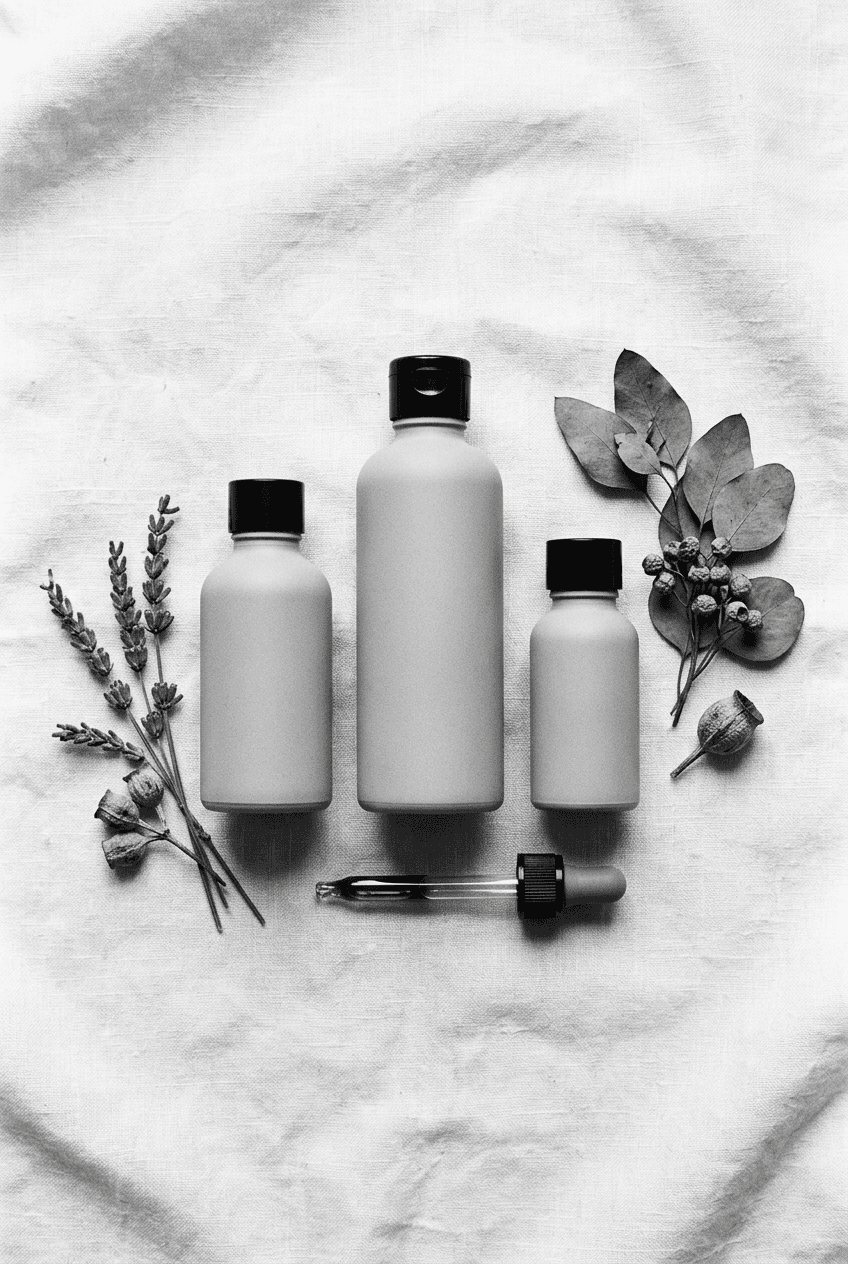
Clean beauty imagery tends to show natural ingredients, botanical elements, green plants, water, or minimal, uncluttered laboratory settings. Imagery suggests purity and simplicity.
Clinical brands use more sophisticated imagery: precise laboratory shots, data visualization, scientific equipment. These signal efficacy and rigor rather than purity.
The visual system should align with your actual positioning, not undermine it.
Supplement vs. Skincare Clean Beauty Positioning
The "clean" trend shows up in both supplements and skincare, but the claims landscape is different.
For supplements, you can make structure and function claims about specific ingredients. "Contains antioxidants for free radical protection" is a defensible supplement claim. "Our antioxidant supplement supports healthy aging" is defensible.
For skincare, you cannot make health or disease claims. You can only make cosmetic benefit claims. "Contains antioxidants" is fine for a skincare product if it's accurate. "Reduces free radical damage" is fine. But "prevents aging" or "reverses aging" crosses into drug claims.
This means clean beauty positioning for skincare needs to focus on ingredient transparency and aesthetic benefits, not efficacy benefits. Clean beauty positioning for supplements can focus on ingredient sourcing and specific function claims.
If you're developing both supplement and skincare brands, separate your positioning by product category. Skincare stays in cosmetic benefit language. Supplements can use structure and function language.
How a Pharmacist Thinks About "Clean" Differently
I have an advantage in this space because I understand ingredient safety from a scientific perspective, not a marketing perspective.
Paraben controversy is a good example. Parabens are controversial in marketing but well-tested in science. They're FDA-approved, they're used in pharmaceutical formulations, and decades of safety data show they're well-tolerated. But consumers perceive them as dangerous because of marketing pressure suggesting they're harmful.
As a pharmacist-designer, I can either:
Avoid parabens and position as "clean," knowing the chemistry is sound but the perception supports the market position.
Include parabens and position as "clinically tested and safe," defending the ingredient with science.
Find a natural preservative that performs similarly and position around that specific choice.
All three are defensible. The key is being honest about the choice and its implications.
Most brands make option 1 (avoid parabens, claim "clean") because it's the safest marketing move. But they should do so understanding that the science doesn't support the concern, only the market perception does.
The best brands acknowledge this. "We formulated without parabens because our customers prefer paraben-free formulations, even though parabens are scientifically safe. We use X preservative instead." This honesty and transparency build lasting credibility.
FAQ
Is "clean beauty" the same as "natural beauty"?
No. A natural product uses natural ingredients but might not be clean if it contains controversial preservatives or additives. A clean product avoids specific ingredients but might use synthetic ingredients that clean beauty advocates accept. Natural and clean are different positioning axes.
What does "nontoxic" mean in beauty marketing?
It means essentially nothing. Everything is toxic in high enough doses. Even water is toxic. The term "nontoxic" is marketing language without scientific definition. Avoid using it in your positioning. Instead, specify "formulated without X ingredient" or "meets safety standards for Y."
If a brand claims to be "clean beauty" but isn't certified, how do you know if it's accurate?
Check the ingredient list and research each ingredient's controversy status. Look at the brand's website for an ingredient transparency statement. See if they're transparent about their choices or if they're being vague. Third-party certification (EWG, Credo) adds credibility. But ultimately, you assess based on transparency and specificity.
Can a luxury brand also be a clean beauty brand?
Yes. Clean beauty and luxury are not mutually exclusive. A luxury brand can use premium natural ingredients, minimal processing, and clean ingredient profiles. The price point reflects ingredient quality and packaging, not the positioning. Some of the most successful clean beauty brands are premium-priced.
How do you balance clean beauty positioning with product efficacy?
By choosing ingredients that are both clean and effective. Vitamin C is clean and effective. Niacinamide is clean and effective. Plant-derived hyaluronic acid is clean and effective. The best approach is finding ingredients that meet both your clean criteria and your efficacy requirements. Don't sacrifice efficacy for the clean claim.
If you're advertising clean beauty, do you have to disclose the banned ingredient list you're avoiding?
No legal requirement, but transparency is good practice. If you're claiming to avoid certain ingredients, having a published list shows you're serious. If you're vague about what "clean" means, you look like you're hiding something.
What happens if consumers discover a "clean beauty" brand contains an ingredient from their concern list?
You have a credibility crisis. The brand is now seen as deceptive or sloppy. This is why transparency is essential. Either define your avoidances clearly and verify your formulas meet them, or don't claim to be clean. Vague claims followed by discovery of controversial ingredients destroys brand trust.
Is organic certification worth the cost for a skincare brand?
Only if you're marketing specifically on organic positioning. USDA organic certification costs money and adds complexity to ingredient sourcing. If organic is central to your brand story, the certification adds credibility. If you're positioning on other factors (efficacy, luxury, clean), organic certification might not be necessary.
Closing
I'm Tambi Haşpak, a brand strategist and creative director with an unfair advantage: I'm a pharmacist. I run a creative studio for cosmetics, supplements and beyond. 17+ years. Exclusively.
Clean beauty is a real market opportunity, but only for brands willing to be specific and honest about what "clean" means to them. Vague greenwashing looks smart short-term but builds credibility cliffs long-term. The brands that will own the premium market are ones that make defensible, transparent claims and stand behind them.
For more on honest beauty positioning, explore cosmetics brand strategy and luxury skincare branding. If you're building a clean beauty brand and need strategic positioning and honest ingredient communication, let's discuss my branding services.
Learn more about clean beauty and ingredient transparency from Credo Beauty's ingredient standards and EWG's cosmetics database and research.