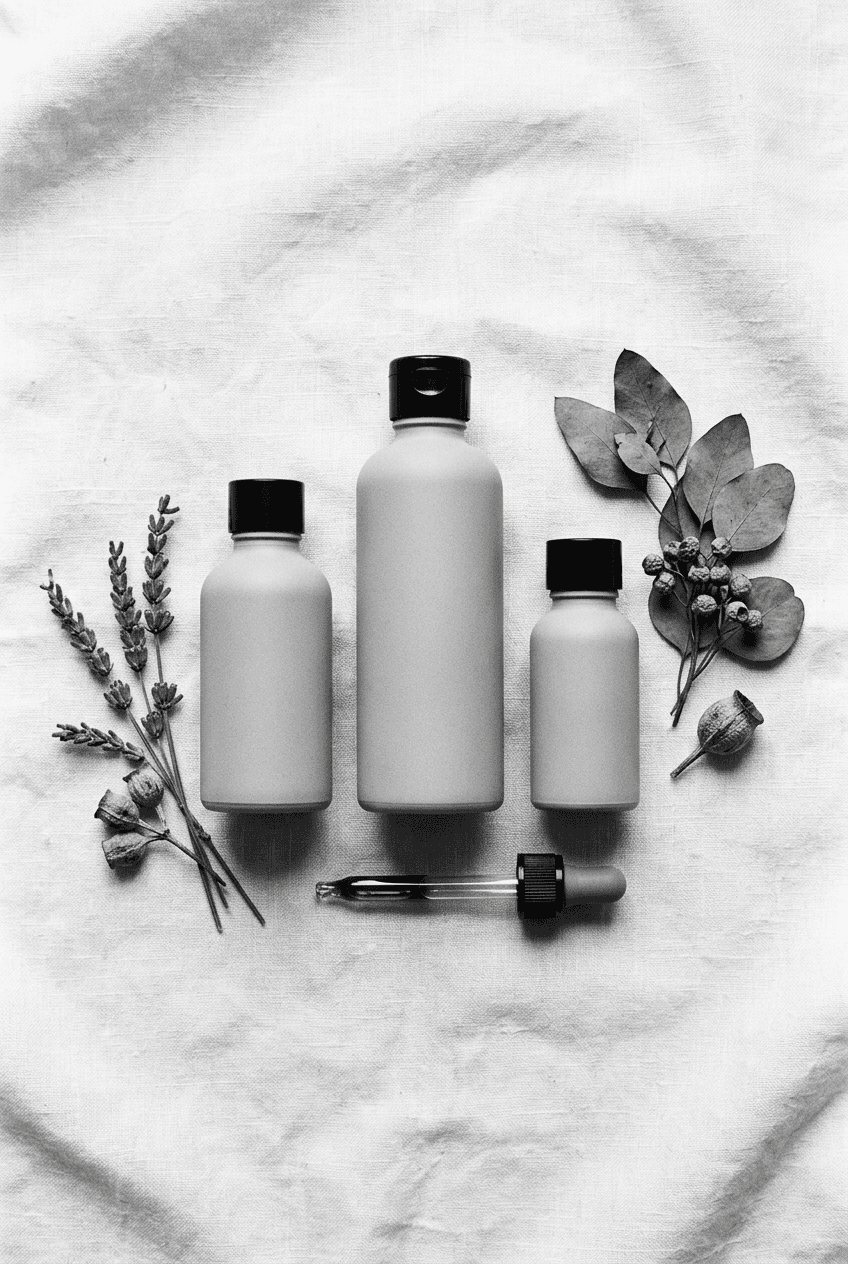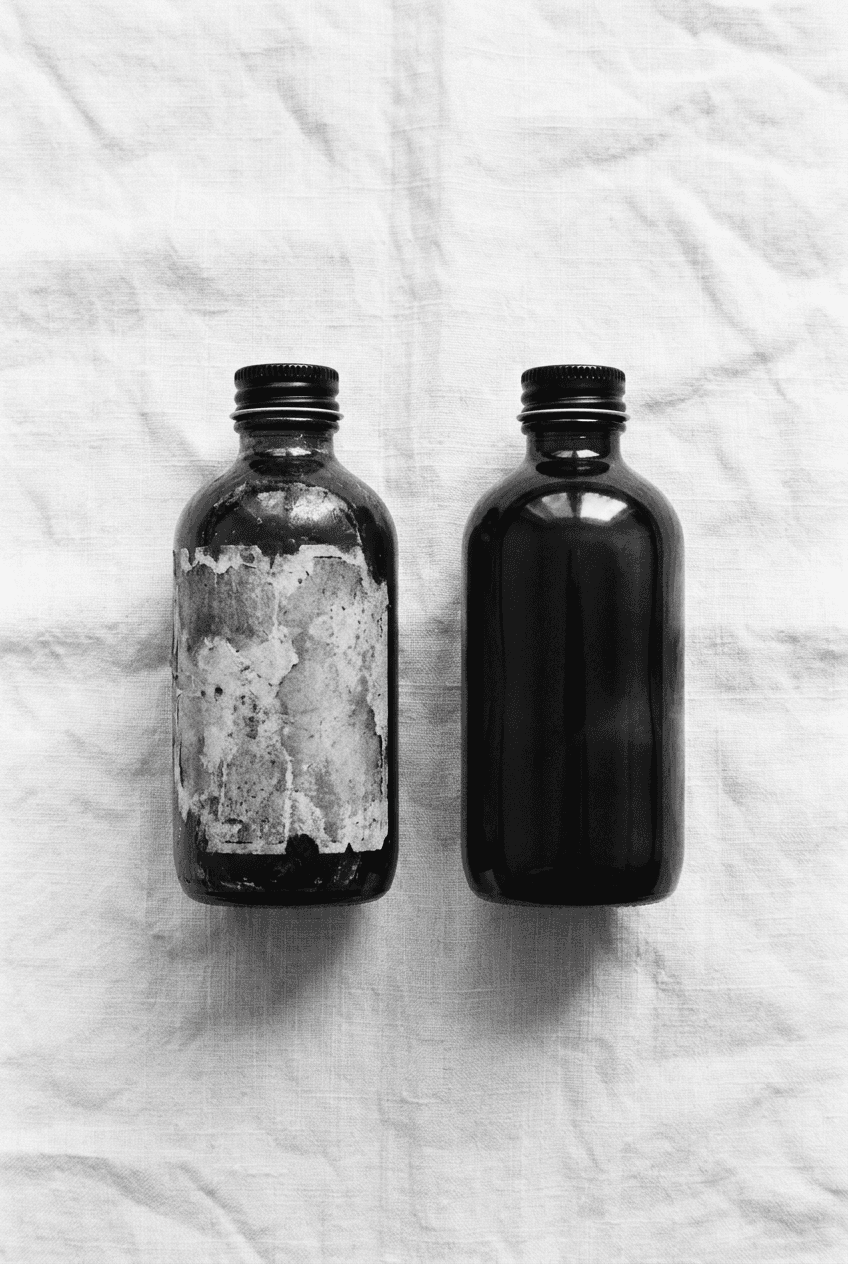

A rebrand isn't a fresh start. It's a translation that keeps your customer loyalty while shifting perception.
What Rebranding Actually Means in Cosmetics
Most brand owners confuse a rebrand with a logo refresh. They're not the same thing.
A logo refresh updates the mark but keeps the broader visual identity intact. The color palette, typography, and overall aesthetic stay recognizable. A customer sees the refreshed logo and thinks, "Oh, they updated their look," but still immediately recognizes the brand.
A true rebrand changes the entire visual language: logo, color palette, typography, packaging design, tone, positioning, sometimes even the product narrative. (Interbrand Best Global Brands, 2024) A customer might look at the new packaging and not recognize the brand at first because the visual identity has fundamentally shifted.
A logo refresh costs $5,000 to $25,000. A true rebrand costs $50,000 to $300,000 or more because it touches every customer touchpoint: packaging, website, social media, retail displays, marketing materials, product photography, brand guidelines.
Most cosmetics brands actually need a refresh, not a full rebrand. But some need a rebrand because their current visual identity is actively preventing growth. Those are the brands I want to discuss here.
The 5 Clear Signals Your Beauty Brand Needs a Rebrand
These are patterns I see repeatedly in cosmetics brands that are stuck or declining.
Signal 1: Your positioning has shifted but your visual identity hasn't.
You launched as a mass-market natural skincare brand. You've evolved. Your products are now better formulated, more expensive, less widely available. Your customers are older, wealthier, and buying you for efficacy not just naturalness. Your visual identity still looks like a direct-response e-commerce brand from 2018.
This disconnect creates confusion at point of sale. Retailers don't know where to stock you. Customers see the packaging and assume it's cheap. Your internal knowledge of your product's quality doesn't translate visually. A rebrand bridges this gap by making the visual identity match your actual positioning.
Signal 2: You're invisible in your retail environment.
You sell in natural products retail or beauty supply. You visit the shelf and your brand disappears next to competitors. Your typography is too small. Your color palette blends with three other brands. Your packaging hierarchy doesn't communicate your primary benefit.
This isn't a problem of quality. Your products might be superior. The problem is that the packaging wasn't designed for the actual retail environment where it's being sold. A rebrand that accounts for retail shelf impact can increase visibility by 300% without changing a single product. (Shopper Marketing Institute, 2025)
Signal 3: Your brand story has evolved beyond your visual identity.
You started in a home kitchen. Your origin story was indie hustle and DIY entrepreneurship. Now you're in a professional lab with dermatologists on your advisory board. Your brand has grown into a legitimate skincare company with real efficacy claims and professional positioning.
Your packaging still looks like a home-made label. Customers don't believe your professional positioning because the visual identity contradicts it. A rebrand that elevates your design to match your actual capability and expertise is necessary here.
Signal 4: You're losing market share to newer brands with stronger visual identity.
You've been in the market longer. Your product quality hasn't declined. But newer competitors are stealing shelf space and direct customers. When you audit why, the answer is almost always visual identity and perceived positioning.
Newer competitors look more confident, more intentional, more positioned. You look tired or outdated even though your products are good. This is the moment when rebranding isn't vanity. It's survival. (Euromonitor International Cosmetics Report, 2025)
Signal 5: Your brand identity is being commoditized or copied.
You built a distinctive look. Now five other brands have copied your color palette, your typography style, your overall aesthetic. Your visual differentiation is gone. Customers can't tell you apart from competitors because the visual language has become generic.
A rebrand reclaims your visual distinction and typically includes stronger IP protection (custom typography, proprietary color formulas, distinctive packaging shapes) that competitors can't easily copy.
The 3 Signals That Tell You It's Too Early to Rebrand
Not every desire to rebrand is legitimate. Sometimes brands want to rebrand for the wrong reasons.
Signal 1: You're rebranding because the current brand feels "tired" to you personally.
You've been looking at your packaging for five years. Of course it feels tired to you. But your customers still respond to it. They recognize it. They buy it. They're loyal to it.
Before you rebrand, test market perception. Show your current packaging to customers and ask if they perceive it as dated, tired, or low-quality. If customers still see it as current and appealing, the tiredness is in your mind, not the market.
Personal boredom with a brand identity is not a reason to rebrand. It's a reason to step away from decision-making for a month and see if you still feel the same way.
Signal 2: You're rebranding to copy a competitor's visual success.
You see a competitor rebrand and gain traction. You assume rebranding will do the same for you. You're conflating cause and effect. The competitor gained traction because their rebrand was strategic and well-timed. They didn't gain traction simply because they rebranded.
A rebrand executed poorly actually damages your brand equity. You lose recognition. Existing customers have to relearn your brand. You get no corresponding gain in new customer acquisition because the rebrand wasn't strategic.
Before you rebrand to match a competitor trend, ask: Is my brand identity actually preventing growth or do I want growth and assume rebranding will provide it?
Signal 3: You're rebranding because you're entering a new market segment without testing product-market fit first.
You're successful in natural products retail. You want to enter beauty supply chains where a more professional look might perform better. Before you rebrand everything, test the new market with your current brand identity. Does the problem actually exist?
Sometimes you just need a sub-brand or a separate line for the new market. Sometimes you need a soft brand refresh, not a full rebrand. Don't commit to rebranding everything when you're still testing whether the new market is viable for you.
The Rebrand Process Without Losing Customers
The biggest risk of rebranding is that existing customers don't recognize your new brand and assume you've been discontinued or replaced by a competitor.
Phase 1: Strategic Clarity (Weeks 1-3)
Before any design happens, clarify your positioning, your customer profile, and your market opportunity. Who are your existing customers and what will they think of this change? Who are the customers you're trying to attract?
Document what you're keeping (brand voice, ingredient philosophy, product benefits) and what you're changing (visual identity, price positioning, retail environment, perceived quality tier).
This phase is pure strategy. No creative work. Just clarity about what the rebrand is trying to accomplish and why. (Brand Strategy Institute, 2024)
Phase 2: Visual Design and Brand System (Weeks 4-10)
Work with a designer to create the new visual identity, including logo, color palette, typography, packaging design, brand guidelines, and imagery style. This is the most visible phase but it's actually less important than phase 1.
A good rebrand includes visual continuity bridges. If your original logo had curves, the new logo maintains some curved elements. If your original color was blue, the new palette might include a different blue that echoes the original. These bridges help existing customers recognize that it's still you, just evolved.
Phase 3: Packaging Transition (Weeks 11-16)
This is the critical phase for retaining customers. You have several options:
Option A: Transitional packaging that bridges old and new. The back label explains the rebrand. You might use both old and new design elements. This helps customers understand the transition is intentional and positive.
Option B: Gradual rollout by product line. If you have 10 SKUs, you might rebrand 3 per month over several months. This extends visibility of the transition and gives customers time to adjust. It also staggers your manufacturing commitments.
Option C: Dual labeling period. You print some units with the old packaging and some with the new. You sell both simultaneously for 6-8 weeks. Customers gradually move to the new design. Retailers see both versions on shelf and understand the transition is deliberate.
Option D: Coordinated launch where all packaging changes simultaneously. This is riskiest because existing customers might not recognize the new design. This works only if your rebrand includes extensive marketing support and customer communication.
Phase 4: Multi-Channel Communication (Weeks 8-20)
Rebranding requires explaining the change to customers. You do this through:
Email to existing customers explaining the rebrand and why (better formulations, professional positioning, improved sustainability). Reassure them that the product inside is still theirs.
Social media teasers before launch and celebration posts after launch. Show the before/after. Acknowledge customer loyalty. Explain the change is about better serving them.
Point-of-sale signage explaining the rebrand if you're in physical retail. Retailers don't always understand why packaging changed. Help them explain it to customers.
Website and packaging copy that explicitly states this is a rebrand, not a discontinuation or acquisition. Customers worry that rebrands mean the product changed for worse. Address this directly.
Phase 5: Inventory and Transition (Weeks 15-20)
Manage your inventory transition. Don't suddenly discontinue the old packaging if you have 3 months of stock remaining. You're leaving money on the table and confusing retailers.
Work with retailers to plan the transition. Some will want to sell through old inventory before accepting new packaging. Some will want to remove old packaging to make shelf space for new. Coordinate, don't force.
If you're direct-to-consumer, consider selling old stock at a slight discount or including old packaging as a "thank you" bonus with new purchases. This empowers customers to see the transition as something special, not something wrong.
Brand Refresh vs. Full Rebrand Comparison
Dimension | Refresh | Full Rebrand |
|---|---|---|
Logo | Updated but recognizable | New mark, may not resemble original |
Color Palette | Same core colors, maybe adjusted | Entirely new palette |
Typography | Same typeface family | New typeface selection |
Customer Recognition | Immediate, no confusion | Potential confusion initially |
Timeline | 6-8 weeks | 4-6 months |
Cost | $15,000-$50,000 | $75,000-$300,000+ |
Packaging Transition | Quick, one production run | Phased or dual-packaging strategy |
Risk | Low | Higher if not managed strategically |
Positioning Shift | Subtle refinement | Potential major shift |
Customer Retention | 95%+ maintain recognition | 85-90% if communicated well |
How Packaging Continuity Helps During Transitions
The smartest rebrands maintain visual continuity elements that help customers make the mental connection.
If your original brand used a specific shape or die-cut, the new brand might maintain that shape with refined details. If your packaging had a distinctive texture, the new packaging might keep that texture in a different color or with a different pattern.
These continuity elements work unconsciously. Customers see the shape or texture and their brain registers, "This is still that brand, just different." Packaging continuity reduces the cognitive load of recognizing the new design.
I see brands throw away all continuity because they want a completely fresh start. This backfires. You lose the visual equity you've built. Existing customers have to consciously recognize the new design. You're starting from zero instead of building from something.
Great rebrands keep about 30-40% of visual continuity (shapes, textures, some color) and change about 60-70% (logo, primary color palette, typography, overall aesthetic). This balance maintains recognition while signaling evolution.
Common Rebranding Mistakes in Beauty
I see patterns in rebrands that fail or underperform.
Mistake 1: Rebranding without market research. Owners design a new identity based on personal preference or design trends, without testing whether customers find the new brand stronger, more premium, or more distinctive.
Mistake 2: Rebranding to follow a trend instead of leading from strategy. You see minimalism gaining traction in skincare, so you go minimalist. You see luxury brands using maximalist design, so you become maximalist. Trend-chasing rebrands are often outdated before they launch.
Mistake 3: Rebranding without updating verbal identity. You change the visual design completely but keep the same tone and messaging. The disconnect is immediate. Visual and verbal identity should align.
Mistake 4: Rebranding without sufficient communication to existing customers. You change everything and expect customers to figure out that you still exist and you're still them. You lose more customers to confusion than you gain from new market appeal.
Mistake 5: Rebranding to elevate perceived quality while keeping product quality the same. Your packaging now looks luxury-tier but your products are still mass-market quality. Customers feel deceived when they use the product. You've damaged trust.
A rebrand is credible only if it's backed by actual product improvement, expanded professional distribution, or genuine market repositioning. Rebranding your packaging without changing what's inside rarely works long-term.
When You Should Actually Refresh Instead of Rebrand
Most cosmetics brands need a refresh, not a rebrand. A refresh is lower risk, lower cost, and often more effective if your fundamental positioning is still working.
Refresh when your brand is working but feeling tired. Refresh when your positioning is still correct but your visual execution is dated. Refresh when you want to evolve without losing customer recognition.
A refresh updates typography, refreshes color palette with modern nuances, refines logo details, and strengthens packaging hierarchy. The brand is still recognizable but feels current and intentional.
Rebrand when your visual identity is actively preventing you from being perceived in your target positioning tier. Rebrand when your old identity is commoditized or copied. Rebrand when your strategy has fundamentally shifted.
The decision between refresh and rebrand depends on one question: Is my current brand identity working for my strategy? If yes, refresh. If no, rebrand.
FAQ
Q: How much will rebranding actually increase my sales?
A: Rebranding alone doesn't increase sales. A strategic rebrand paired with distribution expansion, marketing investment, and product improvement can increase sales significantly. A rebrand without strategy often costs money without corresponding revenue gain.
Q: Should I rebrand all my product lines or start with one?
A: Start with your hero product or your best-selling line. Test the rebrand response with customers. Once you see positive response, extend to other lines. This staggers costs and lets you refine the rebrand approach based on real customer feedback.
Q: What do I do if customers don't recognize the new brand?
A: This is why communication is critical. Include clear messaging on packaging that says "New look, same trusted formula" or "Refreshed design, same commitment to quality." Use email and social media to explain the change. Run paid ads targeting existing customers to announce the rebrand.
Q: How long should I keep old packaging visible on retail shelves?
A: Typically 4-8 weeks. If you're in multiple retailers, coordinate the transition so they understand it's intentional. Some retailers will want to sell through old stock first. Some will want to make room for new. Work with them rather than forcing an immediate swap.
Q: Does rebranding require me to change my pricing?
A: Not necessarily. But many brands use a rebrand as an opportunity to adjust pricing. If your rebrand elevates you to prestige tier, you might raise prices. If you're emphasizing value and accessibility, you might hold or lower prices. Pricing should align with your new positioning.
Q: What if I rebrand and then realize I made a mistake?
A: It's expensive to rebrand twice in quick succession. Test extensively before committing to the rebrand. Run consumer testing with mockups. Show the new design to your most loyal customers and gather feedback. Make sure you're confident before producing packaging.
Q: Should I involve my customers in the rebrand process?
A: Customer input is valuable for testing but dangerous for creative direction. Show mockups to customers and ask if the new brand feels aligned with your positioning, quality tier, and benefits. Don't ask customers to design the brand. Use their feedback to validate your strategic choices.
Q: How often should a cosmetics brand rebrand?
A: A refresh every 3-5 years is normal. A full rebrand every 8-10 years, if at all. Some iconic beauty brands have the same core identity for decades. Frequent rebranding signals inconsistency and confusion to customers.
Q: Can I rebrand without changing my packaging?
A: Partially. You can update your website, marketing materials, and social content to reflect a new visual identity. But if you're still using old packaging, customers will see the contradiction. Packaging is your most visible brand asset. A credible rebrand includes packaging.
Q: What's the biggest rebrand mistake I see?
A: Rebranding for the wrong reasons. You rebrand because you're bored or because you saw a competitor rebrand. You don't rebrand because your strategy demands it. A rebrand that isn't strategically necessary costs money, confuses customers, and doesn't move the needle on sales.
Q: Should I create a sub-brand if I want to reach a new market segment?
A: Often, yes. Instead of rebranding your core brand to reach prestige retail, create a prestige sub-brand and keep your core brand in natural products retail. This lets you reach new customers without confusing existing ones. It costs more but it's lower risk.
I'm Tambi Haşpak, a brand strategist and creative director with an unfair advantage: I'm a pharmacist. I run a creative studio for cosmetics, supplements and beyond. 17+ years. Exclusively. I've rebranded beauty lines that went from commodity to distinctive and cosmetics brands that repositioned from mass to prestige tier. I've also advised brands to stay their course when rebranding would have been a mistake. When you're at the moment of wondering whether your brand needs a rebrand, I can help you make that decision strategically. Start by reading my cosmetics brand strategy services and my analysis on luxury skincare branding to explore how positioning shapes identity.