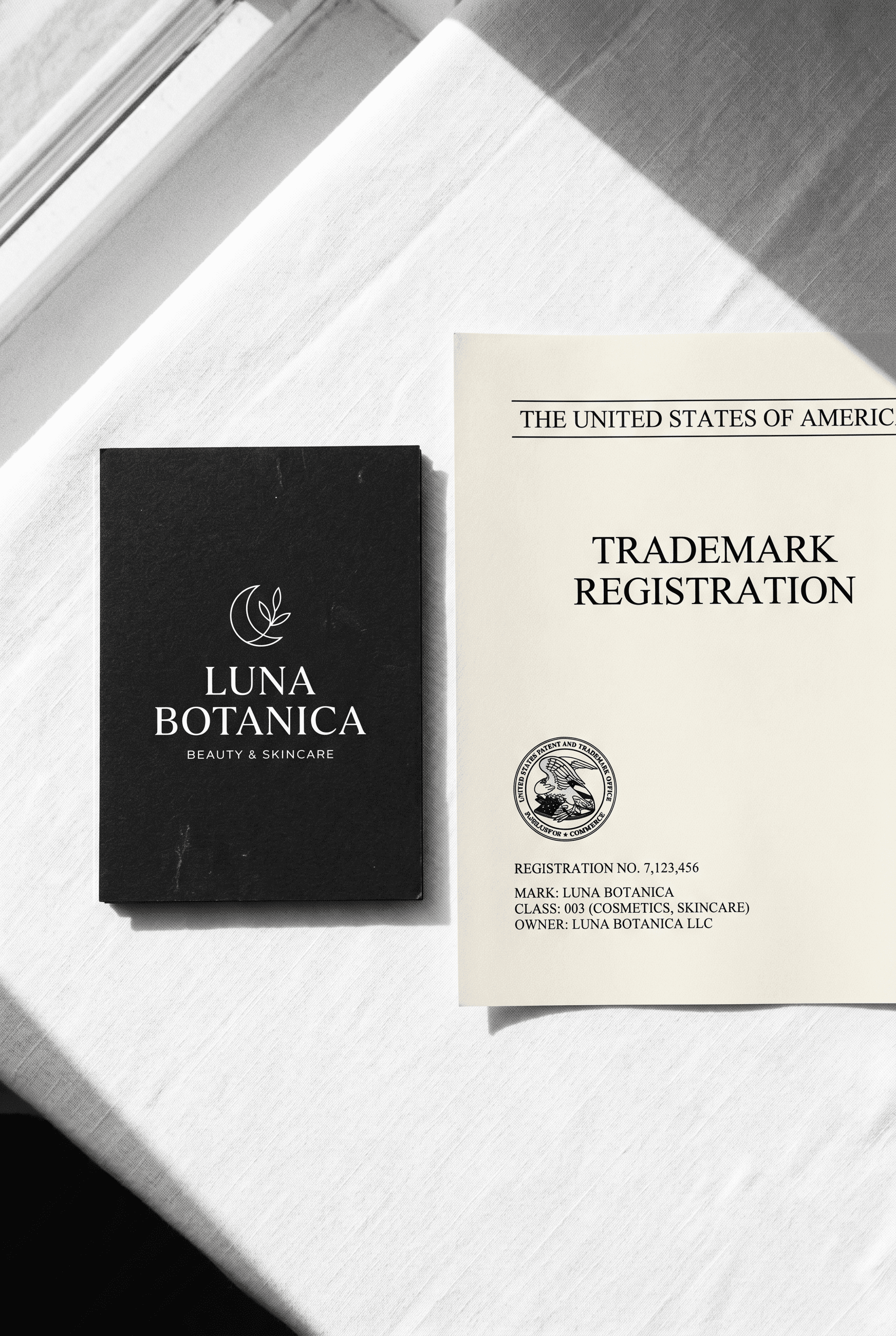

Discovering that your beauty brand name is not trademarkable after you have built a following, printed packaging, and launched is one of the most expensive branding mistakes in the category, and it is entirely avoidable.
Why Beauty Brand Trademark Issues Are So Common
The beauty and cosmetics industry has one of the highest rates of trademark conflict of any consumer category. The reasons are structural. Beauty founders frequently choose names based on ingredient, benefit, or aesthetic associations, which are exactly the categories of names that trademark law considers descriptive and difficult to protect. The category vocabulary is saturated: words like "glow," "pure," "radiance," "luxe," "silk," "bloom," and "veil" appear in hundreds of registered beauty brand names and can no longer be exclusively owned by anyone.
The USPTO (United States Patent and Trademark Office) processes more than 700,000 trademark applications per year. Beauty and personal care products fall primarily into International Class 3 (cosmetics and cleaning preparations) and Class 5 (pharmaceutical preparations and dietary supplements). Both classes are among the most crowded in the trademark register.
Founders who skip the trademark clearance process typically discover the problem in one of three ways: a cease and desist letter from an existing mark owner after launch, a USPTO office action rejecting the application as confusingly similar to an existing mark, or a rejection from a retail buyer's legal team when the brand attempts to enter distribution.
I am a pharmacist and creative director with 17 years of experience building beauty and cosmetics brands. This guide explains how trademark law applies to beauty brand names, what the clearance process involves, and how to name a beauty brand that can be protected.
The Trademark Strength Spectrum for Beauty Brand Names
Not all brand names are equally protectable. The spectrum from most to least protectable maps directly to the naming decisions most beauty founders make, and the most popular choices are usually the weakest.
Name Category | Trademark Strength | Beauty Examples | Likelihood of Registration |
|---|---|---|---|
Fanciful (invented word) | Strongest | Olay, Glossier, Tatcha | Very high |
Arbitrary (real word, unrelated meaning) | Strong | Milk, Sunday Riley, Drunk Elephant | High |
Suggestive (implies benefit without describing) | Moderate to strong | Cetaphil, Clarins | Moderate to high |
Descriptive (describes a feature or benefit) | Weak | GlowSerum, PureClean | Low, often refused |
Generic (the category name itself) | None | Moisturizer, Serum, Toner | Cannot be registered |
The most creative and commercially distinctive beauty brands cluster at the fanciful and arbitrary end of this spectrum. Invented words and unexpected word choices carry the strongest trademark protection and the greatest potential for brand distinctiveness. Descriptive names are the most common failure mode: founders choose names that feel meaningful because they describe what the product does, and those names are exactly the ones that the USPTO is most likely to reject.
The USPTO Registration Process for Beauty Brands
Step 1: Conduct a preliminary clearance search
Before investing in design, packaging, or product development, search the USPTO TESS database for existing marks in Class 3 and Class 5 that are identical or phonetically similar to the proposed name. Also search common law trademark databases (Google, domain registrars, social media) for brands using the name without registered marks.
Step 2: Engage a trademark attorney for a full clearance opinion
A preliminary TESS search identifies obvious conflicts. A full clearance opinion, conducted by a trademark attorney, also evaluates phonetic equivalents, design marks that incorporate the proposed name, and marks in related classifications that could create confusion. Budget $500 to $1,500 for a clearance opinion before committing to a name.
Step 3: File the application
USPTO filing fees for a trademark application are $250 to $350 per class per mark, depending on the filing basis. A beauty brand that wants protection in both Class 3 and Class 5 (for brands that sell both cosmetics and supplements) will pay fees for both classes.
Step 4: Respond to office actions
The USPTO examiner may issue an office action requesting clarification of the goods description, raising a likelihood of confusion with an existing mark, or identifying a descriptiveness issue with the mark. An attorney response to an office action typically costs $500 to $1,500. Budget for at least one office action in any trademark application.
Step 5: Publication and opposition period
If the USPTO approves the application, it is published in the Official Gazette for a 30-day opposition period during which existing mark owners can challenge the application. Oppositions are relatively rare but do occur, particularly in crowded categories. If no opposition is filed, the mark proceeds to registration.
The full process from application to registration typically takes 12 to 18 months. Applications on the Principal Register receive the strongest protection. Descriptive marks that are not yet distinctive enough for the Principal Register may be placed on the Supplemental Register, which provides limited protection.
For a detailed guide to the strategic naming process for cosmetics brands before trademark filing, see my guide to skincare brand naming.
Common Trademark Mistakes in Beauty Branding
Choosing a name and checking availability the same day
The most common mistake. A founder brainstorms names, does a quick Google search to confirm no major brands are using the name, and proceeds to design. A Google search does not reveal registered marks in related classes, common law marks used without registration, or phonetically similar marks that would survive a Google search but fail at the USPTO.
Not filing before launch
Trademark rights in the US are established by actual use in commerce. Filing a trademark application before launch establishes a priority date that protects against later filers. Founders who launch without filing and then attempt to register a name that has been adopted by another brand during the interim have lost their priority.
Filing in one class only
A beauty brand selling cosmetics (Class 3) that later adds supplements (Class 5) or tools and accessories (Class 21) needs trademark registration in each relevant class. Filing in Class 3 only leaves the brand name unprotected in adjacent product categories that are natural extensions of a beauty brand.
Using a geographic name or a personal surname
Geographic names and personal surnames receive limited trademark protection because they are considered descriptive of origin rather than of the brand. "London Beauty" or "Chen Skincare" can be registered but require evidence of acquired distinctiveness, which means documented consumer recognition built through commercial use.
Ignoring international markets
A USPTO registration protects the mark in the United States only. A beauty brand selling into European markets needs protection under the EU Intellectual Property Office (EUIPO) trademark system. A single EU trademark application covers all 27 member states and costs approximately EUR 850 for one class. Brands with significant international markets should file in the relevant jurisdictions before launch.
For the complete guide to building a cosmetics brand that is strategically distinct before the trademark process begins, see my guide to cosmetics brand strategy.
What Trademark Protection Actually Gives You
A registered trademark gives the owner exclusive rights to use the mark in connection with the registered goods and services in the registered territory. It also provides:
The right to use the ® symbol (unregistered marks can only use ™)
Presumption of ownership and validity in infringement proceedings
The ability to register the mark with US Customs to prevent importation of counterfeit goods
A public record that deters others from adopting similar marks
The ability to license the mark and collect royalties
What trademark registration does not give you is protection against brands in completely unrelated industries using the same name. "Dove" is a registered trademark in both personal care (Unilever) and chocolate (Mars) because the trademark system evaluates likelihood of consumer confusion. Consumers are unlikely to confuse chocolate with soap, so both registrations coexist.
For guidance on how brand naming strategy connects to the broader brand identity system, see my guide to cosmetics brand positioning. For what to do when a beauty brand needs to change its name due to trademark conflict, see my guide to cosmetics rebranding.
FAQ: How to Trademark a Beauty Brand
What class does a beauty brand trademark fall under?
Most cosmetics and personal care products fall under International Class 3, which covers "cosmetics, cleaning preparations, perfumes, and essential oils." Brands that also sell dietary supplements or pharmaceutical-adjacent products file in Class 5. Brands selling makeup brushes and beauty tools may also need Class 21. Filing in all relevant classes is important for comprehensive protection.
How long does it take to trademark a beauty brand name?
The USPTO trademark process takes 12 to 18 months from application filing to registration under normal conditions. Filing a trademark application before launch establishes a priority date, so the brand can use the ™ symbol and claim trademark rights from the application date, even before registration is complete.
Can I trademark a color as part of my beauty brand?
Yes, but it is difficult. A specific color can be trademarked as a non-traditional mark if it has acquired distinctiveness exclusively associated with the brand in the relevant product category. The most famous example is Christian Louboutin's red sole. This level of distinctiveness requires significant commercial history and consumer recognition evidence.
What happens if I receive a cease and desist for my beauty brand name?
Do not ignore it. Have a trademark attorney evaluate the strength of the opposing mark, the similarity to your mark, and whether the use constitutes infringement. The right response depends on the specific facts. Options range from negotiating a coexistence agreement to rebranding, depending on the strength of each party's position.
Is it worth trademarking a beauty brand name if I am not a big brand?
Yes. Trademark registration is inexpensive relative to the cost of rebranding after infringement is established. The filing fees are $250 to $350 per class. The cost of a rebranding, including new packaging, a new website, new marketing materials, and legal fees, is typically $20,000 to $100,000 or more. Trademark registration early is a business insurance decision.
I'm Tambi Haşpak, a brand strategist and creative director with an unfair advantage: I'm a pharmacist. I run a creative studio for life sciences, cosmetics, and supplements. 17 years. Exclusively. The brand names I develop for cosmetics clients are chosen with trademark clearance as a non-negotiable step in the process. Book a call or send me an email.