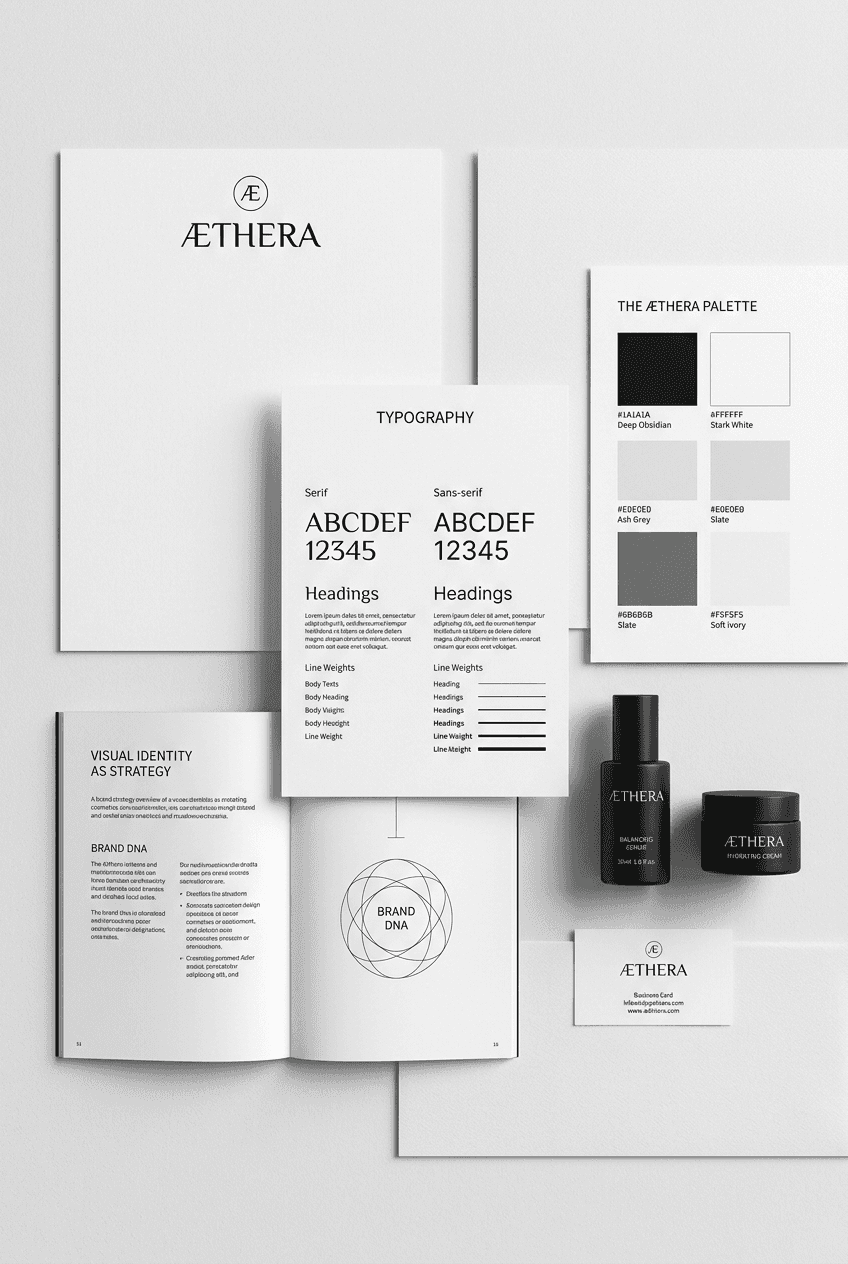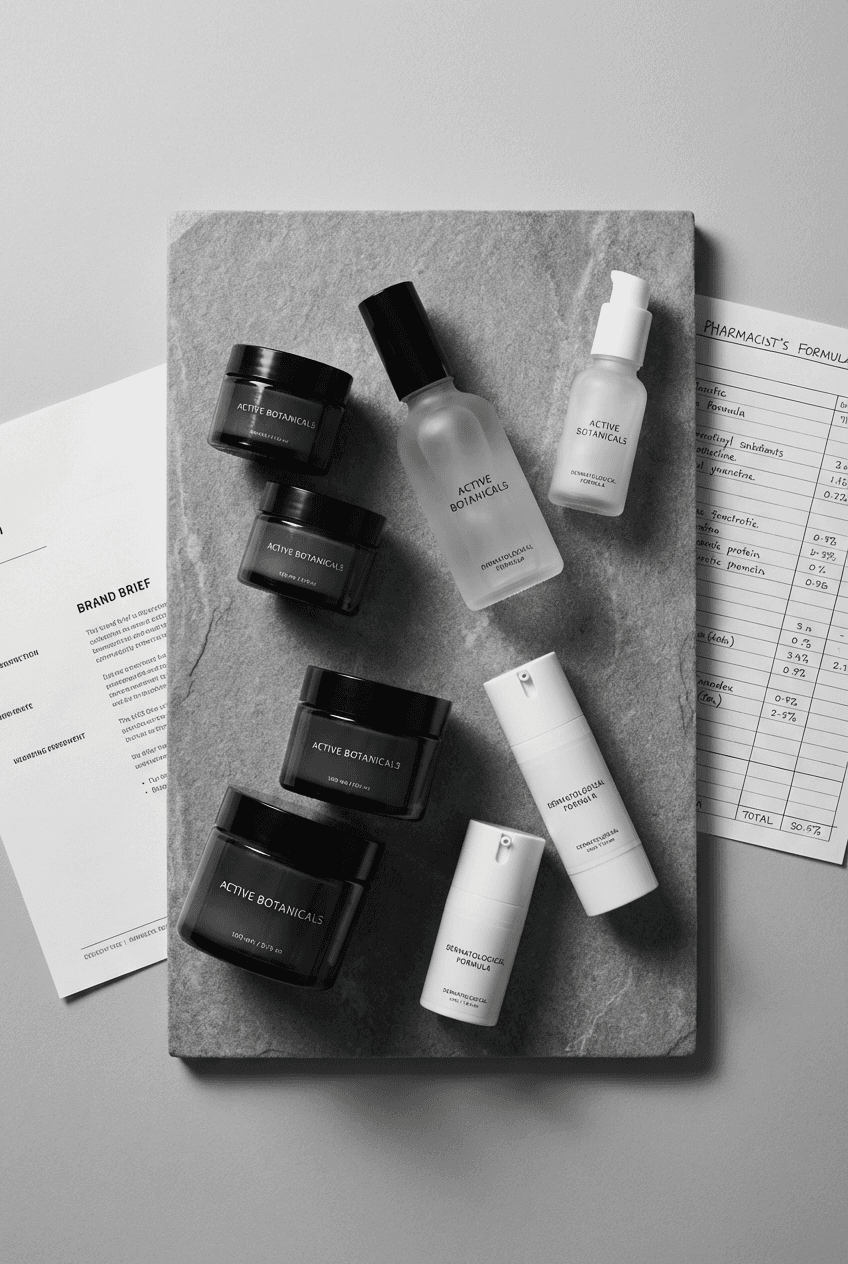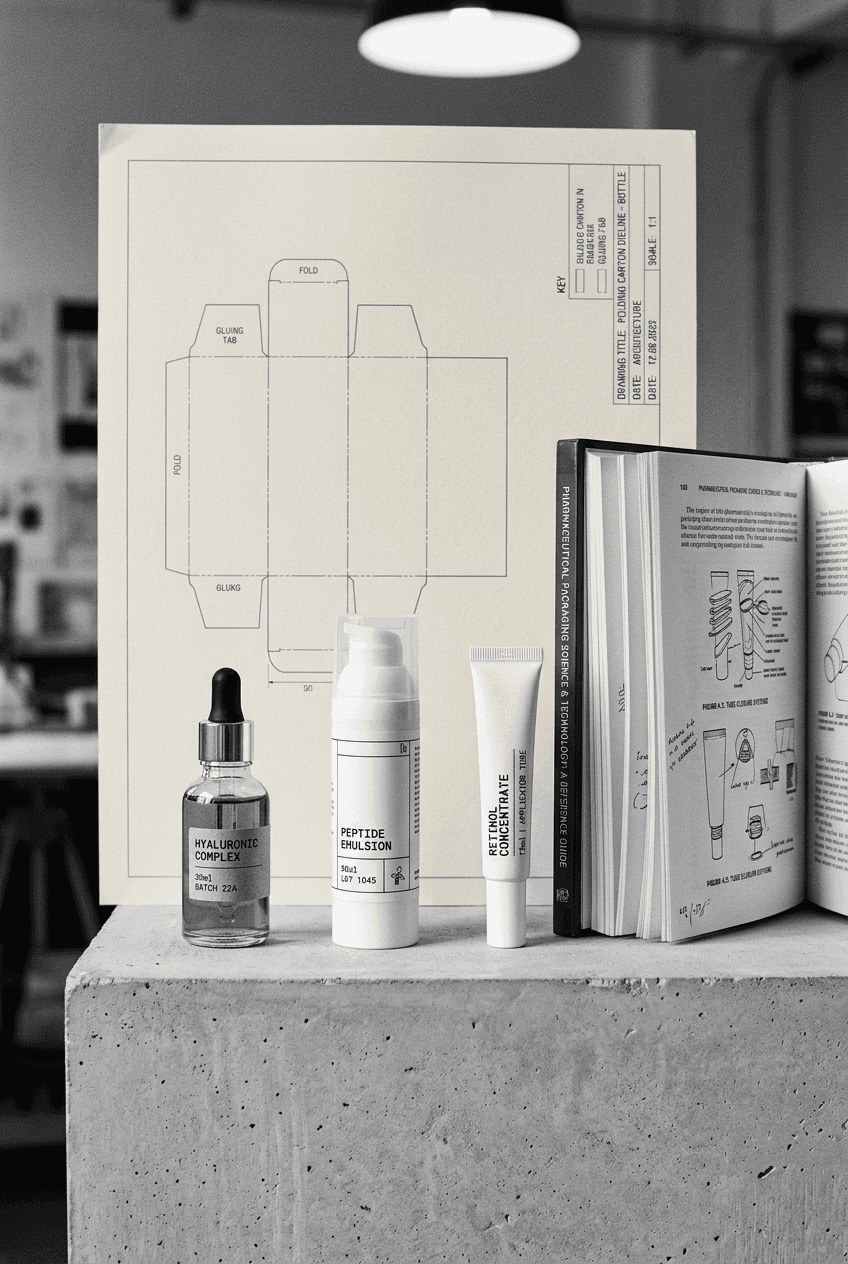

Packaging briefs that arrive after the brand name, formula, pricing, and marketing strategy are packaging briefs that arrive too late. Packaging is a positioning decision made before a designer opens a file.
Most founders understand in theory that packaging matters. Fewer understand it well enough to brief a designer, evaluate options, or make the decisions that separate packaging that converts from packaging that looks good in a photoshoot and fails on the shelf.
According to a 2023 IPSOS study, 72% of consumers say that packaging design influences their purchase decision in beauty and personal care. A 2024 Mintel report found that 59% of skincare buyers say sustainable packaging influences their choice at the point of purchase. These are not marginal effects. Packaging is the primary commercial touchpoint for a cosmetics product, more consistent than any advertising and more immediate than any review.
This guide covers what every cosmetics brand founder needs to know about packaging design, from material choices to label hierarchy to the regulatory rules that govern what can and cannot be said on the front of pack. I work at the intersection of formulation science and design, and the decisions I cover here are the ones where those two disciplines meet.
Why Packaging Is a Brand Decision, Not a Design Decision
The most expensive mistake a cosmetics founder can make is treating packaging as the last step. Packaging briefs that arrive after the brand name, the formula, the pricing, and the marketing strategy has been finalized are packaging briefs that arrive too late.
Packaging communicates the brand's positioning before any copy is read. A heavy glass dropper bottle communicates premium positioning and ingredient integrity. A lightweight plastic tube communicates accessibility and everyday use. Neither is wrong. But each creates expectations in the consumer's mind that the product experience must then meet.
When packaging and positioning are misaligned, conversion breaks down. A clinical-grade formula in discount-looking packaging loses sales not because the product fails but because the packaging creates doubt. A beautifully designed premium package around an average formula builds a transaction once but loses the repeat purchase.
Consistency between what the packaging promises and what the formula delivers is the foundation of sustainable growth in cosmetics. My full guide to cosmetic packaging design covers this alignment process in detail.
Material Choices: What Each Says Without Words
Every packaging material carries associations that are immediately legible to a beauty consumer.
Glass signals prestige, purity, and ingredient integrity. It is associated with luxury skincare, serums, and prestige fragrance. It communicates that the brand takes the formula seriously. The trade-off is weight, fragility, and cost. For DTC brands, breakage rates and shipping costs are real considerations. Airless pumps (plastic or metal) signal clinical precision and formula protection. They communicate that the active ingredients matter enough to protect from air oxidation. Consumers who understand formulation read this as a quality signal. Those who do not still perceive it as premium through the texture of the mechanism. Lightweight plastic tubes and bottles signal accessibility and practicality. They work for mass-market and masstige brands but can undermine premiumization efforts if the formulation or pricing suggests a higher positioning. Aluminium and metal components signal sustainability and modernity. They are increasingly used by brands targeting environmentally conscious consumers. PCR (post-consumer recycled) materials signal environmental responsibility. Increasingly relevant for any brand speaking to a Gen Z or Millennial consumer with sustainability values.
The decision is never purely aesthetic. Material selection is a positioning decision that must align with the product's price point, target audience, channel strategy, and brand story. It must also align with the formula's chemistry: some actives require specific packaging formats to maintain stability.
Material | Brand Signal | Best For | Trade-Off |
|---|---|---|---|
Glass | Prestige, purity, ingredient integrity | Luxury and science-led brands | Weight, fragility, DTC shipping risk |
Airless pump | Clinical precision, formula protection | Unstable actives, science-forward | Higher unit cost |
Lightweight plastic | Accessibility, practicality | Mass-market and masstige | Premiumization ceiling |
Aluminium | Sustainability, modernity | Eco-conscious consumers | Cost, filling complexity |
PCR plastic | Environmental responsibility | Gen Z and Millennial-led brands | Variable quality, aesthetic limitations |
Label Hierarchy: The Consumer's Eye Follows a Path
The consumer's eye moves through a cosmetics label in a predictable sequence, and the designer and founder must understand this sequence to make good decisions.
The path is roughly: brand name, product name or category, key claim or differentiator, secondary information. If any of these elements are out of sequence, or if there is too much visual noise competing for attention, the primary message fails to land.
Brand name must be legible and distinctive. It should be the dominant typographic element. A consumer should be able to identify the brand from two shelf-widths away. Product name or category grounds the consumer in what they are buying. Serum, moisturiser, cleanser. This seems obvious but is frequently deprioritized in favor of a creative name that requires the consumer to do too much work. Key claim is the most important commercial copy on the front of pack. It is the reason the consumer would pick this product over the one next to it. It should be specific, credible, and sensory where possible. "Visibly firms in 4 weeks" outperforms "firming cream." Specificity signals evidence. Secondary information includes ingredient callouts, certifications, usage notes, and anything else that supports the primary claim. This belongs on the back of pack or in a secondary reading position on the front.
Founders frequently front-load the label with everything they want to say. A label that says everything says nothing. Hierarchy is an editorial decision. I cover how to brief a designer using this hierarchy framework in my guide to cosmetic label design.
Regulatory Requirements: What Must Be on the Label
Cosmetics labeling is regulated in every major market, and compliance is not optional.
In the EU, labels must include: product name, function, ingredients (INCI nomenclature in descending order of concentration), net quantity, manufacturer or distributor details, country of origin, date of minimum durability or period after opening (PAO), precautions and safety information, and batch code.
In the US, FDA requirements include: identity statement, net quantity, ingredient declaration, and manufacturer information.
The ingredient declaration must use standardized INCI names, not marketing names. "Sodium Hyaluronate" rather than "hyaluronic acid." "Retinyl Palmitate" rather than "vitamin A." This matters because incorrect or missing declarations can trigger regulatory action and undermine consumer trust with an educated audience.
Claims on the front of pack must be substantiated and must not imply drug action for a product classified as a cosmetic. "Treats acne" is a drug claim in most jurisdictions. "Helps reduce the appearance of blemishes" is a cosmetic claim. The distinction requires understanding both the regulatory framework and the formulation science to navigate correctly.
This is the intersection where my background as a pharmacist adds measurable value. Knowing what can be said, what must be said, and what cannot be said, while still making the label commercially compelling, is a specialized skill.
Shelf Impact: Designing for How Decisions Are Actually Made
Most cosmetics purchasing decisions, in both retail and e-commerce, happen in a context of comparison. The consumer is looking at multiple options simultaneously and making a rapid evaluation.
In physical retail, the shelf is the competitive environment. The packaging must read clearly at a distance, stand out against adjacent products, and communicate positioning quickly enough to invite a closer look.
In e-commerce, the product image is the packaging. The thumbnail must be legible at small sizes. The front-of-pack hero image must communicate the product's positioning within the first scroll of a product listing page. A packaging design that looks beautiful in a studio photograph but fails as a 200-pixel square thumbnail on a marketplace listing is a packaging design that will underperform in the DTC context.
Testing packaging designs in the actual environment where the purchase decision will be made is a practical step that many founders skip. Placing prototype packaging on a physical shelf alongside competitors, or rendering it into a product listing image at realistic sizes, reveals problems that are invisible in isolation. I cover this testing process in my guide to beauty packaging trends 2026.
Practical Next Steps for Cosmetics Founders
Before briefing a packaging designer, have clear answers to these questions.
What is the product's channel strategy? A pharmacy-distributed product has different shelf neighbors and different consumer expectations than a DTC skincare brand or a department store prestige line.
What is the price point, and what does the packaging at that price point typically look like? The packaging must signal value appropriate to the price. A significant mismatch in either direction undermines conversion.
What is the one claim or benefit this product must communicate above all others? Brief the designer with a hierarchy, not a wish list.
What are the regulatory requirements in each market where the product will be sold? Build the compliance layer into the design brief from the beginning, not as an afterthought.
Cosmetics packaging done correctly is not a cost. It is a conversion tool. The investment in getting it right, strategically and scientifically, pays every time a consumer reaches for your product instead of the one next to it. If you are at the packaging brief stage and want to do this correctly, reach out.
FAQ: Cosmetics Packaging
Why is cosmetics packaging considered a brand decision?
Because packaging communicates positioning before any copy is read. The material, format, weight, finish, and label hierarchy all signal what the product is worth, who it is for, and whether the brand behind it knows what it is doing. These are brand decisions, not design preferences. Treating packaging as the last step consistently produces misalignment between what the formula delivers and what the packaging promises.
What packaging material is right for a premium cosmetics brand?
Glass is the most universally understood prestige signal in cosmetics. Airless pump mechanisms communicate clinical precision and formula protection. For DTC brands, the trade-off between glass's premium signal and its shipping fragility needs to be evaluated against the brand's channel strategy. For brands distributing through luxury retail, glass is almost always the right choice.
What is label hierarchy and why does it matter?
Label hierarchy is the order in which information is presented on the front of pack, designed to match the sequence in which the consumer's eye moves. Brand name first, product name or category second, key claim third, secondary information last. A label that does not follow this hierarchy communicates the wrong information at the critical moment of purchase.
What claims can I legally make on cosmetics packaging?
Cosmetic claims must be substantiated, accurate, and must not imply drug-like actions. "Visibly reduces wrinkles" is generally a permissible cosmetic claim. "Stimulates collagen production" approaches drug claim territory in most jurisdictions. The permitted claims framework varies by market. Getting this wrong creates both regulatory risk and brand credibility risk.
How do I design packaging for both physical retail and e-commerce?
The packaging must work in two distinct environments: on a shelf at two feet of distance, and as a thumbnail image at 200 pixels wide. Test the design in both contexts before finalizing. Most packaging failures in e-commerce are caused by designs that work beautifully in isolation but fail to communicate at thumbnail scale.
What sustainable packaging options are available for cosmetics?
PCR (post-consumer recycled) plastic, bio-based plastics, refillable formats, and aluminium are the primary options. The choice depends on the brand's sustainability story, the formula's packaging requirements, and the channels where the product will be sold. Sustainable packaging that compromises formula stability or significantly increases unit cost without a corresponding premium pricing architecture creates economic problems the brand positioning cannot solve.
How much does cosmetics packaging design cost?
The range is wide: from $3,000 to $8,000 for a single SKU from a specialist packaging designer, to $20,000 and above for a full range with primary and secondary packaging across multiple formats. The cost of getting it wrong, in terms of lost sales, rebrands, and regulatory compliance issues, is consistently higher than the cost of doing it correctly the first time.
I am Tambi, a brand strategist and creative director with an unfair advantage: I am a pharmacist. I run a creative studio for cosmetics, supplements and beyond. 17+ years. Exclusively.
Sources: IPSOS Beauty Packaging Consumer Study (2023); Mintel Skincare Sustainability Report (2024); EU Cosmetics Regulation (EC) No 1223/2009; US FDA Cosmetic Labeling Requirements