
A visual identity that communicates nothing specific does not differentiate. And a brand that does not differentiate cannot grow on anything other than price.
Most cosmetic founders understand in principle that visual identity matters. In practice, visual identity decisions are often made too late, too quickly, and with insufficient grounding in the brand's actual positioning. The result is a visual system that looks competent in isolation and generic in context: another clean sans-serif beauty brand, another white label with minimal design, another brand that looks like it could belong to any of fifty competitors in the same category.
According to a 2023 Nielsen study, consumers form their first impression of a beauty brand's packaging in under 250 milliseconds. That impression, made before a single word is read, determines whether the product earns a closer look or is passed over. The visual system is not the finish line of brand development. It is the front door.
I build cosmetic visual identities from the formula and the science outward. Color, typography, packaging structure, copy: all of it starts from what the formula actually does and who it is specifically for. This guide covers how to approach that process correctly.
What Cosmetic Visual Identity Actually Means
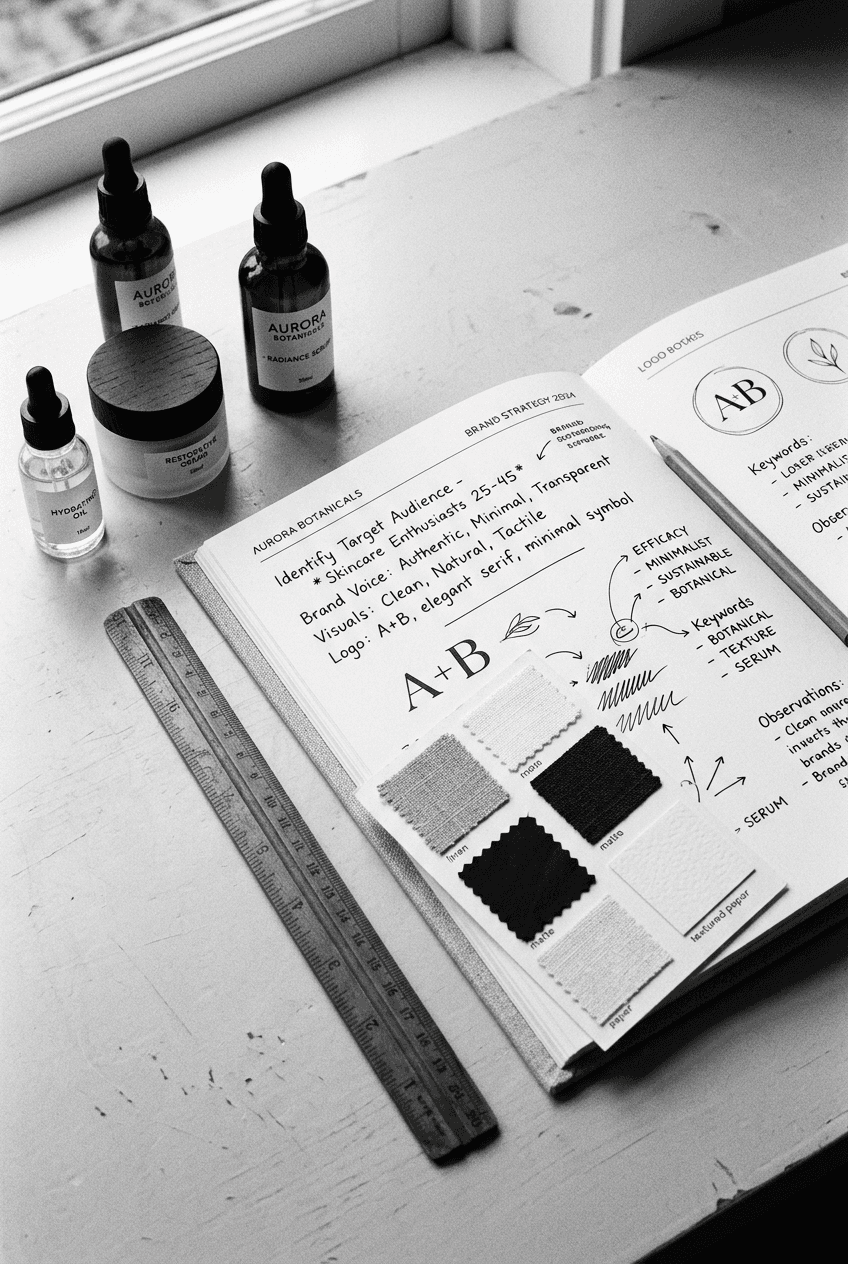
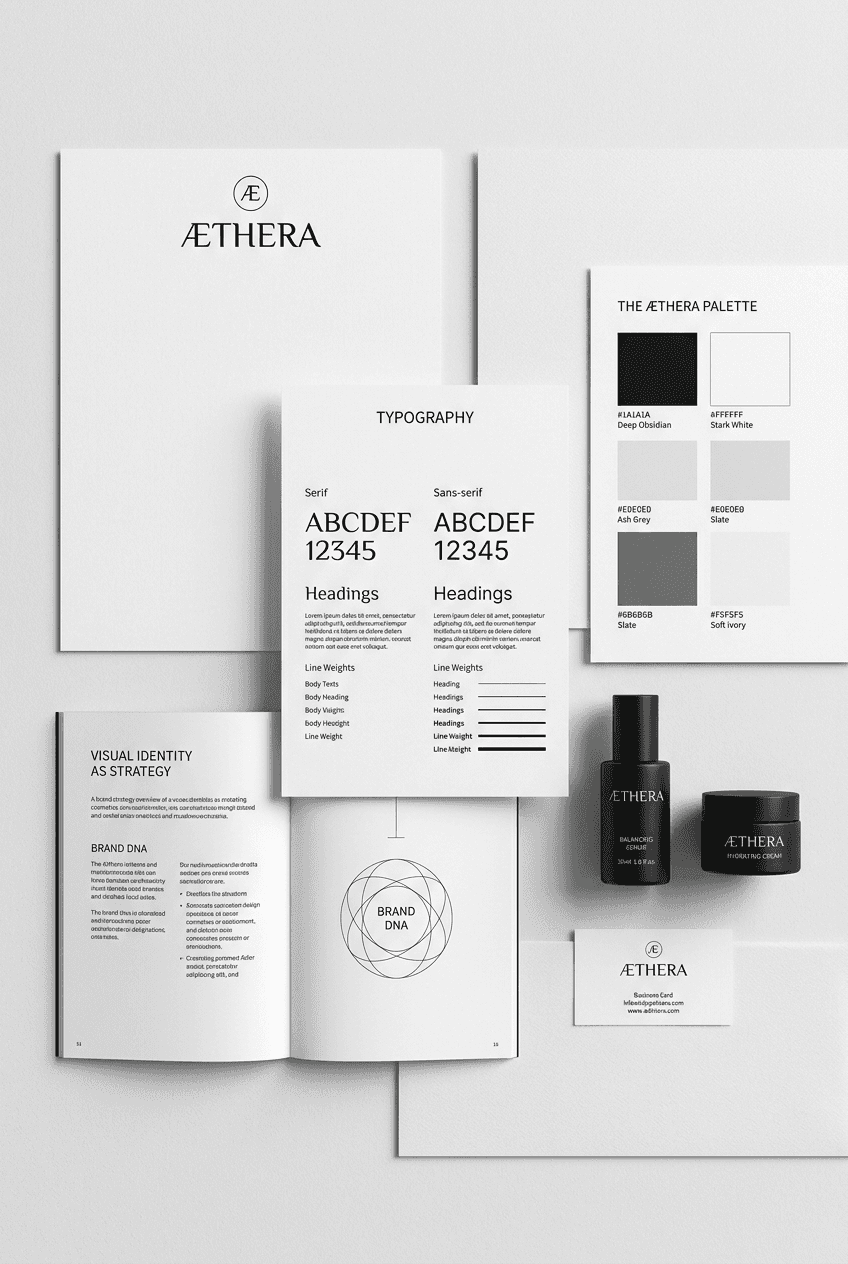
Visual identity is the system of visual elements that makes a brand consistently recognizable: the logo, the color palette, the typography, the packaging structure, the label hierarchy, the photography style, and the way these elements relate to each other across every touchpoint.
The word "system" matters. A logo is not a visual identity. A color palette is not a visual identity. Visual identity is the logic that governs how all of these elements work together, so that a brand's Instagram post, its packaging, its website, and its email template all feel unmistakably like the same brand, even though they are different formats with different content.
For cosmetic brands specifically, the visual identity system must function across a particularly demanding range of contexts: physical retail shelving, DTC product photography, marketplace thumbnail images, social media, and the physical experience of holding the product. Each context has different requirements, and a visual identity that is not built as a system will fail in at least some of them.
A 2024 Deloitte study found that brands with consistent visual identity systems across packaging and digital channels generate up to 33% more revenue than those with fragmented visual communication. The system is not a creative preference. It is a commercial requirement.
Positioning Before Aesthetics
The most common mistake in cosmetic visual identity is treating it as primarily an aesthetic decision. It is not. Visual identity is the expression of positioning. Before a color palette is chosen, before a typeface is evaluated, the brand's positioning must be defined clearly enough to guide those decisions.
Cosmetic brands typically position along several axes. Science versus luxury is the most fundamental: does the brand's authority come from its clinical efficacy, or from its sensory and emotional experience? Accessible versus exclusive: is the brand democratizing something, or creating a category of one? Functional versus expressive: is the brand solving a specific problem, or is it part of a broader identity the consumer wants to inhabit?
Each of these positioning decisions has visual implications. A brand positioning on clinical science signals credibility through precision, white space, and typography that reads like a medical reference rather than a fashion magazine. A brand positioning on luxury signals value through material quality, restrained color, and the kind of negative space that communicates confidence in the product rather than anxiety about the shelf.
Choosing a visual direction without first answering the positioning questions produces a visual identity that looks appealing but does not communicate anything specific. And a visual identity that communicates nothing specific does not differentiate. My guide to cosmetics brand strategy covers the positioning process that should precede any visual identity work.
The Components of a Cosmetic Visual Identity System
Each component of the visual system carries specific communication weight.
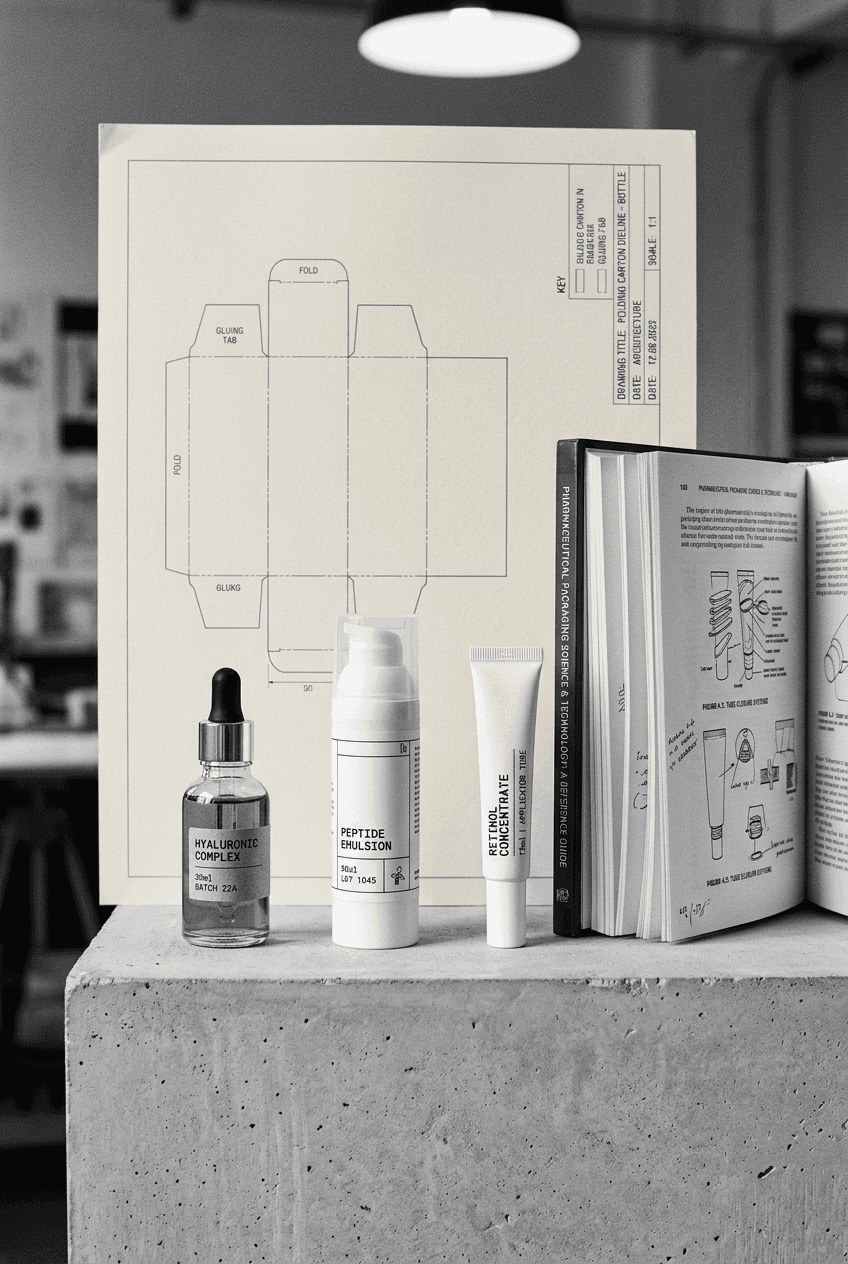
The logo is the brand's most compressed statement of identity. In cosmetics, the logo usually works hardest at small sizes: on a cap, a tube end, a thumbnail image. A logo that is beautiful at full size but illegible at 12mm is functionally useless in packaging contexts. Simplicity, scalability, and distinctiveness are the three requirements that override every aesthetic preference. Typography carries more brand personality in cosmetics than in almost any other category. The choice between a sans-serif and a serif, between a geometric typeface and a humanist one, between condensed and wide-set letterforms, communicates positioning before a single word is read. Clinical brands use typography that communicates precision: often geometric, often with strong technical associations. Luxury brands use typography that communicates refinement: often serif, often with significant attention to spacing. Lifestyle brands use typography that communicates approachability: often humanist, often warm. Color in cosmetics is a complex strategic decision. The category's visual landscape is crowded enough that many dominant color territories have already been claimed. A new brand entering these territories faces two options: differentiate within the territory, or occupy a different one. Both are valid. Neither is accidental. Packaging structure is the three-dimensional expression of the visual identity. The weight, material, and form of the packaging communicate before the label is read. A heavy glass bottle communicates differently than a lightweight flexible tube. A frosted finish communicates differently than a high-gloss one. The packaging structure must be consistent with both the formula's requirements and the brand's positioning. Photography and imagery style is where the brand's world becomes visible. The people, the contexts, the light, the color treatment, the emotional register: all of these establish what the brand's consumer experience actually feels like. I cover how to brief a product photographer using the visual identity system in my guide to luxury skincare branding.
Visual Element | Clinical Brand | Luxury Brand | Naturals Brand |
|---|---|---|---|
Typography | Geometric sans-serif | Refined serif | Humanist or organic |
Primary color | White, clinical grey | Deep neutral, black, gold | Earth tones, warm greens |
Packaging material | Glass or airless pump | Heavy glass, metal details | Recycled or bio-based |
Photography | Product-led, minimal | Lifestyle editorial | Provenance and texture |
Label density | High information, precise | Restrained, minimal | Ingredient-focused |
The Science-Luxury Integration
Cosmetic brands that are built on genuine ingredient science face a specific visual identity challenge: they need to communicate scientific credibility without looking cold, and warmth without looking unsubstantiated.
The brands that solve this most successfully assign these qualities to different elements of the visual system rather than trying to achieve both simultaneously in each element. The structural elements, the typography, the label hierarchy, the information architecture, carry the precision and credibility. The content elements, the imagery, the copy voice, the brand narrative, carry the warmth and human connection.
This division of labor produces a brand that reads as both trustworthy and approachable. The Ordinary is the canonical example, but it is not the only model. Brands as different as Paula's Choice, Typology, and Byoma have built visual systems that communicate clinical seriousness without feeling antiseptic, each through a different formal vocabulary.
The lesson is not to copy any of these brands. It is to understand the structural principle: scientific credibility and human warmth are not competitors in a visual system. They are assignments to different elements.
Claims and Copy as Visual Identity Elements
In cosmetics, the copy on the packaging is not separate from the visual identity. The language, its specificity, its tone, its willingness to make precise claims rather than vague gestures toward benefit, is a component of the visual identity system in the same way that typography is.
A brand that uses typography with clinical precision but copy that says "radiant, luminous, glowing skin" has a visual system in contradiction with itself. The structural vocabulary says "we take science seriously." The copy says "we use the same aspirational language as everyone else."
The brands that build the most durable visual identities treat their copy as seriously as their design. The specificity of "0.1% encapsulated retinol, the clinical threshold for visible effect" communicates differently than "with retinol." The former is a design decision as much as a copywriting decision. It signals a brand that knows exactly what it is doing and is confident enough to show its work.
For founders working in regulated markets, this specificity must be balanced against compliance requirements. The claims permitted for cosmetics differ from those permitted for drugs or supplements. I cover how to navigate this in detail in my guide to cosmetic label design.
Consistency Across Channels
The visual identity system's job is to produce instant recognition across every context where the brand appears. In practice, this requires explicit documentation of how the visual system adapts to different formats, not just what the core elements are.
A brand that has defined its color palette, typeface, and logo has defined perhaps a third of what is needed for a functional visual identity system. The remaining two-thirds is the system logic: how the elements combine on packaging, how they adapt for digital, how photography is framed and processed, what happens when the logo appears on a dark background versus a light one, how the visual identity applies to secondary packaging and cartons, what the brand looks like in motion.
Cosmetic brands that launch without this system logic consistently produce visual incoherence over time. The Instagram posts look different from the packaging. The website feels disconnected from the product photography. The email templates could belong to any brand. Each of these disconnections is a small erosion of the trust that the visual identity is supposed to build.
Building the system logic before launch requires more investment than most founders expect. But the cost of rebuilding brand recognition after a fragmented launch, or executing a rebrand once the brand is in market, is considerably higher.
When Visual Identity Needs to Change
A cosmetic visual identity that was correct at launch becomes incorrect when the brand's positioning, target consumer, or competitive context changes significantly. The signals that a visual identity needs to evolve include: consumer research showing consistent misreading of the brand's positioning, a competitive context that has made the current visual language generic, a product line extension that the existing system cannot accommodate without contradiction, or a repositioning that the existing visual identity actively contradicts.
Evolution and rebrand are different interventions. Evolution refines the existing system while preserving recognition equity. Rebrand rebuilds the system from a different strategic foundation. Most established brands need the former. Brands that were built without a clear strategic foundation often need the latter.
The decision requires understanding what, if anything, the existing visual identity has built in terms of consumer recognition and trust, and whether that equity is worth preserving or whether it is actively holding the brand back.
If you are building a cosmetic visual identity from scratch, or evaluating whether your current system is still working for you, reach out. The conversation starts with the formula, not the design brief.
FAQ: Cosmetic Visual Identity
What is cosmetic visual identity and why does it matter?
Cosmetic visual identity is the complete system of visual elements that makes a brand consistently recognizable across every touchpoint, including the logo, color palette, typography, packaging structure, label hierarchy, and photography style. It matters because consumers form their first impression of a beauty brand in under 250 milliseconds, before any copy is read. The visual system is the brand's most persistent argument for its own credibility.
What is the difference between a logo and a visual identity?
A logo is one element within a visual identity system. Visual identity is the logic that governs how the logo, color, typography, packaging, and photography work together across every format and context. A brand with only a logo has a name badge. A brand with a visual identity system has a communication architecture.
Should positioning come before visual identity design?
Always. Visual identity is the expression of positioning. Designing before the positioning is defined produces visuals that look appealing but communicate nothing specific. And a visual identity that communicates nothing specific does not differentiate a brand in a crowded market.
How do I choose the right color for a cosmetics brand?
Understand what the dominant color territories in your category already communicate, then choose a position within or deliberately outside those territories. White communicates clinical purity. Black communicates luxury. Earth tones communicate naturals and wellness. The choice should be strategic, not preferential, and should align with the brand's positioning.
How many typefaces should a cosmetics brand use?
A maximum of two, and ideally one primary typeface with one complementary secondary. Every typeface added beyond that increases the risk of visual incoherence. Typography communicates positioning before a word is read. The choice of typeface is a strategic decision, not a stylistic preference.
What makes a visual identity system work across digital and physical retail?
Explicit documentation of how the visual elements adapt to different formats, sizes, and backgrounds. A visual identity that is defined only at full size, on a white background, in ideal conditions, will fragment when applied to packaging, thumbnails, social media, and retail environments. The system logic is what prevents that fragmentation.
When should a cosmetics brand consider a visual identity refresh?
When consumer research shows consistent misreading of the positioning, when the competitive landscape has made the current visual language generic, when a product line extension cannot be accommodated without contradiction, or when the brand's positioning has changed but the visual identity has not followed.
I am Tambi, a brand strategist and creative director with an unfair advantage: I am a pharmacist. I run a creative studio for cosmetics, supplements and beyond. 17+ years. Exclusively.
Sources: Nielsen FMCG Visual Communication Study (2023); Deloitte Brand Consistency Revenue Study (2024)