
Looking credible in life sciences is the minimum requirement. The companies that attract the best investors, talent, and partners are the ones that look credible and look like themselves.
The Credibility Trap in Life Sciences Branding
Life sciences brand identity exists under a constraint that most industries do not face: the audience actively evaluates credibility signals, and the category has established conventions that signal seriousness. Blue communicates clinical authority. White communicates cleanliness and precision. Molecular imagery communicates scientific depth. These conventions are not arbitrary. They developed because they work, in the sense that they communicate the right message to the right audience.
The trap is that when every company in the category uses the same credibility conventions, the conventions stop differentiating and start blending. The investor who attends a major biotech conference in a given week encounters dozens of companies, all of which look equally credible in the same blue-and-white visual language. What they cannot do is remember which company is which after the fact, because the visual identities have become indistinguishable.
According to a 2024 Brand Finance study of life sciences company brand value, companies with distinctive visual identities (assessed against a category differentiation score) commanded a 27% premium in brand value over companies with generic category-convention identities. In a sector where brand value directly correlates with funding valuations, talent attraction, and partnership negotiations, visual distinctiveness is not aesthetic preference. It is a measurable financial asset.
The Three Layers of Life Sciences Brand Identity
A life sciences brand identity system has three layers, each serving a different communication purpose.
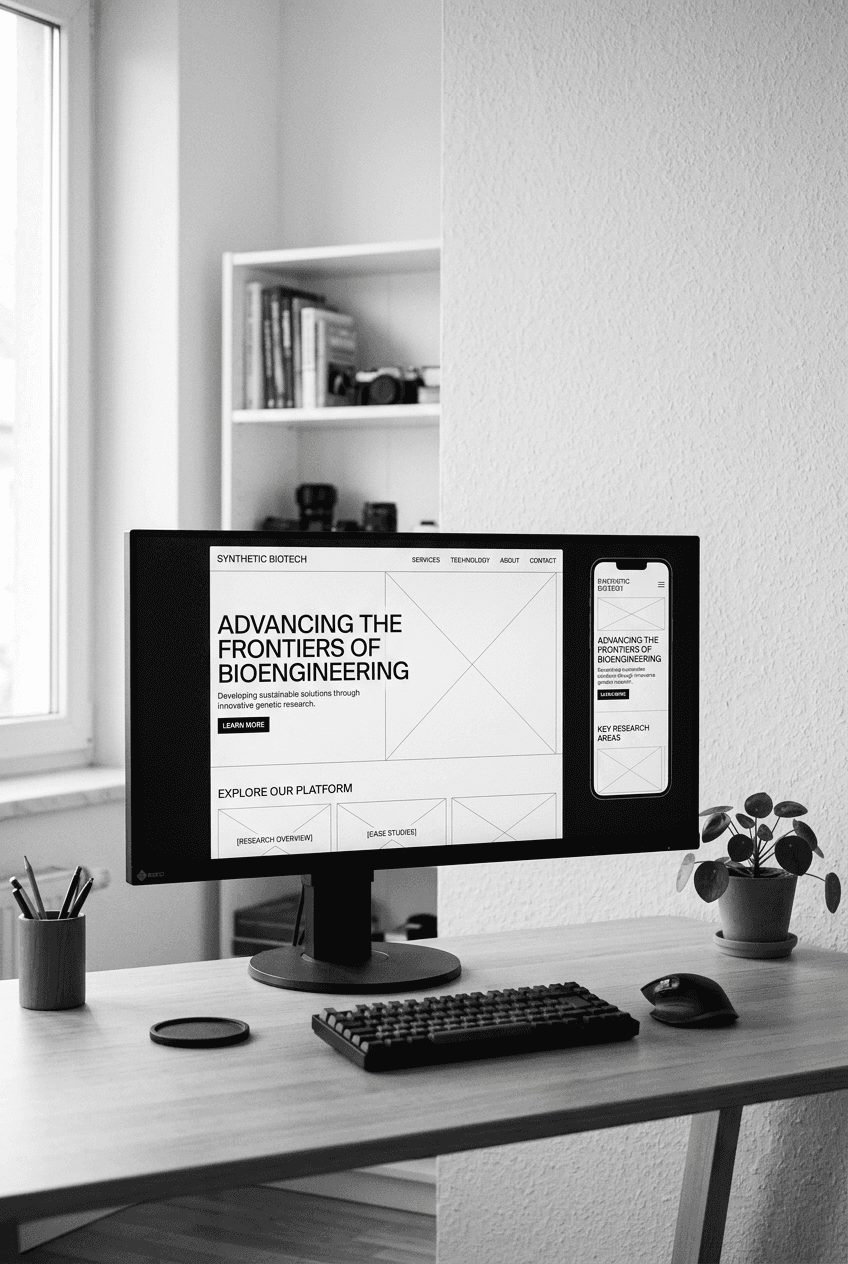
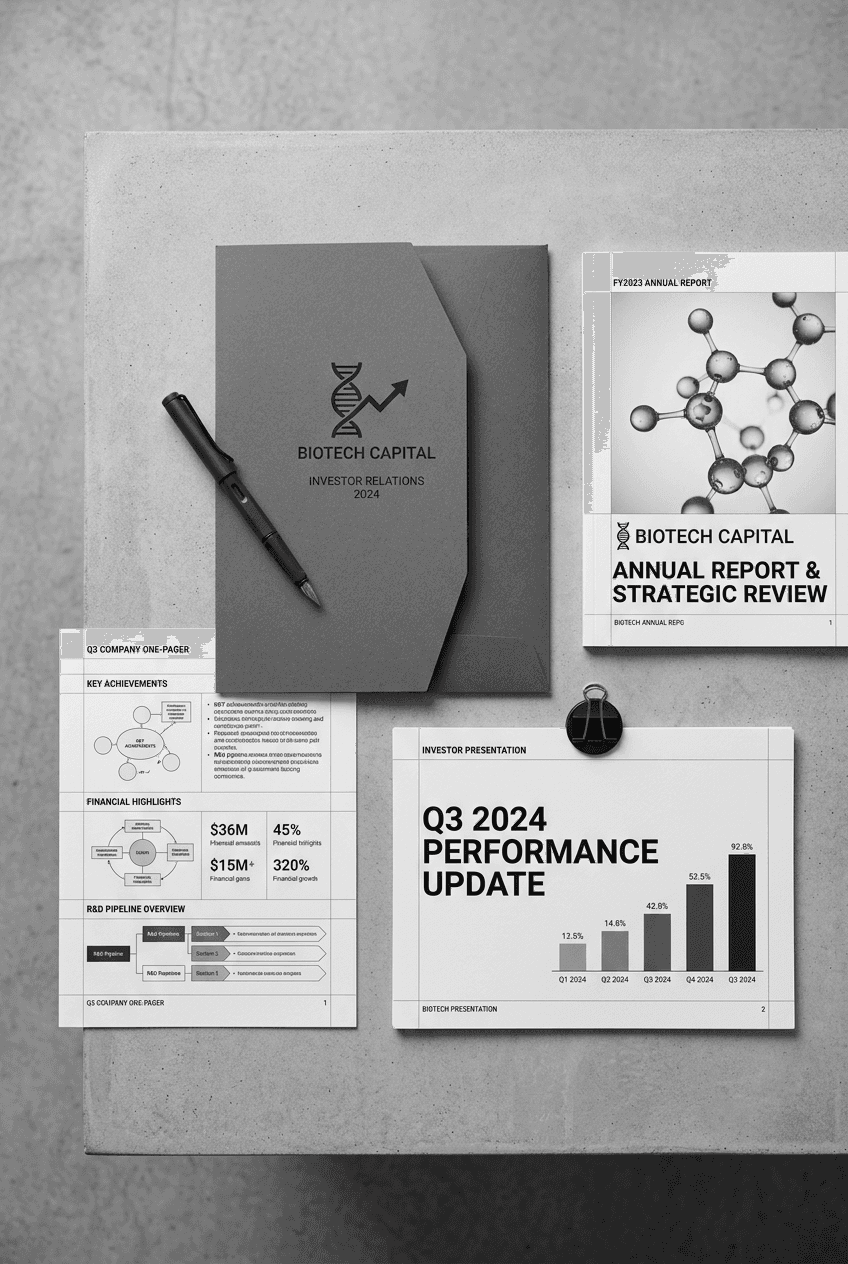
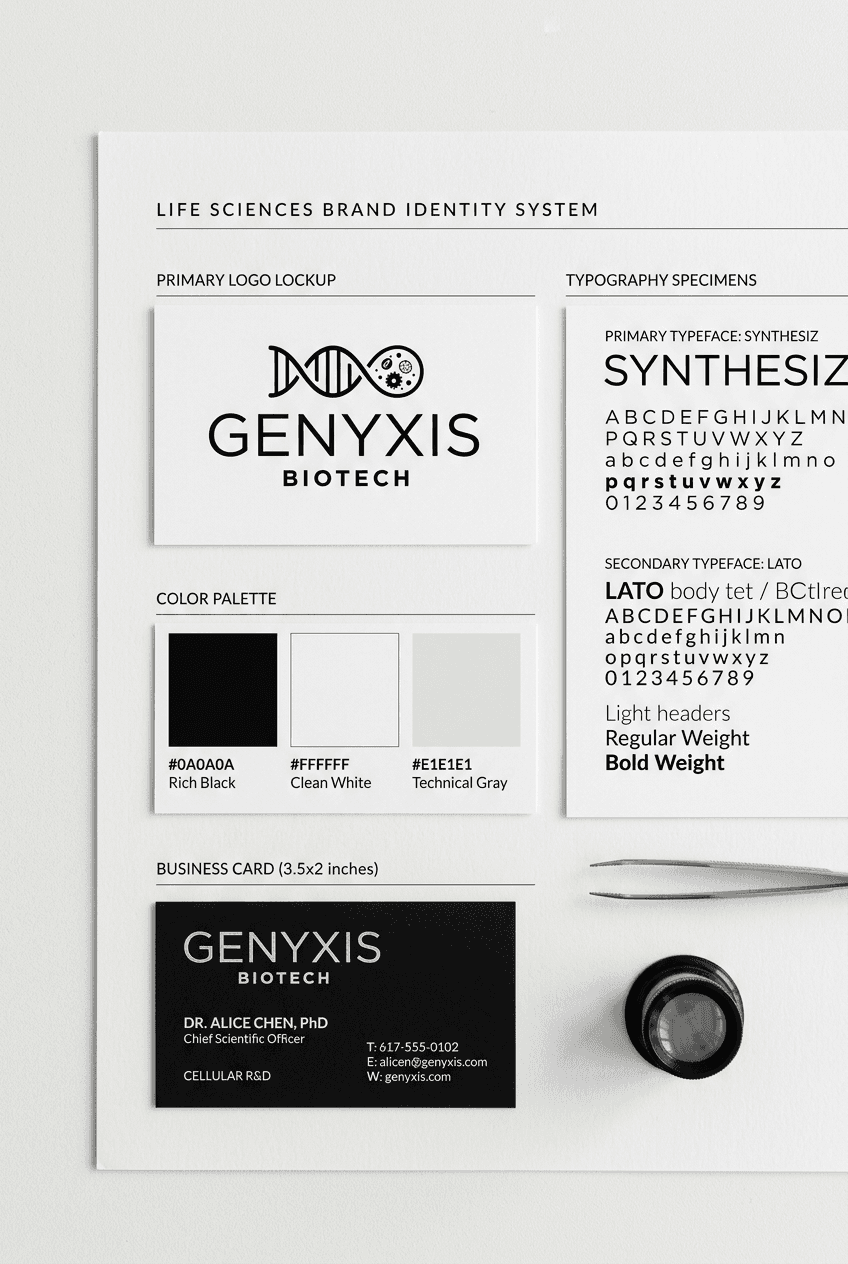
The primary identity layer consists of the logo, primary color palette, primary typography, and core graphic elements. This is what most people think of when they think of a brand identity. It is the layer that must be distinctive enough to be remembered, credible enough to signal scientific seriousness, and flexible enough to work across the full range of applications the company will use over its development arc. The communication identity layer consists of the messaging tone and voice, the visual system for data and scientific communication, and the image and photography direction. This layer governs how the brand expresses itself in written and visual content. A life sciences brand with a distinctive primary identity but a generic communication identity will fail to create a consistent brand impression across the different touchpoints where audiences encounter it. The experiential identity layer consists of the physical and digital experiences the brand creates: the conference booth, the website, the office environment, the materials quality. This layer communicates the company's values and standards through the quality and character of designed experiences rather than explicit messaging.
Building a Distinctive Life Sciences Visual Identity
The design brief for a life sciences visual identity should specify not just what the brand should look like but what it should communicate and what it should feel like to encounter it. The most effective life sciences brands feel like a specific place, a specific way of thinking about the work, rather than a generic version of the category.
Color. The dominant blue palette of life sciences branding is not mandatory. Companies that have built strong identities using unexpected color systems, including deep greens (suggesting growth and biological vitality), warm amber (suggesting warmth and human purpose alongside scientific precision), or desaturated neutral palettes (suggesting precision and restraint), have successfully differentiated themselves while maintaining scientific credibility. The color choice should be driven by the specific character the company is building, not by category convention. Typography. Typography is one of the most powerful differentiating tools in brand identity and one of the most neglected in life sciences. Most life sciences companies use the same small pool of institutional sans-serif typefaces (Helvetica, Inter, Neue Haas). Companies that invest in distinctive typographic systems, whether through commissioning custom typefaces (common at established pharma companies) or through careful selection of high-quality type families with specific character, create a visual language that is difficult to imitate and immediately recognizable. Logo construction. Life sciences logos tend to cluster in two types: wordmarks (the company name in a specific typeface) and symbol-plus-wordmark (an abstract or figurative symbol combined with the company name). For early-stage companies that may not yet have strong name recognition, a symbol-plus-wordmark combination provides a visual anchor that helps the brand register and be remembered more quickly than a wordmark alone. The symbol should be distinctive, scalable to very small sizes (for conference badges and digital favicons), and not literal (a DNA helix or a pill immediately signals category but immediately blends into the category landscape).
Comparison Table: Generic vs. Distinctive Life Sciences Brand Identity
Element | Generic Identity | Distinctive Identity |
|---|---|---|
Primary color | Blue, typically corporate | Distinctive palette with clear rationale |
Typography | Standard sans-serif | Carefully selected, consistent system |
Logo | Abstract swoosh or molecule | Specific, scalable, category-aware symbol |
Visual language | Generic science imagery | Proprietary visual system |
Tone of voice | Clinical, passive | Specific personality, active voice |
Differentiation score | Low (blends in category) | High (stands apart in category) |
Brand recall | Weak after single exposure | Strong after single exposure |
The Role of Scientific Imagery in Life Sciences Brand Identity
Scientific imagery (microscopy images, molecular visualizations, clinical photographs) is both an opportunity and a risk in life sciences brand identity. Used well, it communicates authentic scientific depth and connects the abstract brand to the tangible reality of the work. Used poorly, it is generic and indistinguishable from every other company using the same stock library.
The highest-value scientific imagery in life sciences brand identity is proprietary: actual images from the company's own research, actual photographs of the company's scientific team at work, actual data visualizations from the company's programs. This imagery is authentic in a way that stock imagery cannot be, and it communicates scientific depth through specificity.
When proprietary imagery is not available (common at early-stage companies), the alternative is a conceptual visual approach that communicates the company's scientific focus through abstraction, graphic representation, or typographic expression rather than literal scientific imagery. This approach avoids the generic stock science image problem while maintaining visual quality.
Life Sciences Brand Identity at Different Development Stages
A life sciences brand identity built for a pre-clinical company will have different requirements from one built for a company preparing for commercial launch, and both will differ from the brand needs of an established pharmaceutical company. Understanding the brand needs at each stage prevents either under-building the brand (creating a brand that cannot scale with the company) or over-building it (investing in brand infrastructure before the company needs it).
Pre-clinical stage companies need: a strong foundational identity that communicates scientific credibility and mission conviction, a website and basic materials system, and enough visual sophistication to compete for investor attention and talent at a stage when the brand is doing the heavy lifting in the absence of clinical data.
Clinical stage companies need: an evolved identity that adds the narrative of clinical progress to the foundational scientific identity, an investor communications system, and the beginnings of a commercial communications language if the program is approaching NDA or BLA filing.
Companies approaching commercial launch need: a complete commercial brand system that may include product brand identities alongside the corporate brand, a commercial marketing and communications infrastructure, and the full patient and healthcare professional facing brand expression.
Internal Links
Life sciences companies building a brand identity alongside other corporate communications should review biotech company branding for the strategic framework that should precede identity design. Companies in the pharmaceutical category should also review pharmaceutical branding for the specific requirements of pharmaceutical brand identity. The naming foundation that precedes visual identity work is covered in biotech company naming.
FAQ: Life Sciences Brand Identity
Q: How long does it take to develop a life sciences brand identity?
A: A complete brand identity system for an early-stage life sciences company takes eight to fourteen weeks from initial brief to final delivery. The timeline includes discovery and strategy, concept development, identity design, refinement and approval, and brand guideline production. Companies with complex stakeholder review processes or multiple rounds of scientific and legal review typically need additional time built into the schedule.
Q: Do life sciences companies need brand guidelines?
A: Yes, and they are used more consistently in life sciences than in most industries because the materials that carry the brand (publications, regulatory filings, investor materials, conference presentations) are produced across a large team with many external contributors. Brand guidelines that specify how the identity system should be applied, with specific examples for the most common application types, significantly improve brand consistency without requiring individual approval of every piece of branded content.
Q: Can a small early-stage biotech company afford a professional brand identity?
A: Yes. A complete professional brand identity for an early-stage biotech, including strategy, identity design, and brand guidelines, typically costs between $15,000 and $40,000 with a specialist life sciences brand studio. The return on this investment in improved investor reception, faster talent acquisition, and stronger partner interest typically exceeds the investment within the first funding round. The brand is not a vanity investment. It is a fundraising tool.
Q: What is the difference between a corporate brand identity and a product brand identity in life sciences?
A: The corporate brand identity represents the company: the organization, the platform, the team, the mission. The product brand identity represents a specific therapeutic product. In pharmaceutical companies, corporate and product brands are often managed as separate systems because different audiences engage with each (investors and partners engage primarily with the corporate brand; patients, prescribers, and payers engage primarily with the product brand). For pre-commercial biotech companies, the corporate brand is the primary brand because there are no approved products to brand separately.
Q: How do you maintain brand identity across a distributed team and external partners?
A: Through a clear, accessible brand guidelines document and a centralized asset library. The guidelines should specify all elements of the identity system with enough detail and examples that a competent designer working without direct oversight can apply the system correctly. The asset library should contain all logo files, approved typography, approved imagery, approved templates for common materials, and the most current version of all branded materials. Cloud-based asset management platforms designed for brand management make this significantly easier to maintain than emailed asset folders.
I am Tambi Haşpak, a brand strategist and creative director with an unfair advantage: I am a pharmacist. I run a creative studio for cosmetics, supplements and beyond. Seventeen years in this category. Exclusively.