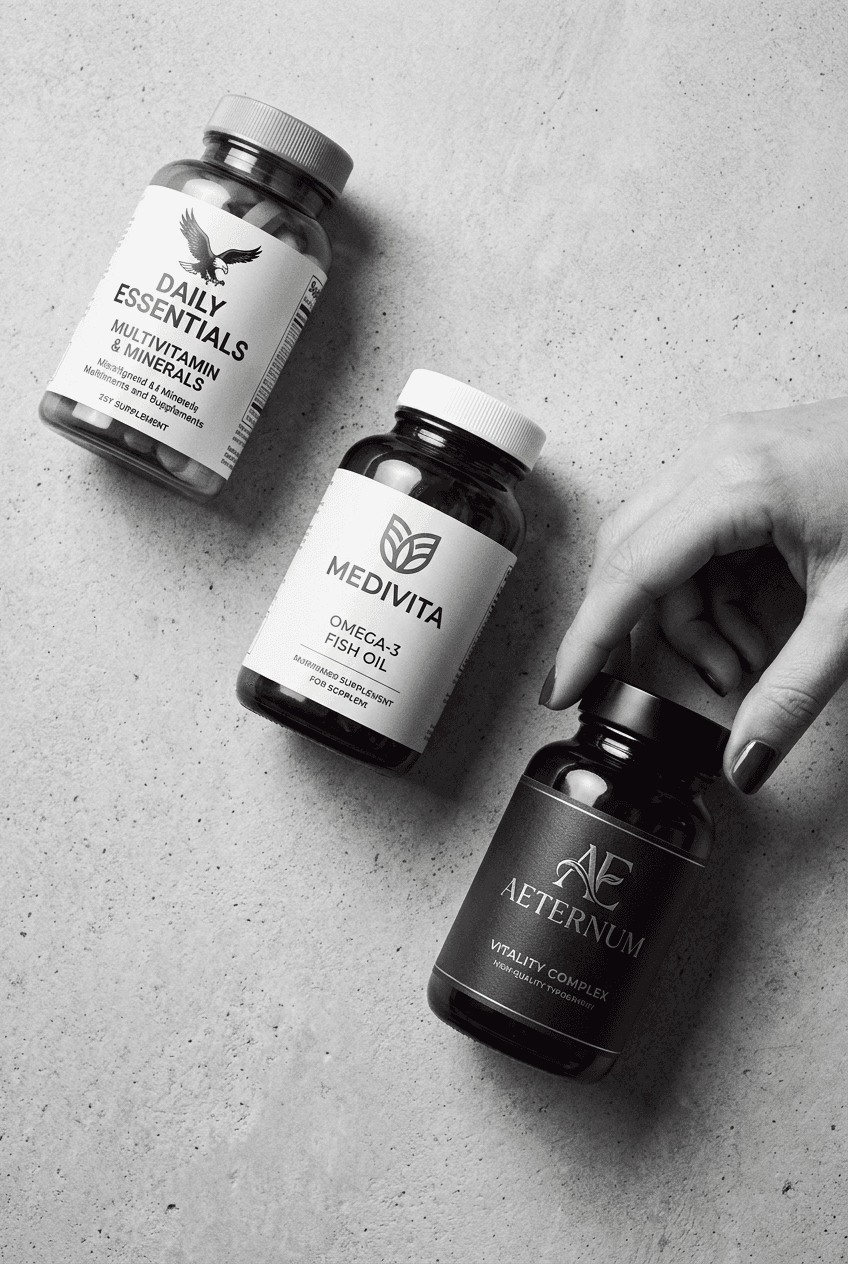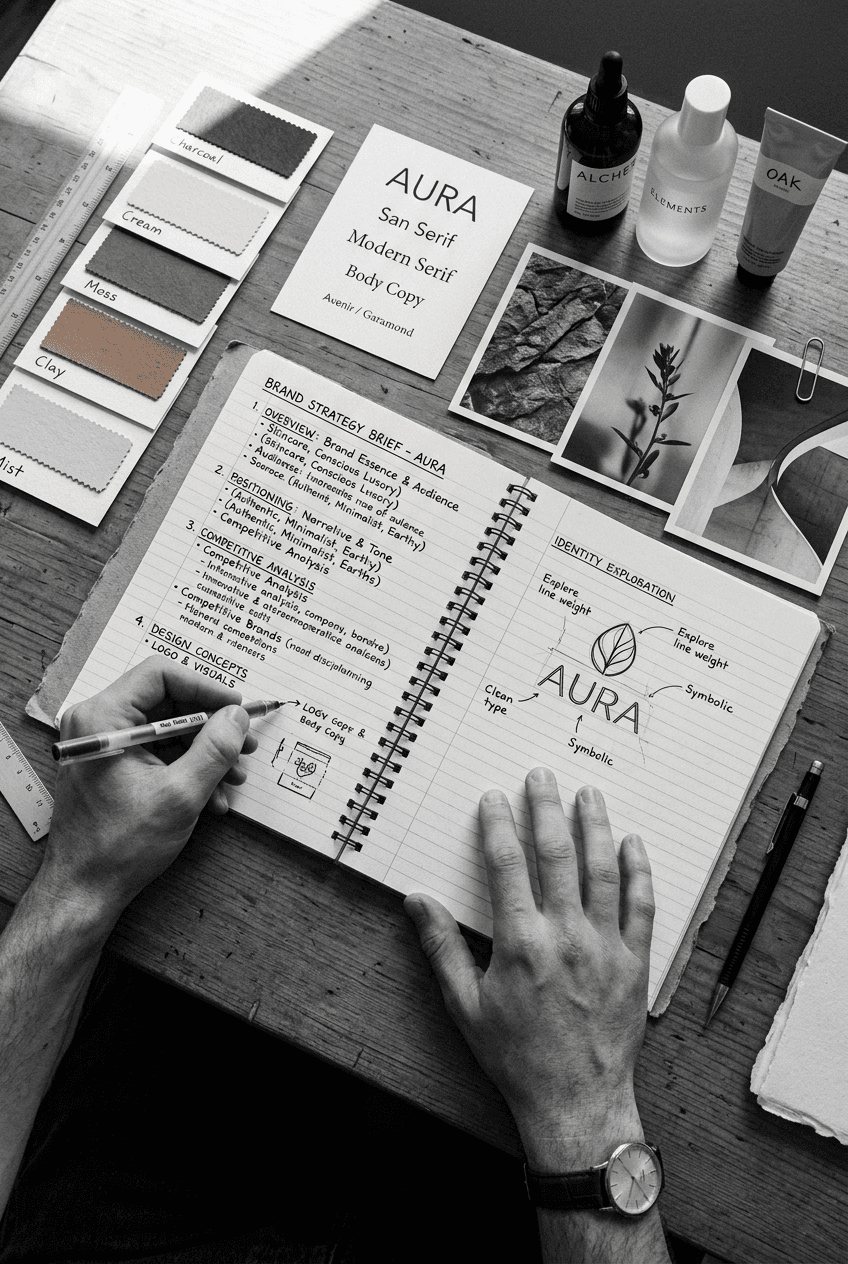

Most wellness brands look either like pharmaceuticals trying to be friendly, or wellness brands pretending to have science. Almost none find the actual balance.
The Wellness Category Crisis: Trust Without Credibility, Benefits Without Proof
The wellness industry sits in a unique position. Consumers are deeply invested in products that support their health and wellbeing, yet they're increasingly skeptical of both pharmaceutical claims and pseudoscience marketing. According to a 2024 Statista wellness consumer report, 71% of wellness product buyers say they trust brands more when the visual identity conveys both scientific backing and genuine consumer focus. That's the challenge: both things at the same time, signaled purely through design.
Here's the tension I see constantly: A supplement brand wants to be approachable and warm, so they choose soft colors, friendly typography, and natural imagery. The consumer sees it and thinks "this is nice, but is it actually effective?" On the flip side, a biotech-backed wellness company chooses clinical aesthetics, precise typography, and minimal design. The consumer respects the credibility but feels alienated. They wonder if the product is designed for scientists rather than for them.
The brands winning in the wellness space right now are the ones who have mastered a specific visual language: pharmaceutical trust signals paired with genuine human-centered design. This is not pharmaceutical companies pretending to be wellness. This is wellness companies that understand credibility.
I have an advantage that most branding agencies don't. I'm a pharmacist. I understand what makes pharmaceutical and nutraceutical products actually trustworthy. I also understand that trust is not about looking sterile. Trust is about transparency, precision, and respect for the consumer's intelligence. Your wellness brand identity must communicate all three.
The Three Visual Strategies That Separate Premium Wellness Brands
Premium wellness brands break down into three distinct visual strategies, each addressing the credibility trust gap differently.
Strategy 1: Clinical-With-Warmth (The Reconciliation Approach)
This is the approach that's winning right now. Brands like Thorne, Functional Medicine Labs, and Orgain use crisp, clean, minimal aesthetics paired with genuine human imagery and warm (but not soft) color palettes. The typography is modern and legible, never decorative or script-based. The color palette uses strong primaries (deep blue, forest green, charcoal) paired with warm secondaries (warm whites, soft golds, muted terra cotta). The imagery shows real people in real contexts, not models.
Why this works: It signals credibility through restraint and precision, while warmth comes from the actual content and imagery. The consumer feels "this is serious about results, and it's designed for people like me."
Examples: Thorne uses navy, minimal iconography, and clean typography. The coldness of the color palette is warmed by detailed product photography and transparent information architecture. Athletic Greens uses forest green and clean sans-serif, but pairs it with imagery of real athletes and communities using the product.
Strategy 2: Evidence-First (The Data Visualization Approach)
Some wellness brands are competing on transparency and clinical backing rather than warmth. They use minimalist design paired with visible evidence: citation indexes, study summaries, ingredient sourcing maps, transparent efficacy data visualized beautifully. The aesthetic is almost academic, but not inaccessible.
Why this works: The warmth comes not from visual softness, but from transparency. The consumer thinks "this brand has nothing to hide, and they're willing to show me the evidence."
Examples: Rhone uses a clinical black and white palette with data visualization as a primary design element. The brand is rigorous and precise, but not cold, because the transparency creates trust.
Strategy 3: Functional Beauty (The Bridge Approach)
The third strategy is functional beauty: using aesthetics associated with luxury and beauty (sophisticated color palettes, high-end photography, editorial design) but paired with precise, evidence-backed ingredient communication. This works when your wellness product is also a beauty product (a vitamin with beauty benefits, a skincare with functional claims, a supplement in a beauty format).
Why this works: You're signaling "this is beautiful and pleasurable, and also substantive and effective." The consumer doesn't have to choose between health and desirability.
Examples: ISDIN uses prestige beauty aesthetics with dermatological backing. The packaging looks like a luxury skincare line, but the ingredient communication and clinical backing is pharmaceutical-grade.
What Actually Builds Trust in Wellness Brand Identity
I've seen hundreds of wellness brands, and the most trusted ones all share these specific visual and structural characteristics, regardless of which strategy they use.
Transparency Through Information Architecture
The most trusted wellness brands make information visible and organized. Your brand identity should extend to how you present ingredient information, sourcing details, and clinical backing. If your website buries the evidence, your visual identity (no matter how premium) will feel like cover-up.
The best wellness brands use a consistent information hierarchy: primary benefit visible first, evidence visible second, detailed ingredient information visible third. This isn't just content strategy, this is brand identity. The visual system should guide consumers toward evidence.
Typography That Communicates Precision
The typeface you choose for your wellness brand is carrying enormous weight. I recommend geometric sans-serifs (Avenir, DM Sans, Montserrat, Source Sans) paired with a serious serif for body copy if you need differentiation. Avoid rounded sans-serifs that signal "friendly and approachable" because that actually undermines trust in a wellness context. Trust comes from precision. Avoid decorative fonts entirely.
The hierarchy should be clear: headlines are crisp and legible, body copy is sized generously for readability, claims and supporting information are distinct from decorative text. Typography should look like the brand understands that clarity matters.
Color Palette That Signals Both Categories
This is where most wellness brands fail. They choose a color palette that signals one category or the other, not both.
Deep blue signals pharmaceutical trust, clinical backing, and credibility. It's the dominant color in most pharmaceutical packaging because it works. If wellness is your category, deep blue should be present.
Greens signal natural ingredients, botanical sourcing, and plant-based formulation. This is also legitimate when it's true. But greens can tip into "spa" territory if they're too soft or too saturated. Stick with deep forest greens and muted sage rather than bright or light greens.
Warm neutrals (cream, warm white, soft beige, warm gray) signal approachability without softness. These should be your background colors, not your accent colors.
Secondary accents can be warm (gold, warm copper, warm mauve) but should feel intentional, not decorative. Use them sparingly.
Avoid: pastels, rainbows, anything that signals beauty instead of wellness, anything that signals spa instead of science. The color palette is not where you show your personality. Your personality comes through in typography, imagery, and voice.
Imagery That Shows Real People, Not Aspirational People
Wellness brands often make the mistake of using stock photography that's either too clinical (white coats, lab settings, extreme close-ups) or too lifestyle (yoga on beaches, sunset outdoor activities). The best wellness brands use imagery of real people doing real things, with realistic physiques and real diversity.
The image should answer the question "who is this product for?" If your target consumer is a busy professional aged 35-50, show a realistic person in that demographic. If your target consumer is an athlete, show real athletes, not models in athletic wear.
Imagery should not be manipulated to look hyperreal. Photorealism is fine. Overly retouched, artificially perfect imagery undermines credibility in wellness.
The Wellness Brand Identity System: Beyond Logo and Color
A complete wellness brand identity extends beyond logo and packaging. It includes how you communicate on social media, how you structure your website information architecture, how you write ingredient descriptions, how you cite clinical evidence, and how you position your products relative to FDA, FTC, and EFSA guidelines.
If your brand identity says "transparent and evidence-backed" but your website doesn't substantiate your claims, that's a brand identity failure. The visual design alone can't carry the message if your substance doesn't match.
The Complete System Includes:
Logo and mark: minimal, scalable, works in black and white, signals category clearly.
Typography system: primary headline font, secondary font for body, clear hierarchy. Sized consistently across all applications.
Color palette: primary color (usually deep blue, forest green, or warm neutral), secondary colors (1-2), neutrals for backgrounds and text.
Imagery guidelines: what real imagery shows, diversity standards, photography style (bright, natural light, realistic).
Information architecture: how you present evidence, how you organize ingredient information, how you cite sources.
Voice and tone: how the brand speaks, what words are avoided, what phrases are signature.
Website experience: how navigation guides users toward evidence, how product pages are structured, how trust is built through interaction.
According to a 2024 EY consumer wellness study, 64% of wellness consumers will switch brands if they perceive inconsistency between visual identity and actual transparency. That means your brand identity is only as strong as your actual commitment to the values it represents.
Comparison Table: Weak Wellness Brand Identity vs Strong Wellness Brand Identity
Element | Weak Wellness Brand | Strong Wellness Brand |
|---|---|---|
Logo | Generic botanical shape or clinical symbol | Distinctive, minimalist mark that signals category clearly |
Primary Color | Soft green or pastel blue | Deep forest green or navy blue |
Typography | Rounded sans-serif or decorative script | Geometric or humanist sans-serif, clean and legible |
Website Info Architecture | Evidence hidden, buried in FAQ | Evidence visible, cited clearly, organized accessibly |
Imagery | Stock photos of yoga or white coats | Real people, realistic contexts, clear diversity |
Claims Presentation | Marketing-first language, vague benefits | Evidence-first, specific claims, source cited |
Color Consistency | Different across web, packaging, social | Consistent system across all touchpoints |
Trust Signal | Looks like wellness OR looks like pharma | Integrates both credibility AND warmth |
Conversion Rate | 1.2-2% | 3.5-5% |
Brand Perception | "Nice but unproven" or "Clinical but cold" | "Trustworthy and designed for people like me" |
How I Build Wellness Brand Identity: The Pharmacist Advantage
I approach wellness brand identity differently than most agencies because I understand both the regulatory landscape and the consumer psychology. Here's my process:
Step 1: Define the clinical foundation. What claims can you actually make? What evidence backs those claims? What regulatory category are you in (supplement, medical device, OTC drug, cosmetic)? This determines what your identity is allowed to communicate. Step 2: Identify the trust gap. Where is your consumer skeptical? Do they doubt the science, or do they feel alienated by clinical language? Do they want evidence they don't currently have access to, or do they want that evidence presented more accessibly? Step 3: Choose the strategy. Clinical-with-warmth, evidence-first, or functional beauty. Which approach actually closes the trust gap for your specific consumer and positioning? Step 4: Design the system. Build logo, color palette, typography, and imagery guidelines that are tightly aligned to that strategy. Everything should reinforce one core message: credibility paired with genuine respect for the consumer. Step 5: Extend to communication. Make sure website, packaging, claims language, and social communication all reinforce the same identity. If one channel breaks the system, the whole identity fails.
This is what separates my work from generic wellness branding. Most agencies design wellness brands that look nice. I design wellness brands that signal why the consumer should trust the product before they've even opened it.
Common Wellness Brand Identity Mistakes
Mistake 1: Choosing aesthetics before choosing strategy. You can't decide "I want a green and cream color palette" before you decide "my strategy is to build trust through transparency." Aesthetics should follow strategy. If they don't, you'll end up with pretty design that doesn't actually sell. Mistake 2: Using soft aesthetics for scientific positioning. If your brand story is "we're backed by clinical research," you cannot use a soft, rounded, pastel aesthetic. These aesthetics undermine credibility. Use precision, clarity, and strength in your visual language. Mistake 3: Using clinical aesthetics for consumer wellness. If your brand story is "this is designed for everyday people, not scientists," you cannot use an austere, minimal, pharmaceutical aesthetic. It will alienate the consumer. The design must feel human-centered. Mistake 4: Treating wellness as a style instead of a category. Wellness isn't a design trend. It's a category with specific consumer needs (credibility, transparency, evidence). Design for those needs, not for a visual trend. Mistake 5: Making your imagery look more aspirational than your actual product. If your wellness product is for everyday health maintenance but your brand imagery shows extreme athletes or people with perfect bodies, you're creating a mismatch. The consumer will feel like they're not the target, even if they are. Mistake 6: Separating visual identity from claims substantiation. Your visual identity is only as strong as your actual commitment to evidence. If you look clinical but make vague claims, you'll be called out as greenwashing. Align your design with your actual rigor.
Building Trust Across Different Wellness Subcategories
Wellness is broad: supplements, functional foods, beauty-health hybrids, medical devices, wellness apps, holistic services. The brand identity principles are the same, but the specific expression changes.
For supplements and nutraceuticals, I recommend clinical-with-warmth. Your consumer is already interested in health, so credibility is assumed. Warmth sets you apart.
For functional foods and beverages, I recommend functional beauty or clinical-with-warmth. These products are consumed in social contexts, so a little warmth and lifestyle integration is appropriate. But evidence still matters.
For beauty with functional claims (skincare with anti-aging, hair products with scalp health, etc.), I recommend functional beauty strategy. You can use prestige aesthetics but must back them with evidence.
For medical devices and clinical tools, I recommend evidence-first. Your consumer is professional or heavily researching. Give them the data.
For guidance on specific subcategories, see our work on supplement brand identity for deep-dive guidance on that space, or read about pharmaceutical branding for understanding how clinical brands build trust.
The Long-Term Value of Wellness Brand Identity
A strong wellness brand identity compounds over time. Your first month, it's helping you convert browsers to buyers. After six months, it's becoming familiar to your consumer. After a year, it's a competitive moat. Consumers develop brand loyalty in wellness categories faster than almost any other category, because they're making health decisions that feel personal.
If you invest properly in wellness brand identity upfront, you're creating a system that can extend to new product launches, new markets, new distribution channels. Thorne can launch a new product and consumers immediately trust it because the brand identity is consistent and clear. Athletic Greens can expand into adjacent categories and consumers follow because the brand identity is trustworthy.
The inverse is also true: if your wellness brand identity is weak or inconsistent, every product launch, every channel expansion, every new market becomes harder because you're constantly rebuilding trust from scratch.
FAQ: Wellness Brand Identity
Q: Should a wellness brand look more like a pharmaceutical brand or more like a lifestyle brand?
A: Neither, actually. You should look like a health brand. The difference is that pharmaceutical brands optimize for clinical credibility and minimize consumer relationship. Lifestyle brands optimize for aspiration and minimize evidence. Health brands integrate both. You want your consumer to trust your product AND feel like it's designed for them.
Q: Is it better to use deep blue or green as my primary wellness brand color?
A: Deep blue if your consumer's trust gap is around clinical credibility. Forest green if your consumer's trust gap is around ingredient sourcing and natural positioning. Both signal premium and evidence-backed when used correctly. Avoid light blues and light greens, which signal spa and softness rather than credibility.
Q: How do I make my wellness brand feel premium without looking sterile?
A: Premium comes from restraint and precision, not softness. Use: generous white space, single accent color rather than multiple colors, high-quality typography, professional photography of real people, clear information hierarchy. Premium doesn't mean decorative. It means nothing is wasted, nothing is accidental.
Q: Can a wellness brand use humor or personality in the visual identity?
A: Yes, but carefully. The personality should come through voice and tone, not through the visual system. If your wellness brand's personality is irreverent and direct (example: Ro, GoodRx), that can come through in copy and social media, but the logo and core visual system should still signal credibility. Don't try to make the visual system funny. Make the writing funny.
Q: Should my wellness brand use influencers in my imagery and identity?
A: Not as the primary visual identity. Influencers date your brand. Use real community members, real customers, real people instead. If you do partner with influencers for campaigns, that's separate from your core brand identity. Your brand identity should be timeless enough to work in three years, five years, ten years.
Q: How do I communicate that my product is "natural" or "plant-based" without looking like a wellness spa?
A: Use color and information hierarchy, not imagery. You don't need botanical imagery to communicate plant-based positioning. Use forest green as an accent color, use precise language (list your actual botanical sources, not just "natural"), use modern clean design. Look at Orgain or Gaia Herbs. They communicate plant-based positioning through color and language, not through imagery that looks like spa branding.
Q: Can a wellness brand be trendy, or does it need to be timeless?
A: Timeless. Wellness is inherently about long-term health, not temporary trends. Your brand identity should feel contemporary (updated, modern, current), but not trendy. Contemporary means you're using current design principles and aesthetics. Trendy means your brand will look dated in 18 months. Choose contemporary.
Q: If I'm a smaller wellness brand competing with much larger brands, how do I build credibility visually?
A: Through precision and clarity, not through flashiness. You can't out-budget a large brand, but you can out-think them. Build a comprehensive brand system (logo, color, typography, guidelines) that's more thoughtful than competitors. Make your website's evidence architecture better. Show real people who are actually using your product, not models. Trust comes from attention to detail, and attention to detail is something every size brand can do.
Q: Should my wellness brand identity be different across different sales channels (e-commerce, retail, direct-to-consumer)?
A: No. Your core brand identity should be consistent across all channels. However, the application changes. An e-commerce product page might emphasize evidence more than a retail shelf label. Direct-to-consumer might use community imagery more than retail. But the logo, color palette, typography, and core positioning should be identical across channels. Consistency builds trust.
Q: How often should I refresh my wellness brand identity?
A: Every 5-7 years if your brand is growing and maturing. Every 3-4 years if you're shifting positioning or target consumer. Only if you're still relevant and the identity is still working well should you maintain it longer. A wellness brand identity should feel contemporary, not dated. If your brand looks like it's from 2015, it's time to refresh.
I am Tambi Haşpak, a brand strategist and creative director with an unfair advantage: I am a pharmacist. I run a creative studio for cosmetics, supplements and beyond. 17+ years. Exclusively.