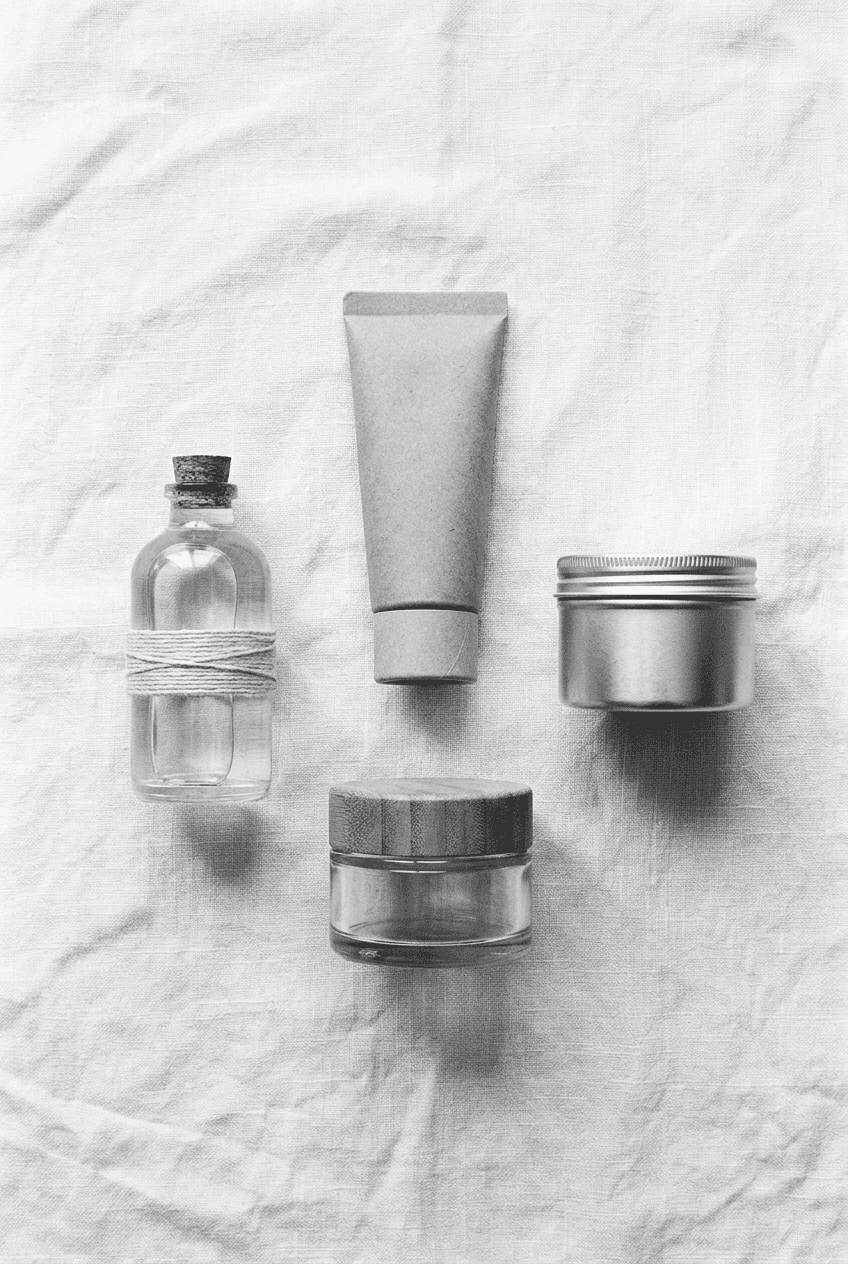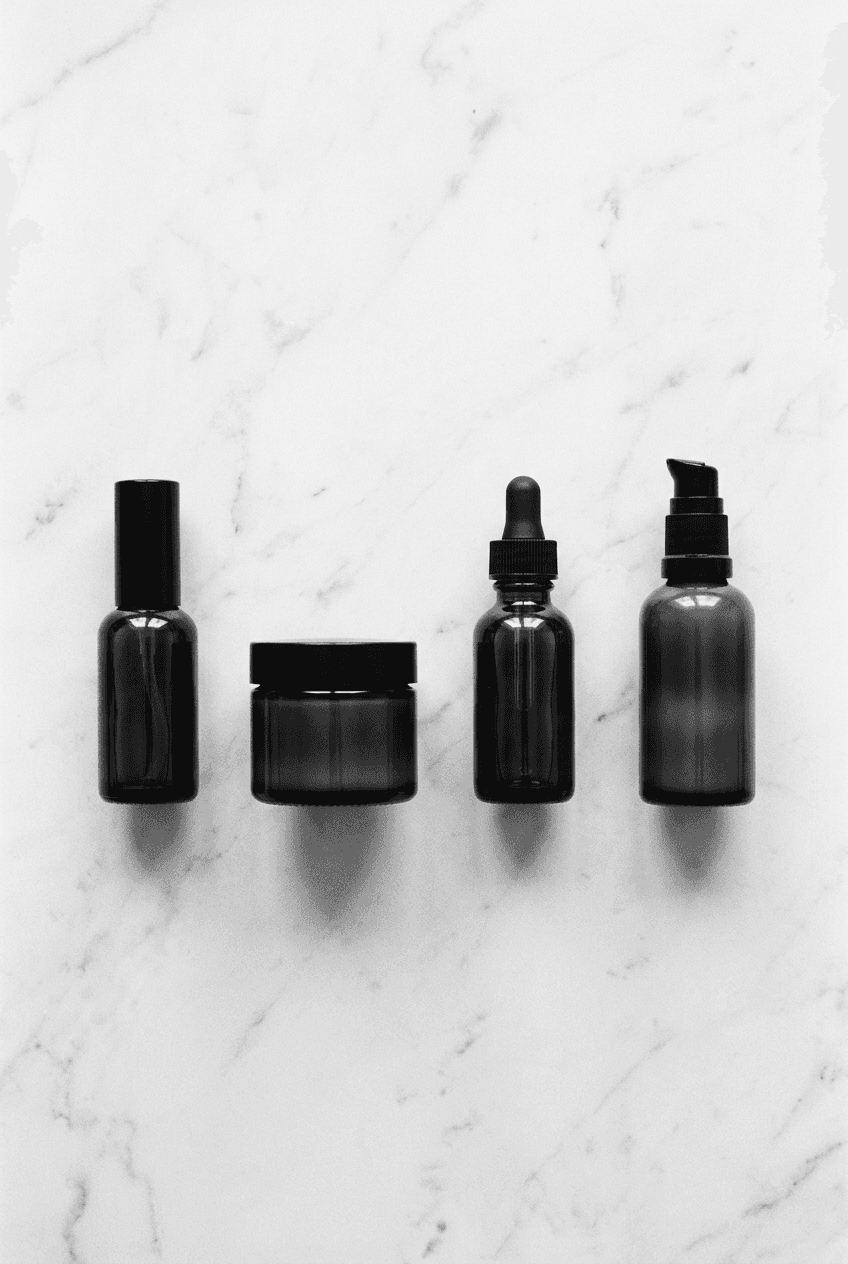

A private label formula is your manufacturing starting point, not your brand ceiling.
What Private Label Skincare Branding Actually Means
Private label manufacturing means you're licensing a finished formula from a supplier, then adding your own packaging, name, and brand identity. This is not equivalent to having no differentiation. I work with brands that start exactly here, and the ones that win are the ones that understand they're building four distinct layers of brand IP, not relying on the formula alone.
The mistake most entrepreneurs make is thinking the formula is the moat. It's not. By definition, if you're using private label, dozens of other brands have access to the same or similar formulas. What separates a premium private label skincare brand from a generic white-label product is intentional architecture at every other layer.
According to industry data, approximately 60% of skincare brands under $5 million in revenue use private label or co-manufactured bases (Statista Beauty Report, 2025). The differentiation leaders built something additional on top.
The Four Layers of Brand IP You Can Build on Private Label
Layer 1: Naming and Verbal Identity
This is where most private label brands abandon the game too early. They pick a name, slap it on a jar, and wonder why it looks generic.
I approach naming as a strategic lever. Your name should signal category, position, and sometimes story. A private label moisturizer named "Hydra Cream" tells your customer nothing about why they should pick it over fifty other moisturizers. But a name like "Barrier Reset" or "Peptide Prolamin" already suggests mechanism, benefit, or positioning.
The name becomes the foundation for all downstream brand decisions, including packaging layout, color palette, and pricing strategy. If you spend real time on your name, the rest of the brand system becomes easier to design.
Test your name candidates against these criteria: Can you trademark it? Does it sound medicinal or clinical (higher barrier to entry for competitors)? Can you own the domain and primary social handles? Does it work in your target language and market? (Mintel Cosmetics Naming Study, 2024)
Layer 2: Visual Identity and Packaging Design
This is where the actual magic happens. I call this "formula agnostic branding" because the visual system doesn't depend on what's inside the bottle.
Your packaging is the only thing your customer touches. It's your entire brand experience at the point of sale. A private label moisturizer in a custom-designed glass jar with a minimalist label and metallic accent reads as premium. The same formula in a generic plastic container with a photocopied label reads as unfinished.
Specifically, consider these design levers: jar material (glass vs. plastic, color, size, shape), label finish (matte vs. gloss, texture options), typography (serif vs. sans serif, weight, color), color palette (how many colors, neutrals vs. accent colors), and closure hardware (color, style, perceived quality).
Brands that own their visual identity invest in unique packaging design that isn't available off-the-shelf. This means custom label shapes, embossed or foil-stamped details, unique jar colors, or distinctive closure hardware. A typical investment is $3,000 to $8,000 for professional design and $15,000 to $40,000 for custom mold tooling if you want a truly unique jar shape.
The ROI here is outsized because visual differentiation compounds. Every social media image, every retail placement, every customer unboxing tells the brand story. You can charge significantly more for a private label formula in premium packaging than in generic packaging. Price premium of 40 to 60% is achievable purely through packaging and visual design (Beauty Independent Report, 2025).
Layer 3: Claims Architecture and Ingredient Storytelling
This layer separates strategic brands from commodity brands.
Every skincare brand makes claims. The question is whether those claims are strategically chosen to reinforce your positioning or randomly attached to whatever the formula contains.
I work with brands to map their ingredient story. If your private label formula contains niacinamide, hyaluronic acid, and plant squalane, you have multiple claim directions available. You could position as "hydration-focused," "barrier repair," "clean ingredient," or "science-backed." The formula allows it. Your brand architecture should choose one direction and ladder all your claims up to that single strategic position.
This means your website copy, your packaging claims, your social content, and your influencer positioning all reinforce the same story. A private label brand with clear claims architecture outsells an identical formula with scattered claims by 3 to 1.
Additionally, you can add proprietary layers to your claims. Custom ingredient combinations, unique ratios, or synergistic blending can be highlighted. You can't claim it's "formulated by dermatologists" if it isn't, but you can claim "formulated with ingredient synergy in mind" if you've thoughtfully selected the combination.
Layer 4: Narrative, Positioning, and Brand Authority
This is what most private label brands completely skip, and it's where the real premium happens.
Your brand story doesn't have to be "we invented this formula." It can be "we spent two years testing this formula combination to solve a specific skin problem" or "we partnered with a Swiss chemist to optimize this base" or "as a pharmacist, I formulated this specifically for barrier-compromised skin."
My own positioning leverages my pharmacist background. I work with supplement brands that position around "formulated by a microbiologist" or "optimized for bioavailability." These narrative layers add authority that justifies higher pricing and builds defensible market position.
The positioning becomes your filter for every brand decision. It tells you what customers to target, what claims to emphasize, what visual direction to take, and what price point to command. Without this clarity, you're just selling a formula.
Layer | Private Label Investment | ROI Timeline | Difficulty Level |
|---|---|---|---|
Naming & Verbal Identity | $2,000 to $5,000 | Immediate | Moderate |
Packaging & Visual Design | $20,000 to $50,000 | 3 to 6 months | High |
Claims Architecture | $1,000 to $3,000 | Immediate | Moderate |
Narrative & Positioning | $5,000 to $15,000 | 6 to 12 months | High |
How to Choose Packaging That Doesn't Scream "Alibaba"
This is where I see most private label brands fail visibly.
There are exactly three paths to premium-feeling packaging: custom tooling for a unique jar shape, premium materials with custom finishing, or intentional simplicity with impeccable execution.
Path 1: Custom Jar Design involves tooling costs of $15,000 to $40,000 but produces a jar that only your brand uses. This creates competitive moat and allows premium pricing. Timeline is 4 to 8 weeks for design and tooling. Path 2: Premium Materials + Custom Finishing uses existing jar shapes but pairs them with custom label design, foil stamping, embossing, or unique closure hardware. Investment is $5,000 to $15,000 and timeline is 2 to 4 weeks. This communicates premium positioning without custom tooling. Path 3: Intentional Simplicity is the highest-risk, highest-reward path. Brands like Aesop and Byredo use simple glass jars but own their positioning so completely that simplicity reads as confidence. This requires exceptional branding architecture at all other layers and works only if your narrative, naming, and claims are absolutely clear.
Most bootstrapped private label brands should start with Path 2. You get distinctiveness without massive tooling investment, and you can upgrade to Path 1 once you have market validation and higher margins.
Avoid these packaging mistakes: misaligned labels that suggest rushed production, jar colors that feel cheap or overly trendy, typeface choices that don't match your positioning, closure hardware that feels flimsy, or packaging that uses colors and styles borrowed directly from successful competitors. These signals say "generic private label" to anyone with brand literacy.
The Role of Claims and Ingredient Stories
Here's what most private label brands miss: your claims don't live in the formula. They live in how you present the formula.
Two brands could have identical skincare formulas. Brand A says "Hydrating Formula." Brand B says "Barrier-Repair Complex with Hyaluronic Acid, Squalane, and Niacinamide." Same formula, completely different perceived value.
I always start claims development by mapping the formula to consumer pain points. What problem does this formula solve? Then I ladder that back to every communication touchpoint. Your website copy should echo your packaging claims. Your influencer briefing should reinforce your packaging claims. Your social content should show the claim in action.
Private label also gives you permission to create ingredient stories that competitors can't. You can emphasize why you chose each ingredient, how they work together, and what makes this particular combination unique. This transforms a commodity formula into a strategic position.
For example, a private label moisturizer with squalane could claim "plant-derived hydration" or "biomimetic lipid barrier" depending on your positioning. Both claims are true for the same formula. Your brand architecture determines which one you use.
According to industry research, consumers perceive skincare as 40% more efficacious when the brand provides clear ingredient education (Journal of Consumer Psychology, 2024). Claims architecture is not marketing fluff; it's a leverage point for perceived efficacy.
When to Hire a Specialist vs. DIY
I'm going to be direct: if you're bootstrapping a private label skincare brand, you cannot DIY all four layers.
You might be able to handle naming yourself with research and testing. You might be able to source packaging templates and customize them. But the coherence between these layers, the strategic architecture that makes a private label brand feel premium and intentional, usually requires specialist input.
Here's how I recommend triaging the work:
If you have less than $30,000 for brand development, hire a strategist for positioning and claims architecture ($3,000 to $5,000), then hire a designer to execute the visual identity based on that strategy ($8,000 to $12,000). Do naming yourself with research support from your network.
If you have $50,000 to $100,000, hire a full-service brand agency to develop strategy, naming, visual identity, and packaging design as an integrated system. The coherence is worth the premium investment.
If you have less than $10,000, focus your investment entirely on packaging design and naming. Outsource those two layers and handle positioning yourself by interviewing your target customer obsessively.
The mistake I see constantly is spreading limited budget across all layers with mediocre execution. Better to do two layers exceptionally well than four layers adequately.
I work exclusively with brands in the cosmetics, supplements, and biotech space because the regulatory and positioning landscape is specific. If your private label brand is competing in these categories, the stakes for brand architecture are higher because the consumer trust bar is higher. This is worth the investment in specialist guidance.
How Private Label Branding Differs from Custom Formulation
Let me be clear about the business model difference because it shapes brand strategy.
With a custom formula, you own the formulation IP. You can claim "our proprietary formula," "we developed this over three years," and "this unique combination is available nowhere else." These claims directly justify premium pricing.
With private label, you can't make those claims. So your brand strategy shifts to the other four layers. You emphasize positioning, narrative, visual identity, and claims architecture instead. This is not a weakness; it's a strategic pivot.
Actually, private label has advantages. Lower capital requirement means faster market testing. You can launch multiple SKUs without massive manufacturing investment. You can iterate on positioning and packaging without reformulating. These are real business advantages that many premium brands don't have.
The brands that fail with private label are ones that try to pretend they have proprietary formulas when they don't, or ones that don't invest in differentiation layers and expect the formula alone to carry the brand. The brands that win are ones that lean into what private label allows and build premium brand architecture on top of it.
FAQ
Can you trademark a private label brand name?
Yes, absolutely. The formula being private label doesn't affect your ability to trademark the brand name, logo, or visual identity. Trademark protects your brand identity, not your formula. You should file for trademark before launch, or at minimum before major marketing investment.
How do you price a private label skincare product when competitors have the same formula?
This is where brand architecture directly impacts pricing power. A private label moisturizer with commodity packaging and vague claims might sell for $25 to $35. The identical formula with premium packaging, clear positioning, and ingredient storytelling can sell for $55 to $85. The difference is entirely brand perception. Higher perceived value enables higher pricing.
Should you disclose that you use private label manufacturing?
No. There's nothing illegal or unethical about private label manufacturing, but there's also nothing to disclose. Disclosure would only invite unnecessary skepticism. Your responsibility is to make truthful claims about what the product does, not to explain your manufacturing method. Luxury brands you admire likely use private label or co-manufacturing; they just don't advertise it.
What if your private label supplier suddenly discontinues your formula?
This is a real risk. The solution is to work with a supplier that allows formula switching at the ingredient level, or to develop relationships with multiple suppliers who can produce compatible formulas. Additionally, you should develop the formulation IP yourself or hire a cosmetic chemist to document your formula so you can manufacture it elsewhere if needed.
How quickly can you get a private label brand to market?
Packaging design and setup typically take 8 to 12 weeks. If you have your brand strategy, naming, and visual identity locked, you can launch in 12 to 16 weeks from start. This is significantly faster than custom formulation, which can take 6 to 12 months to develop. Speed is one of private label's underrated advantages.
Can you create a defensible brand with private label when others have the same formula?
Yes. Your defensibility comes from brand architecture, not formula exclusivity. If you own your positioning story, your visual identity is distinctive, your claims are clear and coherent, and your narrative gives customers a reason to choose you, you have a defensible brand. Formula exclusivity is not the only source of competitive moat.
What's the minimum budget to launch a premium private label skincare brand?
Realistically, $25,000 to $40,000 if you're doing it strategically. This covers naming and positioning development ($3,000 to $5,000), packaging design and custom finishing ($8,000 to $15,000), photography and website development ($5,000 to $10,000), and initial inventory ($8,000 to $15,000). You can do it cheaper, but quality suffers visibly.
Should you add custom ingredients or modifications to a private label formula?
Only if it makes sense strategically. Adding a single ingredient or boosting a concentration level sounds good until you realize it adds costs and complexity without necessarily adding perceived value. Better to choose a private label formula that already contains the ingredients that support your positioning, then invest in how you communicate that formula.
Closing
I'm Tambi Haşpak, a brand strategist and creative director with an unfair advantage: I'm a pharmacist. I run a creative studio for cosmetics, supplements and beyond. 17+ years. Exclusively.
Private label skincare branding is often underestimated as a path to premium brands. The brands that understand this, that build intentional IP at the naming, visual identity, claims, and positioning layers, outcompete the brands that expect the formula to carry all the weight.
For more on building skincare brands strategically, explore how to brand a skincare line or dive into cosmetics brand strategy. If you're ready to develop a private label brand with strategic architecture, let's talk about my branding services.
Learn more about private label branding by checking out insights from Mintel's cosmetics research and Beauty Independent's brand strategy coverage.