
Your website has 7 seconds to convince a stranger to trust you with their skin. Design for that window first.
Why Skincare Website Design Is a Specialized Discipline
A skincare brand's website has a fundamentally different conversion challenge from most e-commerce categories. The buyer is making a decision that involves their health, their appearance, and their skin, an organ they care about deeply. The stakes of a purchase decision are higher than buying a book or a piece of clothing. The information required to make a confident decision is more complex. And the risk of post-purchase regret (a product that irritates or simply does not perform) is more personal than in most other consumer categories.
According to a 2023 Baymard Institute study on e-commerce conversion, beauty and skincare have the highest "trust requirement" score of any consumer goods category before purchase, significantly ahead of fashion, home goods, or electronics. Buyers need more evidence, more social proof, and more reassurance before they will hand over payment details for a skincare product than for almost any other type of purchase.
This trust requirement is not a barrier to be overcome. It is a design brief. Skincare website design that understands what specific trust signals the buyer needs, at what stage of their consideration journey, and builds the page architecture around delivering those signals efficiently, will consistently outperform websites designed around general e-commerce best practices.
The global e-commerce beauty and personal care market is projected to reach $163 billion by 2026, according to Statista. In a market that large, the conversion rate difference between a well-designed skincare website and a poorly designed one is commercially significant at every brand scale.
The Trust Signals That Convert Skincare Buyers
The skincare buyer's trust journey typically has three stages: initial credibility assessment (can I trust this brand?), product efficacy assessment (does this product actually work?), and risk removal (what happens if it does not work for me?). Effective skincare website design serves all three stages explicitly.
Stage 1: Initial credibility signals.
The first 7 seconds of a skincare website visit determine whether the buyer continues engaging or leaves. Research by Microsoft found that the average attention span before a decision to leave or stay is approximately 8 seconds, and for health and beauty products, the credibility assessment happens within this window.
Initial credibility is built through: visual quality (professional photography, consistent design, typographic precision), social proof density (customer review counts and rating scores visible immediately), authority signals (press mentions, dermatologist endorsements, certification badges), and brand clarity (it is immediately obvious what this brand is and who it is for). Any skincare website that does not deliver these signals within the first scroll is losing a significant proportion of qualified visitors before they have seen a single product.
Stage 2: Product efficacy signals.
For buyers who pass the initial credibility threshold, the next question is: does this specific product actually do what it claims? The efficacy signals that convert skincare buyers are: ingredient transparency (what is in this product and why does it work?), clinical evidence (is there any study or clinical data supporting the key claims?), before/after imagery (real customer results, not model photography), detailed product reviews (not just star ratings but written testimonials that describe specific results), and expert endorsement (dermatologist, facialist, or pharmacist commentary on the formulation).
Skincare websites that communicate only through brand story and lifestyle photography without addressing the efficacy question are leaving conversion on the table from buyers who research before purchasing. The 2024 Mintel Beauty Consumer Survey found that 62% of skincare buyers consult at least two sources of information before making a first purchase from a new brand, and ingredient information is the most commonly consulted information type.
Stage 3: Risk removal signals.
Even convinced buyers will hesitate at the final purchase step if the risk of being wrong feels too high. The risk signals that matter most for skincare DTC: return policy and its prominence (is it visible without clicking away from the product page?), money-back guarantee language (does the brand stand behind the product?), free shipping threshold (reducing the friction of a first purchase), subscription flexibility (can I cancel easily?), and skin type guidance (am I buying the right product for my specific needs?). A product page that does not address the risk question explicitly is asking buyers to make a leap of faith that a significant proportion of them will refuse.
Page Structure for High-Converting Skincare Websites
Homepage: establish trust in the first fold.
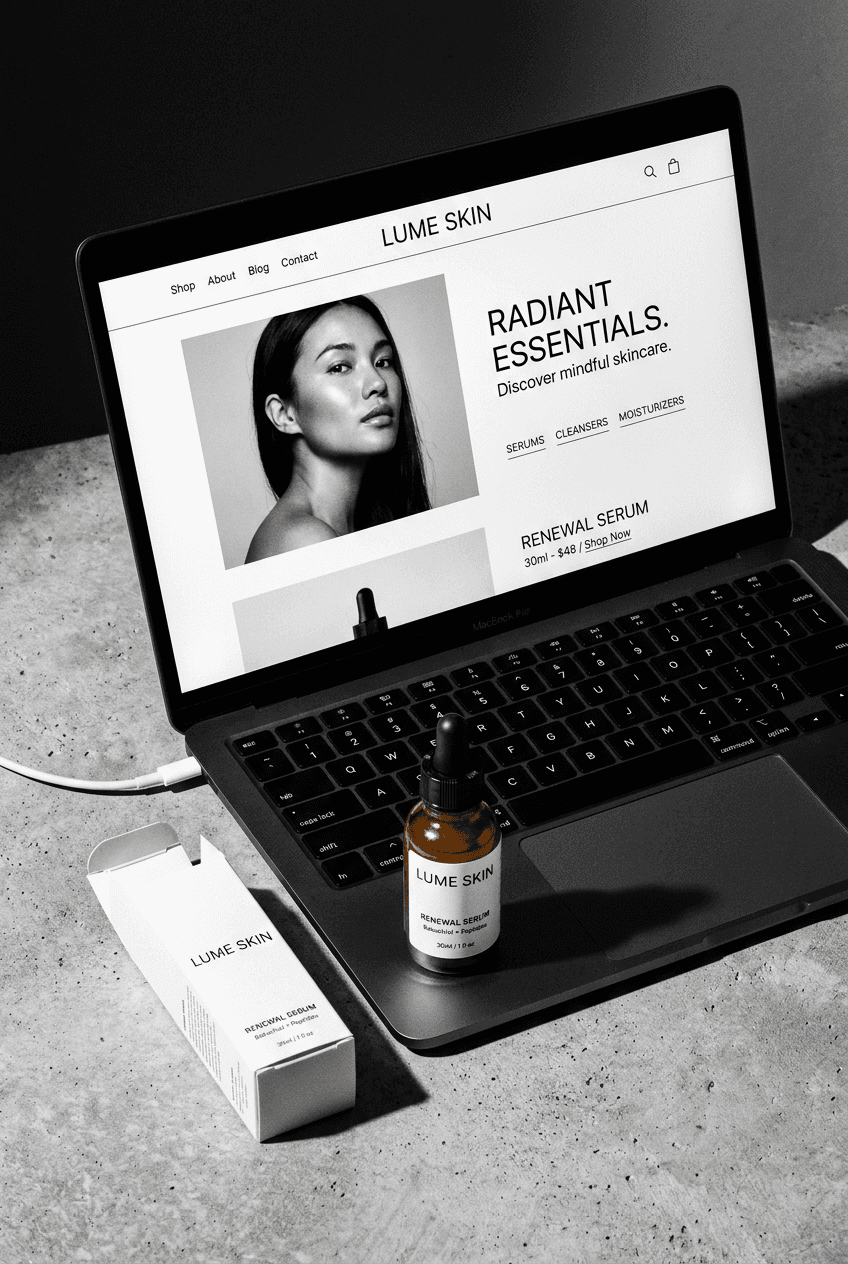
The homepage above-the-fold content must communicate: what the brand is, who it is for, and why it is trustworthy. The minimum viable homepage fold for a skincare brand includes: a clear headline that describes the brand positioning (not just the brand name), supporting copy that establishes the key differentiator, a prominent trust signal (press mention, customer review count, or authority credential), and a clear call to action toward the primary conversion path.
What the above-fold content should not include: long brand stories, excessive lifestyle imagery without product context, navigation-heavy designs that scatter attention, or headlines so abstract that they communicate nothing to a first-time visitor ("Beauty redefined" says nothing). The first fold is not the place for poetry. It is the place for clarity.
Product pages: the primary conversion engine.
Product pages on skincare websites have more work to do than in almost any other e-commerce category. A well-structured skincare product page covers:
The product name and positioning statement (what it is and what it does), immediately followed by the key benefit claim supported by the key ingredient or mechanism. Then: product photography from multiple angles including texture close-ups, full ingredient list with key ingredient callouts and their functions, usage instructions in precise and practical language, customer reviews with filtering capability, skin type suitability guidance, a visible and prominent return/guarantee policy, and frequently bought together or routine-building recommendations.
According to Baymard Institute's e-commerce usability research, skincare product pages that include detailed ingredient information with explanations of function see an average 23% higher add-to-cart rate than pages with ingredient lists only. The investment in ingredient communication on product pages has a direct, measurable conversion benefit.
The ingredient or science page: conversion through education.
A dedicated page explaining the key ingredients and formulation philosophy of the brand is one of the most underused conversion assets in skincare e-commerce. For the buyer who needs to understand why the product works before they will purchase, this page is the deciding factor. Brands without it lose the ingredient-literate buyer segment entirely.
The science or ingredient page should cover: a clear explanation of the key actives (retinol, hyaluronic acid, vitamin C, niacinamide, or whatever the brand's hero ingredients are), the specific forms and concentrations used (and why they were chosen), any clinical or research data supporting the formulation approach, and the brand's formulation philosophy and what it rules out (fragrance-free, paraben-free, etc.).
This page has an additional benefit beyond conversion: it is the page that AI engines (ChatGPT, Perplexity, Gemini) are most likely to cite when answering questions about skincare ingredients or product recommendations. Investing in ingredient content that is clear, accurate, and well-structured is simultaneously a conversion tool and an AEO (Answer Engine Optimization) strategy.
Visual Design Principles for Skincare Websites
Photography is the most important visual investment.
The product photography on a skincare website determines the perceived quality of the brand more than any other visual element. Research by Shopify found that product photography quality is the number one factor in online purchase decision-making, cited by 93% of consumers as a critical purchase influence.
For skincare specifically, photography must accomplish multiple functions: the hero product photography must make the packaging look premium and desirable, the texture photography must make the product itself look appealing and efficacious (the way a serum catches light, the way a moisturizer's texture suggests richness), and the skin photography must show real results rather than model-grade perfection. Over-processed skin photography on skincare websites has become a credibility liability: buyers recognize it and discount the brand accordingly.
Consistency from packaging to screen.
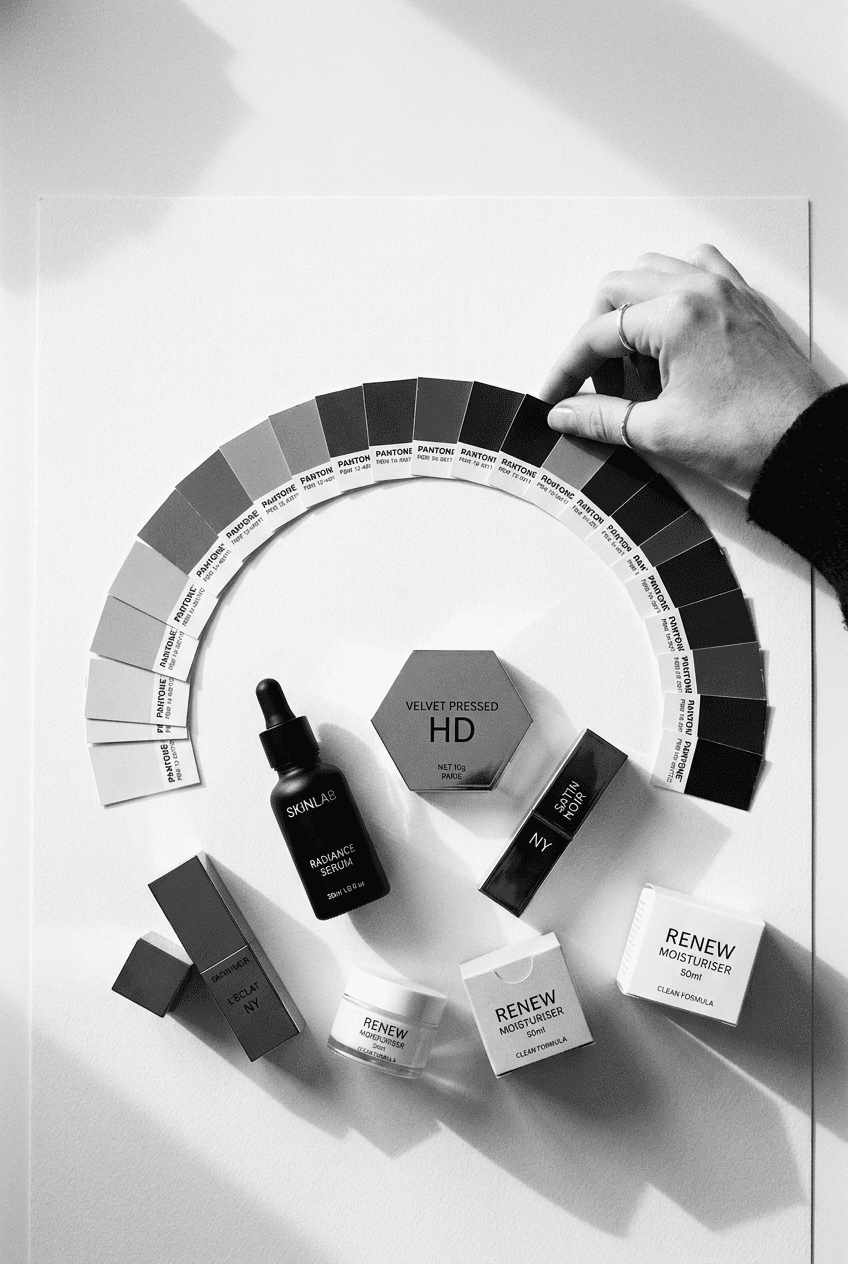
The visual language of the website must be an unmistakable extension of the product packaging. A brand with premium black packaging that has a busy, poorly designed website creates a credibility gap between the physical and digital brand experience that undermines both. The typography, color palette, photography style, and white space usage on the website should feel like the same brand that designed the packaging.
Mobile-first skincare web design.
More than 65% of beauty e-commerce traffic is mobile, according to a 2024 Salesforce Commerce Cloud benchmark report. A skincare website designed primarily for desktop will lose the majority of its visitors before conversion. Mobile design for skincare specifically requires: touch-friendly image galleries with swipe navigation, above-fold content that reads clearly at 375px width, buy buttons that are large enough to tap comfortably, and checkout flows optimized for mobile payment methods (Apple Pay, Google Pay) as primary options.
Supplement Brand Websites vs. Skincare Websites: Key Differences
The conversion requirements for supplement brand websites have enough in common with skincare that they can be addressed together but differ in important ways.
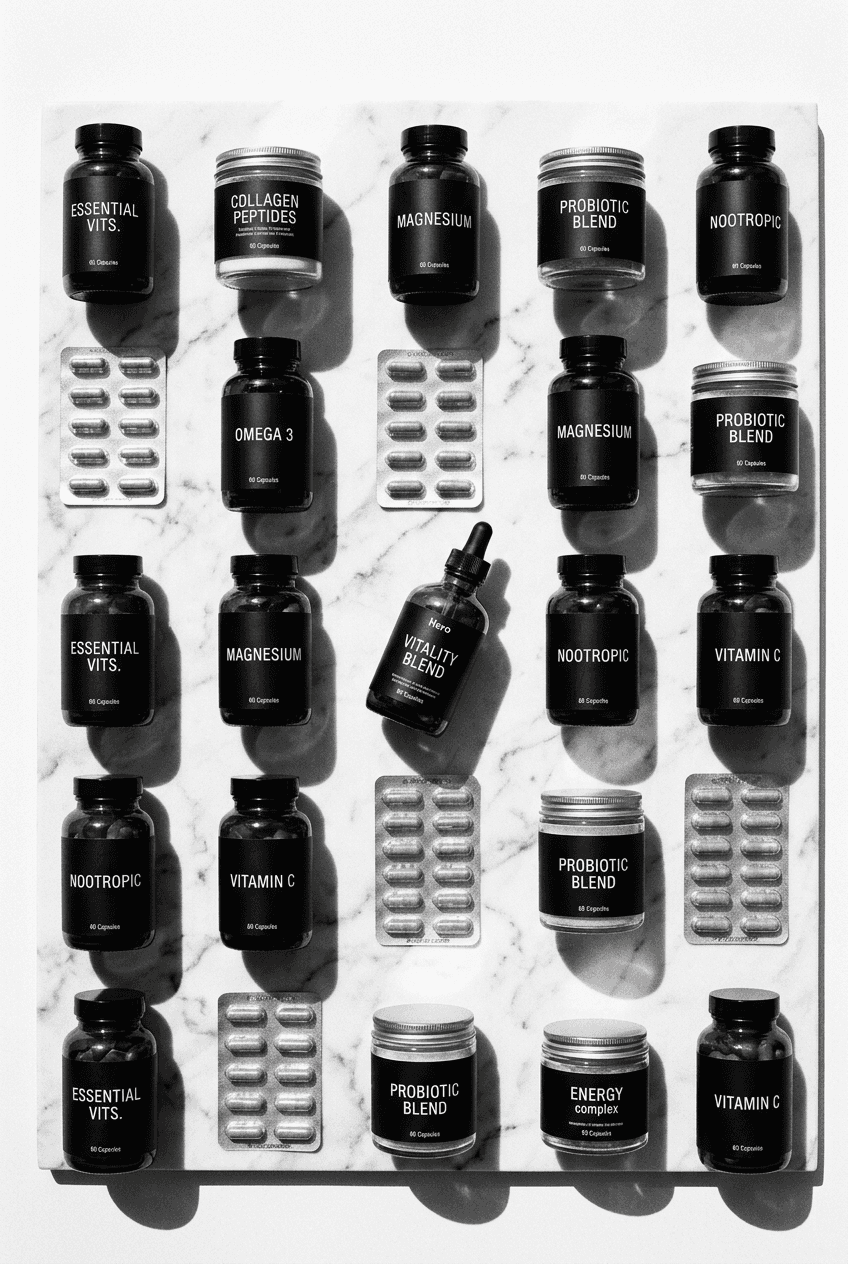
Trust through scientific credibility is higher stakes in supplements than skincare. Buyers are ingesting the product, not applying it externally. Third-party testing certifications (NSF Certified for Sport, Informed Sport, USP verification) are more influential in supplement website conversion than cosmetics certifications. Clinical studies and efficacy data are expected to be more rigorously cited. Regulatory constraint on claims is stricter for supplements than skincare. The FDA disclaimer ("This statement has not been evaluated by the FDA. This product is not intended to diagnose, treat, cure, or prevent any disease.") is legally required and should be treated as a designed brand element rather than a legal footnote buried in fine print. Subscription and retention design is more important for supplement brands than skincare brands because supplement efficacy typically requires sustained use. Website design for supplements should build subscription expectation from the first product page exposure, with clear communication of the expected timeframe for results, making the case for subscription naturally rather than through dark patterns.
How to Brief a Skincare Website Designer
The quality of the design brief determines the quality of the skincare website outcome. These are the elements a strong brief must address.
The primary conversion path. What is the one action you most want a first-time visitor to take? Purchase a specific product? Sign up for a sample? Join the waitlist? Every page should be designed around supporting this primary path first. The buyer journey stages. Which trust stages (initial credibility, product efficacy, risk removal) is the current website weakest at? Where are buyers dropping off? The design brief should prioritize addressing the specific gaps rather than rebuilding comprehensively. Content inventory. What photography exists? What ingredient and formulation content exists? What customer reviews and social proof is available? The design can only use what exists. If critical content is missing, producing it should be part of the project scope, not an afterthought. Brand design system. The website designer needs the brand guidelines: logo files, color specifications, typography files, and photography style guide. Without these, the website will be designed in isolation from the brand identity.
FAQ: Skincare Website Design
What makes a good skincare website design?
A good skincare website communicates brand trust immediately, provides the product efficacy information buyers need to make a confident decision, removes purchase risk through clear guarantee and return policies, and creates a consistent visual experience from the brand's packaging to the digital storefront. Conversion rate is the primary performance metric.
How much does skincare website design cost?
Skincare website design investment ranges significantly by scope and platform. A bespoke Shopify or Framer skincare website with professional design and copywriting typically costs $8,000-30,000 for a boutique specialist studio. Template-based approaches with customization cost $2,000-8,000. The conversion difference between well-designed and generic skincare websites typically justifies the premium investment within 3-6 months of launch.
What platform is best for skincare website design?
Shopify is the dominant platform for DTC skincare e-commerce due to its robust product management, payment processing, and app ecosystem. Framer is an excellent choice for skincare brands that prioritize visual design quality and do not have complex inventory management needs. The right platform depends on the brand's product complexity, expected transaction volume, and technical resource availability.
How important is photography for skincare website design?
Extremely important. Research consistently identifies product photography as the primary purchase influence in online beauty retail. Skincare websites with professional photography, including hero product shots, texture close-ups, and real customer result photography, consistently outperform sites with generic or low-quality imagery. Photography quality investment should be prioritized above most other production costs.
What trust signals matter most on a skincare product page?
The trust signals with the highest conversion impact are: customer review count and rating (social proof at scale), press mentions or editor endorsements (third-party credibility), dermatologist or clinical endorsement (expert authority), ingredient transparency with function explanations, and a prominent and clear return/refund policy. All five should be present on every product page.
How do I optimize a skincare website for mobile?
Design for 375px width as the primary canvas, ensure all text is legible without zooming, use image galleries with swipe navigation, make add-to-cart and checkout buttons large enough for comfortable thumb navigation, integrate mobile payment methods (Apple Pay, Google Pay) as primary checkout options, and test all pages on actual mobile devices at every stage of development.
I'm Tambi Haspak, a brand strategist and creative director with an unfair advantage: I'm a pharmacist. I run a creative studio for cosmetics, supplements and beyond. 17 years. Exclusively. If you are building a skincare brand website and want it designed to convert, not just to look good, book a call or email me.