
Refillable skincare packaging has moved from aspirational to expected. If you're not planning for refills, you're already behind.
The Shift from Single-Use to Refillable Systems
The skincare industry is experiencing a fundamental shift in how consumers think about packaging. For decades, beauty brands treated packaging as disposable. You'd buy a jar, use it, throw it away, and buy another. That model is being replaced by refillable systems where the consumer keeps the primary container and refills it. This is not a marketing trend. It's a regulatory and consumer expectation shift that brands must navigate.
Why? The regulatory pressure is real. The EU is implementing extended producer responsibility laws that make brands financially accountable for packaging waste. California is moving in the same direction. Simultaneously, consumer surveys show that 67% of skincare buyers prefer brands that offer refill options, according to Statista's 2025 beauty sustainability report. For skincare specifically, where texture, consistency, and formula quality matter, refillable formats also reduce oxidation risks compared to traditional jars with caps that are opened repeatedly.
I've designed refillable systems for skincare brands across Europe, North America, and Australia. The common pattern: brands start with refillable options as a sustainability gesture, but they quickly discover the refillable container can command a premium price and foster deeper brand loyalty. A consumer who invests in a quality refillable dispenser is more likely to repurchase refills consistently than someone buying a new package each time.
The technical requirement: you need a primary container that is robust enough to withstand repeated refilling, and a refill format that interfaces with it seamlessly. Most refillable skincare systems use either magnetic connections, threaded bases, or proprietary cartridge systems. The design must make refilling intuitive. If it's confusing or messy, consumers abandon the system.
According to a 2025 study from Mintel, skincare brands offering refillable systems see 23% higher customer lifetime value compared to single-use packaging only. But that's only true if the system is frictionless. A poorly designed refill mechanism undermines the entire sustainability story.
Airless Packaging: No Longer Premium, Now Essential
Airless packaging was once a premium feature. Now, it's becoming the baseline for serious skincare brands. Airless pumps and dispensers eliminate oxygen contact with the formula, which extends shelf life, preserves active ingredients, and reduces the need for preservative levels that would otherwise be necessary in traditional jars.
For serums, essences, and vulnerable actives like vitamin C or retinol, airless is not optional. These ingredients oxidize rapidly when exposed to air. A serum in a traditional jar loses efficacy within weeks, even if unopened. The same serum in an airless dispenser remains stable for months. I design most skincare packaging with airless components, and I've watched the cost of these systems drop significantly over the past three years. What was once a 40-50% cost premium is now 15-25%.
The consumer benefit is clear: they see the formula dispensing only when they pump, which signals preservation and freshness. They use less product per application because there's no scooping waste. And they get more refills per purchase because the product isn't being oxidized between uses. This is why airless has moved from premium to standard.
The design challenge: airless pumps are less flexible than traditional jars. You cannot have the consumer see the product inside. The transparent windows available on some airless systems show an internal reservoir, but not the formula itself. For aesthetic brands or luxury positioning that relies on showing the product color or texture, this is a constraint. But for efficacy-focused skincare, it's an advantage. Your packaging no longer promises visual appeal; it promises functionality and preservation.
According to research from Cosmeticsandtoiletries, 78% of consumers purchasing skincare with active ingredients prefer airless dispensing, even if it costs more. The perceived value is that high.
Sustainable Materials: Glass, Aluminum, and the Circular Economy
Glass and aluminum are the materials of 2026 skincare packaging. Plastic is still used, but its status has shifted. Plastic was the default in cosmetics for decades because it was cheap, lightweight, and easy to mold. Now, premium brands are moving away from plastic explicitly, and mid-tier brands are following.
Why glass? It's infinitely recyclable, chemically inert, and signals luxury positioning. Glass bottles feel more substantial than plastic, and the aesthetic differentiation is significant. A serum in a frosted glass bottle with a stainless steel pump feels premium before the consumer even opens it. For skincare, where trust and efficacy perception drive purchase, material choice is inseparable from brand positioning.
Aluminum is the underrated material here. Aluminum tubes and airtight bottles provide barrier protection equal to glass but are significantly lighter. This reduces shipping weight and carbon footprint. Aluminum is also infinitely recyclable and has an industrial aesthetic that works for minimalist or clean beauty positioning. Many of my clients are shifting serums and creams from plastic to aluminum tubes specifically because the barrier protection is superior and the environmental narrative is simpler.
But here's the catch: glass and aluminum increase production costs. A glass skincare bottle costs 2-3 times more than plastic. This needs to be built into your pricing strategy from day one. Brands that switch to glass packaging without adjusting retail price often find themselves with margin compression. The solution is repositioning your entire brand around premium materials and justifying the price increase through formula quality, positioning, and packaging design excellence.
I see brands making the material shift without a coherent story. They switch to glass but don't communicate why, or they keep the same retail price as competitors with plastic, and suddenly their margins are gone. The successful brands I've worked with are transparent: they move to glass and aluminum intentionally, communicate that choice in their brand narrative, and adjust pricing accordingly. The consumer who cares about premium positioning understands the material investment and values it.
According to IbisWorld research, the premium skincare segment (retailing above $50 per unit) has grown 12% annually for three years, outpacing the mass market segment's 2.3% growth. A significant driver is perceived quality, and packaging material is a primary quality signal.
Minimalism and Typographic Design: The Beauty Shift Away from Imagery
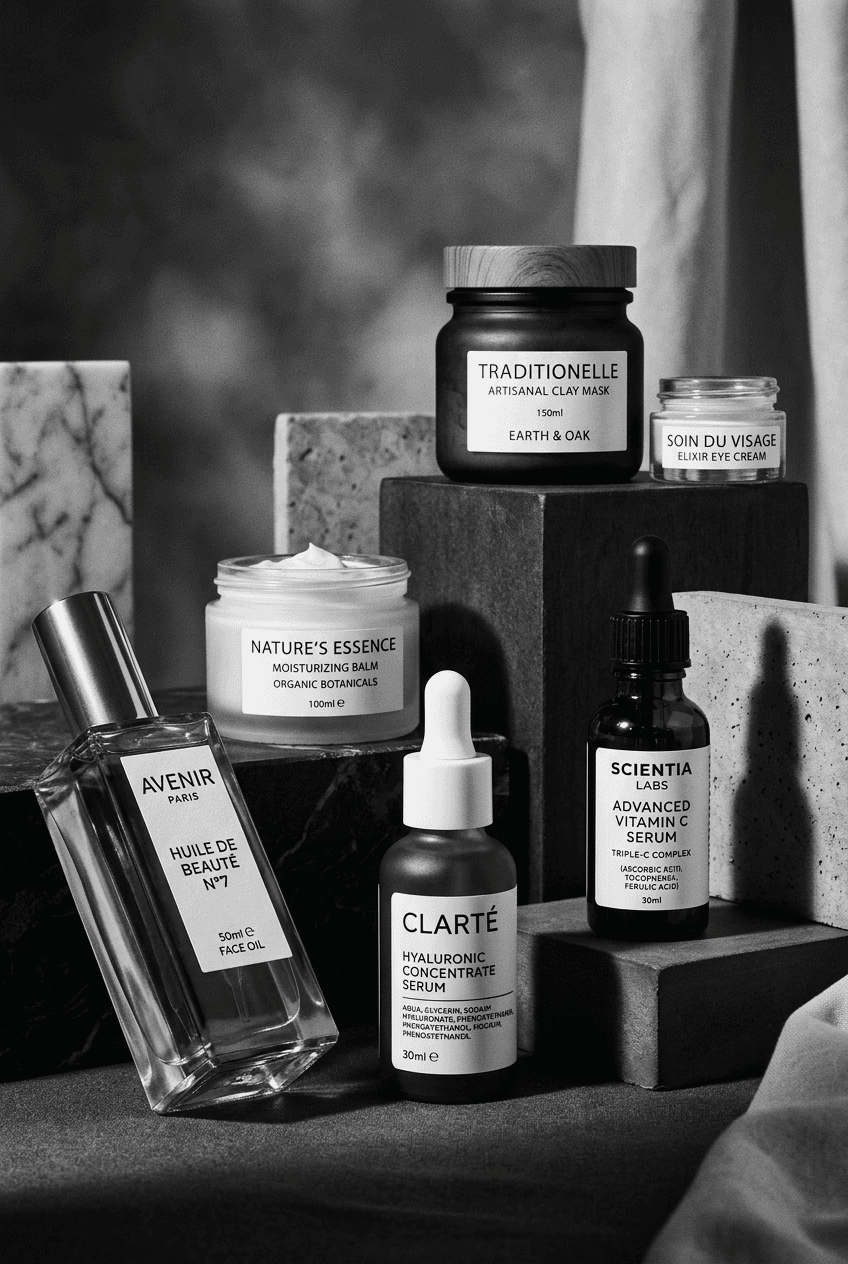
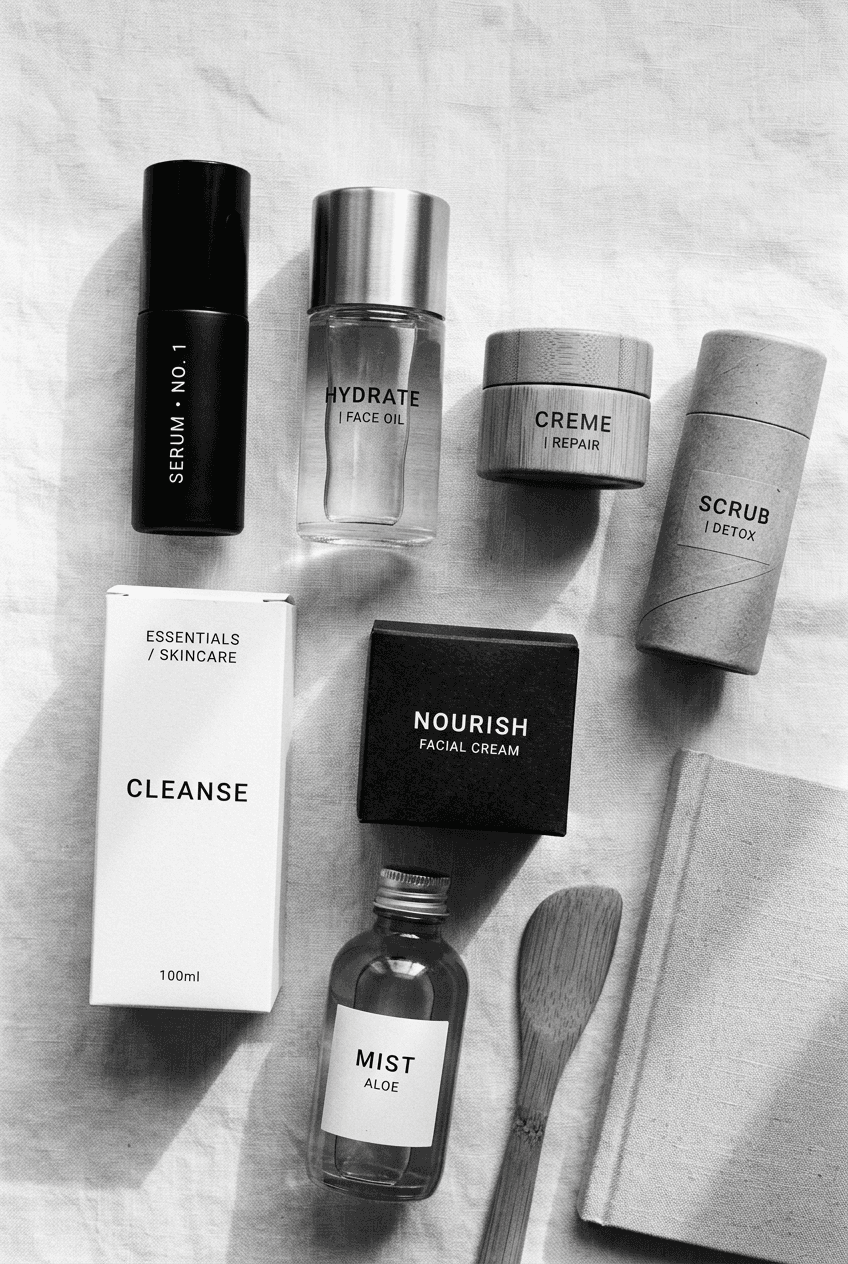
A clear trend in 2026 skincare packaging is the move away from lifestyle imagery and nature photography toward minimalist design, clean typography, and ingredient transparency. Brands are ditching the photoshoot-heavy label aesthetic in favor of clear communication about what's inside.
This shift reflects deeper consumer values. The skincare shopper in 2026 is skeptical of lifestyle imagery. They want to know the ingredient list, the claimed benefits, and why this product is different from the 500 similar products on the shelf. Packaging that leads with typography and ingredient clarity is outperforming packaging that leads with imagery.
I design this shift into every skincare brief now. The primary display area should feature the product name, the primary benefit claim, and the ingredient story. No unnecessary imagery. If I include a visual element, it's either the formula itself (showing color or texture through transparent packaging), a minimalist icon that clarifies the product's function (a drop for serums, a swirl for creams), or the brand's logo. Everything else is removed.
The color palette for minimalist skincare packaging is intentionally restrained. Whites, off-whites, and neutral grays dominate. The accent color is subtle and connected to either the ingredient story (green for botanical extracts, gold for peptides, blue for hydration) or the brand identity. Most minimalist skincare brands use a single accent color across the range, and that color becomes the brand's visual signature.
Typography does the heavy lifting. I select typefaces that feel clean and trustworthy, usually sans-serifs with good legibility. The brand name is prominent but not oversized. The benefit statement is secondary. The ingredient list is legible and organized. This visual hierarchy builds credibility because it prioritizes information clarity over decoration.
According to Mintel's 2025 beauty packaging trends report, skincare brands with minimalist, ingredient-focused packaging see 34% higher consideration among consumers aged 25-40 compared to lifestyle-focused packaging. For skincare specifically, minimalism is no longer a niche aesthetic. It's becoming the standard for credible positioning.
Refill and Sustainability Systems: The Operational Complexity
Offering refillable packaging sounds straightforward until you start designing it. You need to ensure the refill packaging minimizes waste (usually smaller cartons or pouches), the interface between the primary container and refill is intuitive, the refill pricing creates a sustainable economics model, and the entire system communicates clearly to the consumer.
I've designed refill systems that failed because the primary container wasn't durable enough and began deteriorating after three or four refills. I've designed systems that succeeded because the refill cartridge was 60% smaller and lighter than the original packaging, creating a clear cost and environmental advantage. The difference is in the engineering and the communication.
A successful refill system needs:
Robust primary container that lasts at least five refill cycles
Refill format that's intuitive to use without spilling
Refill pricing that's 30-40% lower than original purchase price (to incentivize repeat purchase)
Clear labeling that explains how to refill and when the primary container should be replaced
Recycling information for both primary container and refill packaging
Most brands get stuck on point four. The refill instructions must be obvious, or consumers will give up. I design refill systems where the mechanical action is almost impossible to do wrong. Magnetic bases, for example, are foolproof. Threaded bases require more care but work well if the threading is large and obvious.
The economics matter too. If your primary container costs 80 cents to produce and the refill pouch costs 20 cents, your refill pricing strategy is clear: refill pouch at 40% of original price. But if your primary container is a complex airless pump that costs three dollars, and the refill costs 60 cents, suddenly 40% off doesn't work mathematically. You need to price the refill at 50-55% of original to sustain margin. The consumer still sees value (they get 45-50% off), and you maintain profitability.
According to packaging industry analysis, skincare brands with refill systems see a 15% increase in repeat purchase rate within the first year, but that only holds if the refill price is compelling and the system is frictionless.
Format Innovation: Powder, Sticks, and Alternative Delivery Systems
Beyond traditional bottles and jars, skincare packaging is diversifying into alternative formats. Powder serums that require water activation, solid cleansing bars, stick formats for targeted application, and single-use sachets are gaining market share. Each format requires a different packaging approach.
Powder skincare is a 2026 trend I'm seeing across actives like vitamin C, collagen, and peptides. The benefit is stability: powders don't oxidize the way liquid actives do. The challenge is convincing consumers to mix them. The packaging must communicate this as a feature, not a hassle. I design powder skincare with clear dispensing mechanisms (scoops, measured openings) and simple mixing instructions. Often, the packaging includes a small mixing vessel or applicator to reduce friction.
Stick formats work for targeted applications: solid serums for eye areas, solid moisturizers for dry patches. These are often formulated as balms and require robust packaging that keeps them solid in warm climates but dispensable in cold ones. The stick format is more sustainable than liquid (less packaging overall) and creates a premium, innovative perception.
Single-use sachets are controversial in sustainability circles, but they're growing for luxury skincare. The benefit is freshness: each use is a new, unopened packet. For travel and testing, this is valuable. The packaging challenge is creating sachets that are easy to open without tearing, don't feel cheap or wasteful, and protect the formula from light and air.
Formats like these require specialized production partnerships. You cannot design powder sachets without understanding powder formulation, particle size, and moisture protection. The packaging must be engineered specifically for the format. This is where my background as a pharmacist becomes essential: I understand the formulation constraints and how they affect packaging choices.
According to a 2025 analysis from NutraceuticalsWorld, alternative skincare formats (powders, sticks, balms) are growing at 18% annually, outpacing traditional liquid and cream skincare growth of 4.2%. But adoption is highest among premium brands and early adopters. For mainstream skincare, traditional formats still dominate.
Comparison Table: 2026 Skincare Packaging Approaches
Approach | Sustainability | Brand Perception | Production Cost | Shelf Life | Consumer Adoption |
|---|---|---|---|---|---|
Traditional Plastic Jar | Low | Neutral | Very Low | 12-18 months | High (established) |
Glass + Airless | Very High | Premium | High | 24+ months | High (growing) |
Refillable System | Very High | Premium + Values-Aligned | Medium | 24+ months | Growing (25-40%) |
Aluminum Tube | High | Premium | Medium | 24+ months | Growing (15-25%) |
Powder/Stick Formats | Very High | Innovative | High | 24+ months | Low (niche) |
Each approach serves different market positions and consumer expectations. The choice depends on your brand positioning, budget, formulation, and target market.
The Regulatory Reality: Compliance Impacts Packaging Choices
Packaging design for skincare is not purely aesthetic or environmental. Regulations shape what's possible. In the EU, you need specific language about recycling, collection systems, and post-consumer responsibility. In the US, FDA requires ingredient declarations with specific font sizes and contrast. Australia requires warning statements and expiration information in specific locations.
Light protection is also a regulatory and formulation concern. Certain ingredients (vitamin C, retinol, peptides) are light-sensitive and require opaque or heavily tinted packaging. You cannot use clear glass for these formulations without compromising efficacy. I've had to redesign beautiful clear glass bottles to frosted versions because the formula inside was degrading. The packaging must serve the formula first, the brand second.
Claim substantiation also affects packaging. If you claim your serum will reduce wrinkles, the packaging becomes part of your evidence package. Regulators will ask: how does this packaging protect the active ingredients? How do you ensure the consumer receives the product in the state intended? Packaging design documentation becomes part of your regulatory file.
According to the FDA's own guidance on cosmetic claims and packaging, 22% of cosmetic companies receive warning letters for unsupported claims that are actually related to packaging choices: claims about stability or preservation that aren't supported by the barrier protection the packaging provides.
Designing for 2026: What You Need to Consider
If you're designing skincare packaging in 2026, here are the non-negotiable considerations. First: ingredient protection. What does your formula need? Light protection, oxygen barrier, moisture control? Design around that need first. Second: sustainability positioning. Is this a core value, a differentiator, or just cost optimization? Be honest about your commitment, because consumers can tell. Third: consumer clarity. Will the consumer understand how to use your product, how to apply it, how to store it, and what to expect?
Fourth: refillable viability. Can you offer a refill system, even if it's not your primary business model? Having an option available, even if adoption is slow initially, demonstrates commitment and builds optionality. Fifth: material story. Can you justify your material choices? If you're using glass, why? If you're using plastic, why not glass? Communicate intentionality.
Sixth: budget alignment. Premium materials and systems cost more. You need to price accordingly and communicate the value. A forty percent increase in packaging cost might support a twenty-five percent price increase, but only if the rest of your brand (formula quality, positioning, education) justifies it. And seventh: production feasibility. Some beautiful designs are impossible to produce at scale without prohibitive costs or quality loss. Work with manufacturers during design, not after.
According to research from Cosmeticsandtoiletries, the average cost of packaging for skincare products ranges from eight percent of COGS for mass-market brands to twenty-five percent for luxury brands. Design complexity, material choices, and production volume all affect this calculation. Knowing your packaging budget ceiling before you start designing eliminates wasted iterations.
Internal Links for Deeper Exploration
Skincare packaging is part of a larger brand ecosystem. If you're designing skincare packaging, you're likely also working on brand positioning and identity. Explore tambihaspak.com/blog/cosmetics-brand-positioning to understand how packaging communicates your market position. For the role of materials in creating brand perception, read tambihaspak.com/blog/luxury-skincare-branding, which covers premium material choices and their effect on brand equity.
If you're launching a skincare brand and need guidance on the full identity system that packaging must integrate with, tambihaspak.com/blog/skincare-brand-naming is your starting point. And for understanding the technical details of how packaging affects shelf life and ingredient stability, tambihaspak.com/blog/pharma-packaging-design covers the science of barrier protection that skincare brands often overlook.
For broader sustainability packaging strategy, tambihaspak.com/blog/sustainable-beauty-packaging covers the full lifecycle perspective that 2026 consumers expect from skincare brands.
FAQ: Skincare Packaging Trends and Implementation
Should I switch to glass packaging if my skincare is currently in plastic?
Switching to glass is a significant decision that affects cost, brand positioning, and shelf presence. If your target consumer prioritizes premium positioning and sustainability, the switch makes sense and justifies a price increase. If you're in the mass-market segment competing primarily on price, the cost increase may compress margins unacceptably. I recommend a phased approach: switch your hero product or premium line to glass first, test consumer response and pricing elasticity, then expand if successful. Never switch everything at once without understanding your consumer's price sensitivity.
How do I make refillable packaging work economically?
The refill ecosystem only works if the primary container lasts multiple refills and the refill price creates clear consumer value. Your primary container should cost enough to justify significant investment in durability but not so much that refill pricing becomes implausible. A general rule: if your primary container costs more than eight to ten percent of your original selling price, refill pricing becomes difficult. Also, your refill packaging must cost substantially less (at least fifty percent less) than original packaging. If these economics don't work, refillable options will have low adoption.
What is the minimum font size and contrast requirement for skincare labels?
In the US, FDA requires ingredient declarations in type size no smaller than the type used for the brand name, with a minimum of 6-point font. Contrast must be sufficient for legibility. In the EU, INCI ingredient declarations have slightly different requirements but similar legibility standards. I always design ingredient declarations in 8-10 point font because anything smaller drives consumer confusion and regulatory risk. Contrast ratios should exceed 4.5:1 for body text to ensure readability for visually impaired consumers.
Is plastic completely unacceptable for skincare now?
Plastic is still widely used in skincare, but its market perception is shifting. Plastic remains acceptable for mass-market brands, for certain formulations where barrier protection requirements favor plastic over alternatives, and for certain formats where glass is impractical. But premium brands and sustainability-focused brands are moving away from plastic. For luxury skincare, plastic sends a cost-cutting signal that undermines premium positioning. My advice: use plastic deliberately for specific reasons (cost efficiency for a mass-market line, barrier properties for a sensitive formula), not as a default.
How long does skincare actually stay stable in different packaging formats?
Stability depends on the formula, the active ingredients, storage conditions, and packaging barrier properties. In traditional jars, most skincare loses thirty to forty percent of efficacy within six to twelve months due to oxidation and microbial exposure. In airless packaging, stability extends to twenty-four months or more. In sealed, glass bottles with minimal headspace, stability can exceed thirty-six months. Always conduct stability testing specific to your formula and packaging choice. Don't assume traditional shelf life timelines apply to your new packaging system.
What does a refill system need to succeed with consumers?
A refill system needs simplicity above all else. The mechanical action must be obvious and foolproof. It needs clear instructions visible on the primary container that explain how to refill and when to replace the primary container. The refill price must be compelling enough to justify the consumer's initial investment in a more expensive primary container. And the refill packaging must be compact and easy to dispose of. I've seen refill systems fail because consumers couldn't figure out how to open the refill cartridge, or the refill price was only ten percent less than the original, eliminating the financial incentive to repurchase.
Are sustainable packaging materials actually better for the environment?
Sustainable materials have lower environmental impact over their lifecycle, but the narrative is more complex than marketing suggests. Glass is infinitely recyclable but heavy (higher shipping emissions). Aluminum is lightweight and recyclable but energy-intensive to refine. Plastic is light but typically recycled poorly. Refillable systems reduce overall packaging waste but only if consumers actually use them multiple times. The environmental benefit is real but dependent on your entire system, including consumer behavior and waste infrastructure. I design with transparency about these tradeoffs rather than overstating sustainability claims.
How do I balance beautiful design with functional packaging requirements?
This is the central tension in packaging design. Functional requirements come first: the packaging must protect the formula, meet regulatory requirements, and be producible at scale. Within those constraints, design excellence creates differentiation. The most successful skincare packaging I've designed does not sacrifice function for aesthetics. Instead, it makes the functional elements visually intelligent. Ingredient clarity becomes a design feature. The airless pump becomes a brand signal about formula preservation. The refill mechanism becomes part of the consumer experience narrative. Function and beauty are not opposing forces if you design intentionally.
What's the right time to introduce a refillable system to a new skincare brand?
I recommend introducing refillable options within the first year of launch, once you've validated product-market fit and consumer demand. Launching with refills when you're still testing product-market fit adds unnecessary production complexity. But waiting three to five years to introduce refills cedes the sustainability narrative to competitors. The sweet spot is: once you have clear evidence that consumers will repurchase your formula, introduce a refillable option alongside your standard packaging. This allows committed consumers to adopt the sustainable option while maintaining accessibility for others.
I am Tambi Haşpak, a brand strategist and creative director with an unfair advantage: I am a pharmacist. I run a creative studio for cosmetics, supplements, and beyond. 17+ years. Exclusively.