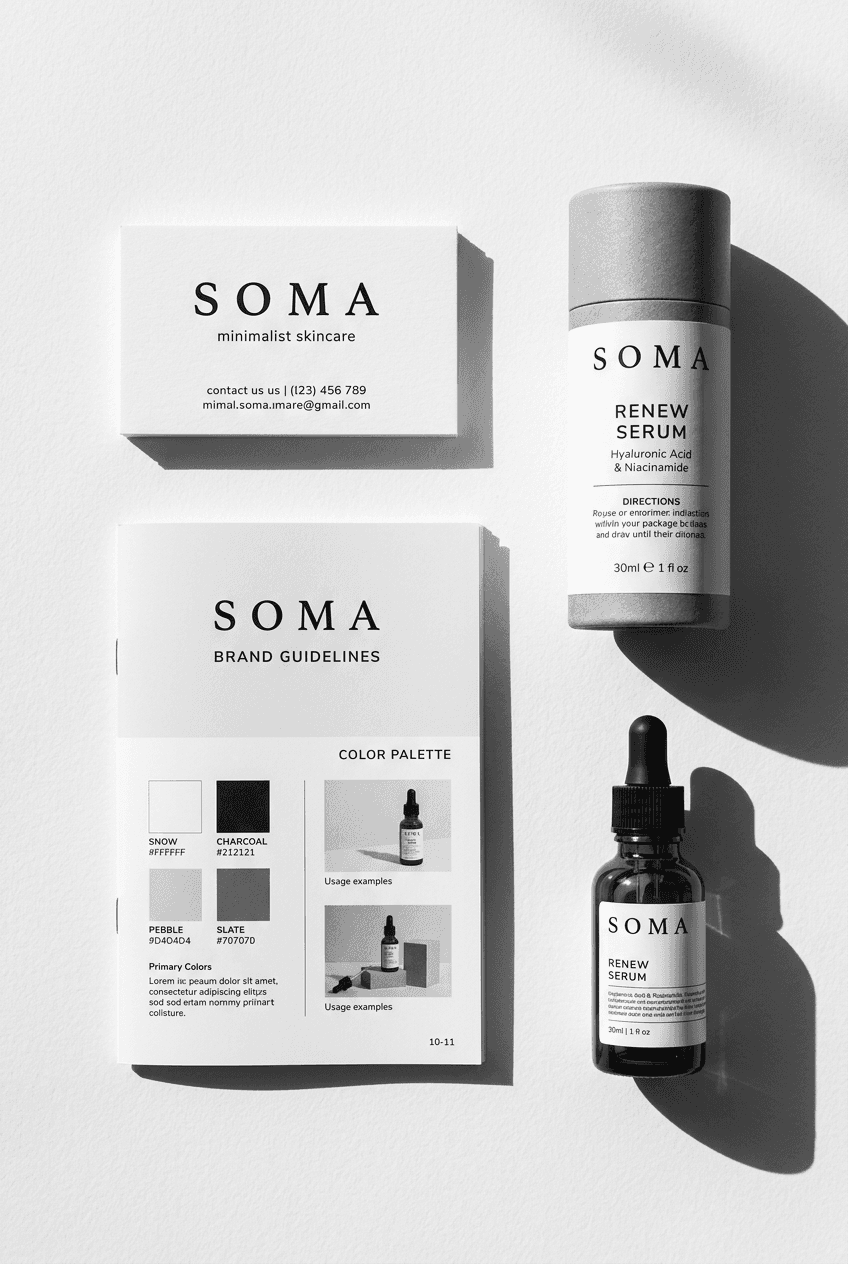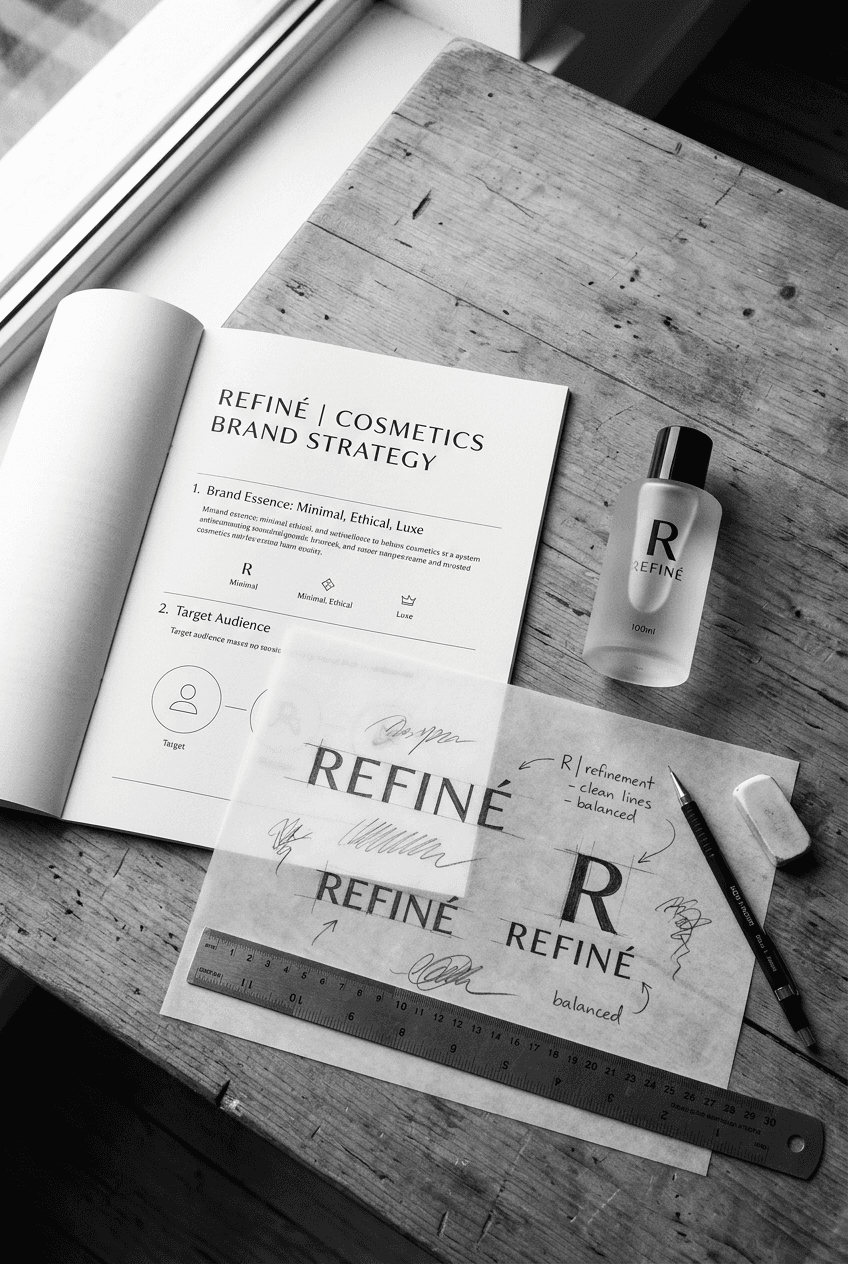

A cosmetics branding studio that cannot explain your competitive landscape before design begins is not a branding studio. It is a design studio with a better invoice.
Why Choosing the Wrong Cosmetics Branding Studio Is So Costly
Choosing the wrong cosmetics branding studio does not just waste the original investment. It sets the brand on a strategic path that requires expensive correction later. A visual identity built without proper competitive positioning locks in differentiation decisions that are difficult and costly to change after packaging has been printed and products have shipped.
The global cosmetics market reached $430 billion in 2023, according to Statista. That market is generating thousands of new brand launches every year, most of them working with studios that have no specific knowledge of the category. The result is a sea of brands that look similar because they were built by people who did not know what they were differentiating against.
I have been building cosmetics brands as a pharmacist and creative director for 17 years. The studios that consistently produce commercially effective cosmetics brands share specific characteristics that have nothing to do with how their own portfolio looks. This guide explains what those characteristics are and the exact questions that reveal whether a studio has them.
The Difference Between a Design Studio and a Branding Studio
This distinction matters before anything else. Most studios that call themselves branding studios are design studios with a broader service list. The difference is not about the outputs. It is about where the work begins.
Dimension | Branding Studio | Design Studio |
|---|---|---|
Starting point | Brand strategy and competitive positioning | Visual design brief from the client |
Competitive analysis | Conducted independently before design begins | Skipped or client-provided |
Regulatory knowledge | Understands cosmetic claims compliance | Not typically part of the skill set |
Packaging expertise | Designs for the physical container and channel | Designs for screen, adapts to print |
Guidelines | Detailed enough for any agency to execute against | Visual reference document |
Revision process | Grounded in strategic rationale | Based on aesthetic preference |
Output | A brand that functions commercially | A brand that looks good in a presentation |
The test is simple: ask the studio what their process looks like before the first design is created. If the answer describes a questionnaire you fill in and a discovery call, you are talking to a design studio. If the answer describes a competitive audit, category mapping, audience analysis, and a written strategy document that precedes any visual work, you are talking to a branding studio.
What a Cosmetics Branding Studio Must Know About Your Category
Category knowledge is the most underweighted factor in how founders choose branding studios, and the most consequential one. A cosmetics branding studio that does not understand the specific visual conventions, buyer psychology, and regulatory requirements of your segment cannot make the strategic decisions that determine whether your brand succeeds on shelf.
Cosmetic claims compliance. The EU Cosmetics Regulation and FDA cosmetic labeling requirements both restrict what can be said about a cosmetic product and how it must be said. A studio without this knowledge will design packaging with claims language that either violates regulations or requires expensive post-design revision. According to a 2022 European Commission compliance audit, 18% of cosmetic products reviewed had labeling issues related to claims or required information. A specialist studio prevents these problems by treating compliance as a design input, not an afterthought. Shelf and channel context. Cosmetics packaging is evaluated in specific environments: pharmacy shelves under LED lighting, beauty retailer gondolas next to direct competitors, DTC website product pages, and Amazon thumbnails at 200 x 200 pixels. A studio that designs for a presentation deck without considering these contexts produces packaging that looks excellent in the deck and performs poorly in the actual purchase environment. Category visual conventions. Every segment of the cosmetics market has visual language conventions that carry meaning for buyers. Clinical skincare uses specific typography and color conventions. Natural beauty uses different ones. Prestige uses different ones again. A studio that does not know these conventions by category cannot make informed decisions about when to follow them and when to deliberately subvert them for differentiation.
The Six Questions That Reveal Everything About a Cosmetics Branding Studio
These are the questions I would ask if I were evaluating a studio to build my brand. The answers are more diagnostic than any portfolio.
1. Can you show me your competitive audit process?
A genuine branding studio will have a documented process for mapping the competitive landscape before design begins. They should be able to show you an example of a competitive audit from a previous project and explain how it informed the design decisions. A studio that cannot do this does not conduct genuine competitive analysis. They either skip it or rely on what the client tells them, which is not independent analysis.
2. How do you handle cosmetic claims compliance in your design process?
The right answer involves claims compliance being part of the brief-building phase, before any design starts. The wrong answer involves sending finished designs to a regulatory consultant after the fact. If the studio does not have a clear answer to this question, they have not built enough brands in the regulated beauty space to understand why it matters.
3. What does your strategy deliverable look like?
Ask to see the format of the brand strategy document they produce before design begins. A serious studio produces a written positioning document that defines the brand's audience, competitive differentiation, key messages, and visual direction. If the strategy deliverable is a mood board, you are not looking at a strategy.
4. How do you design for the specific containers in my range?
Packaging design that is not tested on the actual physical container produces results that look different in production than they did on screen. A specialist studio will ask about your specific bottles, jars, tubes, and caps early in the process and design against those formats. If the studio's process does not include working from your specific packaging specifications, ask why.
5. Can you describe a project where your work produced a measurable commercial result?
Good branding studios know what happened to the brands they built. They track whether the products reached their target retail, how the brand performed at launch, whether it was acquired or scaled. A studio that cannot speak to outcomes is a studio that has not stayed close enough to the commercial context of their work.
6. Who specifically will work on my project?
In many studios, the senior work is sold by partners who then hand off execution to junior staff. Ask specifically who conducts the strategy phase, who designs the identity, and whether the people you met in the pitch are the people who will work on your brand. The answer to this question reveals more about the actual quality you will receive than any number of portfolio examples.
Red Flags in a Cosmetics Branding Studio
They present before they have asked enough questions. Any studio that presents creative concepts in a first or second meeting, before conducting a competitive audit and agreeing on a strategic position, is designing on intuition rather than strategy. Beautiful work produced this way is aesthetically strong and commercially unreliable. Their portfolio shows only one aesthetic. A cosmetics branding studio with a strong point of view is not a problem. A studio that applies the same visual aesthetic to every client regardless of their category, positioning, or audience is not building brands. They are applying their own visual preference to someone else's business problem. They cannot articulate why they made specific design decisions. Ask why a specific color was chosen, why a particular typeface, why that hierarchy on the front panel. If the answer is aesthetic ("it felt right," "the client loved it"), the decisions were not grounded in strategy. Strategic decisions have strategic rationale. They describe their process as highly collaborative. Collaboration sounds like a virtue. In branding, excessive collaboration at the design stage usually means the studio is outsourcing strategic decisions to the client rather than making them independently. The client should approve strategic direction. They should not be making visual design decisions.
For guidance on what to include in a brief when you do find the right studio, see my guide to how to brief a branding agency.
How Specialist Studios Differ From Generalist Agencies
A generalist agency builds brands across multiple industries: food and beverage, technology, financial services, beauty. They bring broad creative capability and no specific category knowledge. For commodity categories with simple buyer psychology and no regulatory layer, this can be appropriate.
Cosmetics is not a commodity category. It sits at the intersection of regulated claims, complex buyer psychology, specific channel requirements (pharmacy, prestige, DTC, Amazon), and visual language conventions that carry precise meaning for the buyers you are trying to reach. A generalist agency will research your category before designing for it. A specialist studio brings 10 to 17 years of direct category experience to the first briefing call.
The practical difference shows up in the decisions that require category knowledge: which claims language is safe for your target markets, how to differentiate visually in a shelf environment you know, which packaging formats perform best in the channel you are targeting, and how to build a visual identity that scales across the full product range you plan to build over five years.
According to a 2023 Mintel report on beauty brand launches, brands built by specialist studios had a 34% higher rate of reaching target retail distribution within 18 months of launch compared to brands built by generalist agencies. The category knowledge that seems like a nice-to-have is a commercially significant factor in launch outcomes.
FAQ: Choosing a Cosmetics Branding Studio
What is a cosmetics branding studio?
A cosmetics branding studio is a specialist design and strategy practice that builds brand identities specifically for cosmetics and beauty brands. Unlike generalist agencies, specialist studios bring direct category knowledge including cosmetic claims compliance, shelf psychology, packaging design for specific container formats, and experience with the visual conventions of different beauty segments.
How do I know if a cosmetics branding studio is legitimate?
Ask about their strategy process before design begins. Ask to see a competitive audit from a previous project. Ask how they handle cosmetic claims compliance. Ask who specifically works on client projects. A legitimate specialist studio will answer all of these questions confidently and in detail. A generalist agency or design studio posing as a branding studio will give vague or aesthetic-focused answers.
How much does a cosmetics branding studio cost?
A specialist cosmetics branding studio typically charges $8,000 to $60,000 for a complete brand identity depending on the scope. Entry-level studio work starts at $3,000 to $8,000. Senior specialist studios with deep category experience charge $25,000 to $60,000 for a full brand system including strategy, identity, packaging design, and guidelines.
Should I choose a cosmetics branding studio based on their portfolio?
Portfolio aesthetics tell you about a studio's visual capability. They tell you nothing about the studio's strategic process, category knowledge, or commercial outcomes. Evaluate a studio's process, ask about their competitive analysis methodology, and ask about outcomes before you decide based on how their previous work looks.
What is the difference between a cosmetics branding studio and a cosmetics packaging designer?
A packaging designer creates the visual design for your packaging. A branding studio builds the brand strategy and visual identity that the packaging design is an expression of. Packaging design without brand strategy produces beautiful containers without commercial positioning. For a brand that needs to compete in retail or prestige distribution, the strategic work must precede the packaging design.
I'm Tambi Haşpak, a brand strategist and creative director with an unfair advantage: I'm a pharmacist. I run a creative studio for cosmetics, supplements and beyond. 17 years. Exclusively. If you are evaluating studios for your cosmetics brand and want to understand what a genuine specialist process looks like, book a call or send me an email.