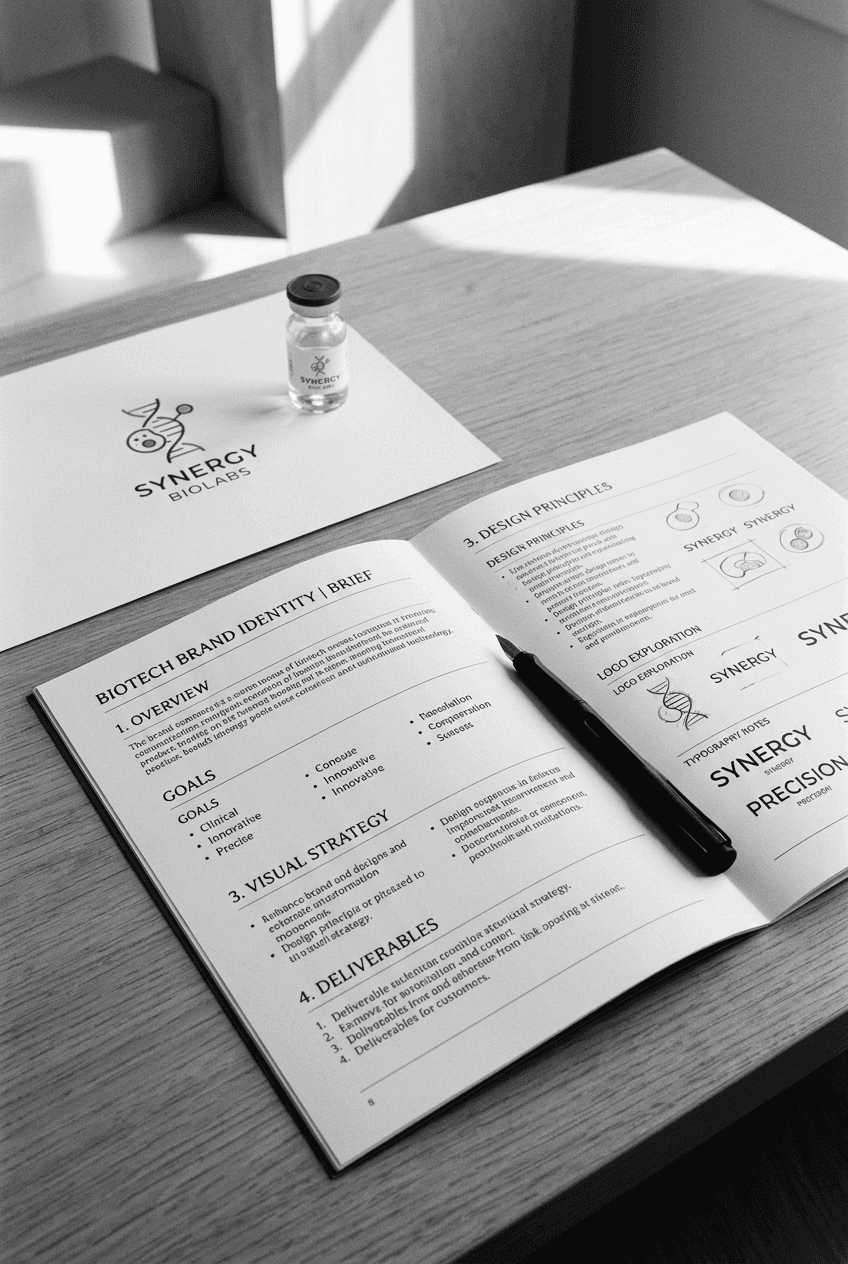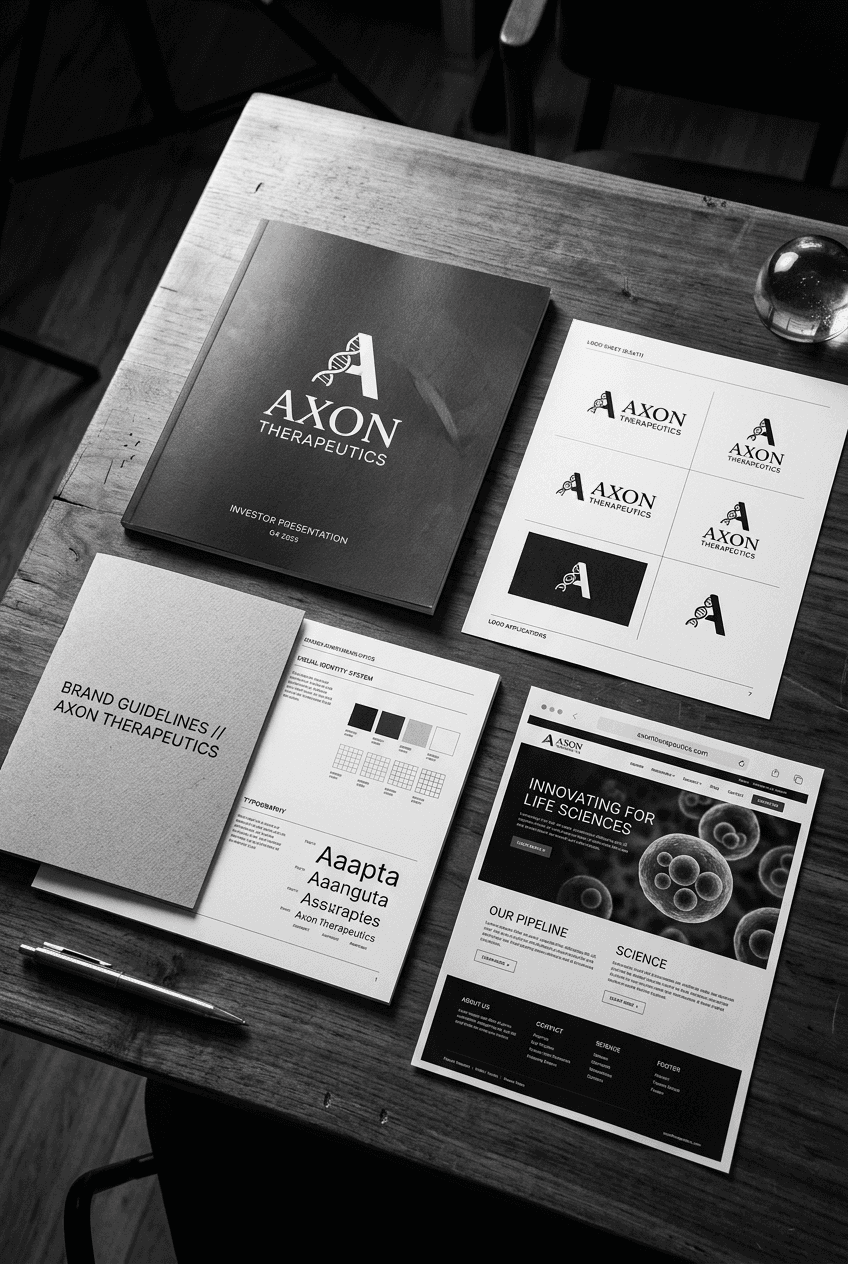

A biotech branding agency that cannot engage with your science cannot differentiate your brand from the other 400 companies that look exactly like you.
What a Biotech Branding Agency Actually Does
A biotech branding agency builds the strategic and visual identity for a biotechnology company. At its best, it translates the company's scientific differentiation into a brand that earns trust from investors, healthcare professionals, and patients simultaneously. At its worst, it produces a blue-and-white visual identity with a molecular motif and a mission statement that could belong to anyone.
The global biotechnology market was valued at $1.55 trillion in 2023 and is projected to grow at 13.96% annually through 2030, according to Grand View Research. That growth is generating more biotech companies and more branding projects than at any point in the industry's history. Most of those projects are awarded to agencies that look confident in a pitch, produce polished presentations, and deliver work that is visually professional and strategically undifferentiated.
I am a pharmacist and creative director with 17 years of experience building life sciences brands. The agencies that consistently produce effective biotech branding share specific capabilities that most agencies do not have. This guide explains what those capabilities are and how to identify them before you sign a contract.
What Makes Biotech Branding Different From Every Other Category
Biotech branding is not consumer branding with clinical colors. The differences are fundamental.
Dimension | Biotech Branding | Consumer Branding |
|---|---|---|
Primary trust driver | Scientific credibility and regulatory legitimacy | Emotional resonance and lifestyle alignment |
Audience structure | Investors, HCPs, and patients simultaneously | Typically one primary buyer |
Regulatory constraints | Claims and representations governed by FDA, EMA, and securities regulations | Minimal claims restrictions except for specific categories |
Brand lifecycle | Built before product approval; must evolve through development stages | Built around existing products |
Scientific literacy required | High — must understand and communicate mechanism of action | Low — product features are usually accessible |
Naming complexity | Trademark, linguistic, global usability, and scientific appropriateness | Primarily brand differentiation and trademark |
Failure mode | Generic industry wallpaper, no scientific differentiation | Aesthetically pleasing, wrong for the target buyer |
These differences determine the capabilities a biotech branding agency must have. An agency that builds excellent consumer brands cannot automatically build excellent biotech brands. The skills that produce a successful skincare rebrand do not automatically transfer to a pre-clinical oncology company's Series A identity.
The Five Capabilities a Biotech Branding Agency Must Have
1. Scientific literacy
The single most important capability, and the most rare. A biotech branding agency must be able to engage with the science of a client's pipeline well enough to make strategic decisions about how to differentiate the company visually. This does not require the agency to employ scientists. It requires that the strategists who work on biotech projects have sufficient scientific background to understand mechanism of action, read a pipeline summary, and identify what is actually distinctive about the science.
An agency without scientific literacy will default to category conventions. The brief will not contain enough scientific specificity to drive differentiated design decisions, so the agency will apply the visual language it has seen work in other biotech brands. The result is a brand that looks credible and communicates nothing specific.
Ask directly: who on the team has a scientific or clinical background? What is their role in the branding process? If no one on the strategy team has a life sciences background, the scientific differentiation of your company will not reach the brand.
2. Multi-audience brand architecture
Biotech brands must simultaneously serve investors who require commercial clarity, healthcare professionals who require scientific credibility, and patients who require human warmth. These are genuinely different communication requirements that cannot be satisfied by a single visual tone.
An agency that has built brands for multiple simultaneous audiences in regulated categories has developed the architecture skills to navigate this. An agency that primarily builds consumer brands has not. Ask for examples of biotech brand systems that were designed to serve investor, HCP, and patient audiences, and ask the agency to walk through how the same brand identity was adapted for each.
3. Regulatory communication knowledge
Pre-clinical and clinical-stage companies face specific regulatory constraints on what can be represented in brand communications. Securities regulations govern how pipeline products can be described in investor-facing materials. FDA and EMA regulations govern what can be claimed or implied about investigational products in patient and HCP-facing materials.
An agency without knowledge of these constraints will produce materials that require legal and regulatory revision before they can be used. This is not a minor inconvenience. For a biotech company preparing for a funding round, discovering that the investor deck contains representations that need to be revised because of securities communication rules is a significant delay. Ask the agency how they account for regulatory constraints in their brand communication work.
4. Life sciences category portfolio
An agency claiming to specialize in biotech branding should be able to show a substantial portfolio of life sciences work: biotech, pharma, medtech, diagnostics, or adjacent health sciences. The portfolio should span different indication areas and company stages, and the agency should be able to articulate the strategic rationale behind the visual decisions in each project.
A thin or diverse portfolio (one or two biotech projects alongside many consumer brands) indicates that the agency is capable of working in the category but does not have deep category expertise. The visual and strategic conventions of biotech branding are different enough from consumer branding that experience depth matters.
5. Materials that scale across the full brand system
A biotech company's brand operates across investor presentations, conference exhibition, clinical trial documentation, HCP literature, patient information, website, and social media. The visual identity must function coherently across all of these at the same time.
An agency that designs for the website and investor deck in isolation will produce work that fragments when it is applied to conference materials, patient information leaflets, or large-format exhibition graphics. Ask the agency to walk through how a previous biotech brand identity was applied across the full range of materials the company required.
Questions to Ask a Biotech Branding Agency Before You Hire
Does anyone on your strategy team have a scientific or clinical background?
This is the most important question. The answer reveals whether the agency has the scientific literacy required to make strategic decisions from your pipeline information.
Can you show me a competitive audit from a previous biotech branding project?
The audit should map the visual landscape of the indication area or technology category, identify specific differentiation opportunities, and connect those opportunities to the design decisions in the final work.
How do you approach regulatory constraints in your brand communication work?
A genuine specialist will describe a process for identifying and integrating regulatory constraints before design begins. The wrong answer is treating regulatory review as a post-design checkpoint.
What does your strategy deliverable look like before design starts?
Ask to see the format of the positioning document they produce before any visual work begins. If the strategy deliverable is a mood board or a client-filled questionnaire, the agency is not conducting independent strategic analysis.
Can you describe a biotech project where the brand identity supported a specific commercial outcome?
Good biotech branding agencies know what happened to the brands they built. They should be able to speak to funding rounds supported, partnerships enabled, or clinical trial recruitment assisted by the brand work they produced.
Who specifically will work on my project?
The people who pitched the work are not always the people who do it. Ask who leads strategy, who designs the identity, and whether the senior people you met are the people who will be working on your brand day to day.
The Difference Between a Biotech Branding Agency and a Healthcare Marketing Agency
This distinction comes up frequently, and it matters. A healthcare marketing agency produces campaigns, advertising, and promotional materials for existing healthcare products. A biotech branding agency builds the foundational identity from which all of those materials eventually derive.
Hiring a healthcare marketing agency to build a pre-clinical biotech identity is a category error. Marketing agencies are optimized for message reach and campaign effectiveness. Branding agencies are optimized for positioning clarity, visual consistency, and long-term brand equity. In the early stages of a biotech company, before any product is approved and before any campaign is possible, the brand equity built through the identity is the commercial asset that supports fundraising, hiring, and partnerships.
For a full breakdown of the strategic decisions in biotech brand building, see my guide to biotech brand strategy. For the complete picture of what a biotech brand identity must communicate at each stage of development, see my guide to biotechnology brand identity.
FAQ: Choosing a Biotech Branding Agency
What does a biotech branding agency do?
A biotech branding agency builds the strategic and visual identity for a biotechnology company. This includes brand strategy and positioning, naming, visual identity design, brand guidelines, and the design of materials across investor, HCP, and patient-facing channels. The best biotech branding agencies bring scientific literacy to the strategy phase, enabling them to differentiate the brand based on genuine scientific distinction rather than aesthetic convention.
How much does a biotech branding agency cost?
A corporate identity for a pre-clinical biotech company, covering strategy, naming if required, visual identity, website direction, and investor deck template, typically costs $30,000 to $80,000 with a specialist agency. Generalist agencies may quote lower rates but typically lack the scientific literacy and life sciences category experience required to produce genuinely differentiated work.
How do I know if a biotech branding agency has real scientific literacy?
Ask who on the strategy team has a scientific or clinical background and what their role is in the branding process. Ask them to explain what your company does in their own words after you have described it, and assess whether the summary reflects a genuine understanding of the scientific differentiation. An agency that summarizes your pipeline accurately can make strategic decisions from it.
Should I hire a biotech specialist agency or a generalist agency with healthcare experience?
For a biotech company where the scientific differentiation is the primary commercial asset, a specialist with direct life sciences experience will consistently produce more strategically differentiated work than a generalist with adjacent healthcare experience. The scientific literacy, regulatory communication knowledge, and life sciences visual language expertise that come from deep category experience are not easily replicated by research alone.
What should I expect in the first meeting with a biotech branding agency?
A serious biotech branding agency will ask questions in the first meeting that demonstrate scientific curiosity: what is the mechanism of action, what makes your approach different from competitors, what development stage are you at, and what are the regulatory communication constraints. An agency that focuses primarily on aesthetics, brand values, and visual references in the first meeting is not engaging with the scientific and strategic substance of the project.
I'm Tambi Haşpak, a brand strategist and creative director with an unfair advantage: I'm a pharmacist. I run a creative studio for life sciences, cosmetics, and supplements. 17 years. Exclusively. If you are looking for a biotech branding agency that can engage with your science and build a brand that earns trust from investors and clinicians alike, book a call or send me an email.